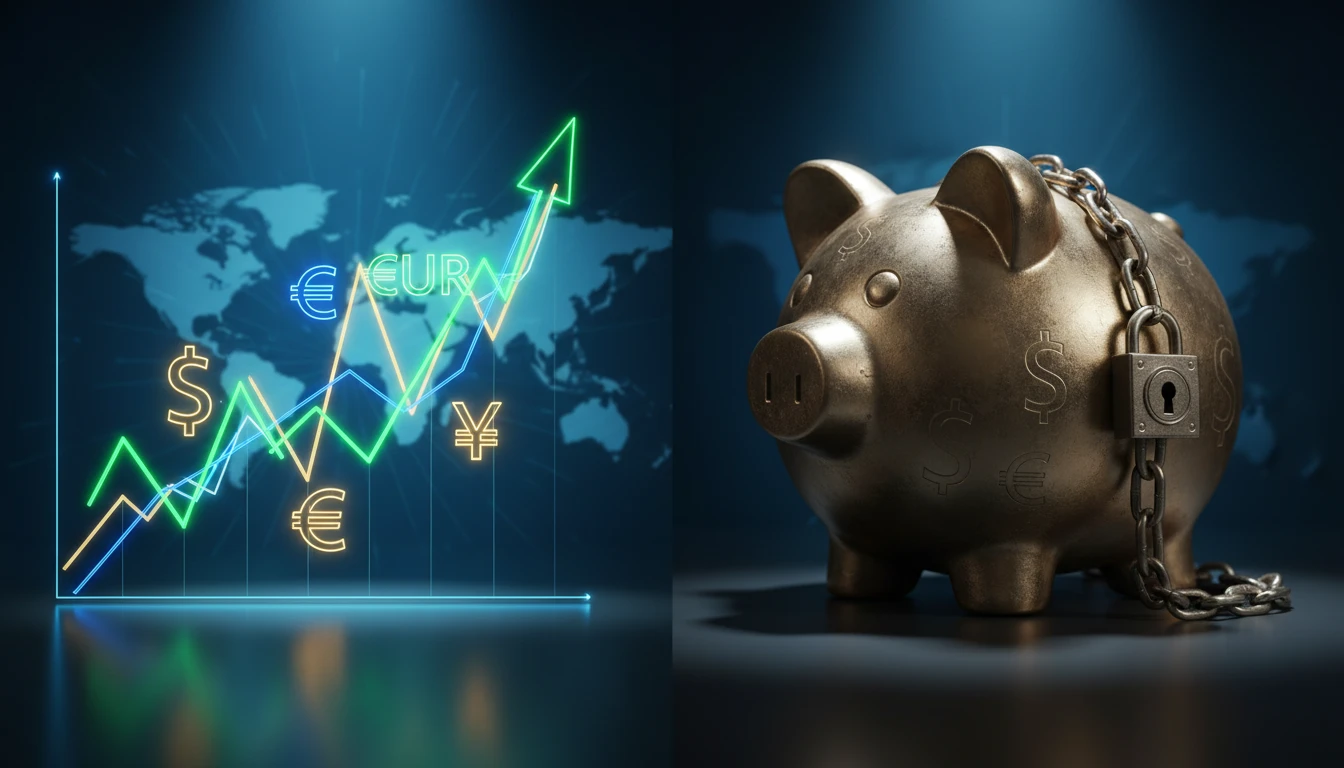









The Two Main Drivers: Interest and Currency
When you sign up for an education loan, especially for studying overseas, your repayment amount is not set in stone. It’s influenced by two powerful, constantly shifting factors: global interest rates and foreign exchange (forex) rates. Think of your loan as a boat
on the financial seas. A decision made in a central bank halfway across the world can create waves that rock your boat, and the value of the Indian Rupee (INR) against other currencies determines how high those waves are. Understanding these two forces is the first step to navigating your loan journey without any nasty surprises.
Global Interest Rates: The Ripple Effect
Major central banks, like the US Federal Reserve (the Fed), set benchmark interest rates that have a global ripple effect. When the Fed raises its rates to control inflation in the US, it makes American investments more attractive. This can lead to foreign investors pulling money out of emerging markets like India. To prevent a massive outflow of capital, the Reserve Bank of India (RBI) might be prompted to increase its own key lending rate, the repo rate. When the repo rate goes up, the cost of borrowing for commercial banks in India rises. They, in turn, pass this increased cost to consumers, leading to higher interest rates on loans, including education loans with floating rates. So, a decision made in Washington can directly lead to your EMI in India becoming more expensive.
The Forex Factor: When the Rupee Dips
The second major influence is the foreign exchange rate—the value of the INR against the currency of the country you'll be studying in, like the US Dollar (USD), British Pound (GBP), or Euro (EUR). Your tuition and living expenses are in that foreign currency. If the rupee weakens (depreciates) against the dollar, you need more rupees to pay the same amount of fees. For example, if tuition is $50,000, a shift in the exchange rate from ₹83 to ₹90 per dollar increases the cost from ₹41.5 lakh to ₹45.5 lakh. This means you might have to borrow more than you initially planned, leading to a higher principal amount and, consequently, a larger EMI, even if the interest rate remains unchanged. A weaker rupee makes everything from tuition to rent and groceries more expensive in rupee terms.
Fixed vs. Floating Rates: Your First Line of Defence
Given these variables, you have a crucial choice to make: a fixed-rate or a floating-rate loan. A fixed-rate loan has an interest rate that stays the same throughout the loan tenure, offering predictability and peace of mind. Your EMI will not change, making budgeting easier. However, this stability often comes at a price; fixed rates are typically 1-2% higher than the initial floating rates. A floating-rate loan has an interest rate linked to a benchmark like the RBI's repo rate, meaning it can change over time. If rates go down, you benefit from a lower EMI. If they rise, your EMI increases. The best choice depends on your risk appetite and the current interest rate environment. If rates are expected to fall, a floating rate might be beneficial. If you prefer certainty, a fixed rate is safer.
Smart Strategies to Mitigate Risk
You are not powerless against these global currents. Proactive planning can save you a significant amount of money and stress. First, budget for a weaker rupee; experts suggest planning for a 5-10% depreciation over your course duration to create a financial buffer. Second, consider where you'll earn after graduation. If you plan to work abroad and earn in a foreign currency, a loan in that same currency can be a natural hedge. If you plan to return to India, an INR-denominated loan may be safer despite currency risk affecting the total borrowed amount. You can also use tools like forex cards to lock in an exchange rate for certain expenses. Finally, explore refinancing your loan once you have a stable income, as you may be able to secure a better interest rate and reduce your exposure to forex risk.