
The Science of a Supple Body
Flexibility isn't just about how far you can stretch; it's a complex interplay between your muscles, your connective tissues, and your nervous system. When you practice yoga, you're not just pulling on your muscles. You're communicating with your body
on multiple levels. Holding a pose sends signals to the nervous system that it's safe to relax the muscle's automatic 'stretch reflex', which normally tightens a muscle to prevent injury. With slow, mindful breathing, this signal is amplified, allowing muscles to lengthen more easily. Furthermore, yoga works on the fascia—a web-like connective tissue that encases your muscles and organs. Inactivity can make fascia 'sticky' and restrictive. The varied movements in yoga help to hydrate and release these adhesions, improving overall suppleness.
Consistency Unlocks Progress
The secret to gaining flexibility isn't about contorting yourself into a pretzel on day one. The true benefit comes from consistent, gentle practice. A short, daily session is far more effective than one long, intense practice per week. Repetition helps to reinforce neuromuscular pathways, teaching your body to engage muscles more efficiently and increasing your awareness of its position in space. This mindful approach not only improves range of motion but also reduces the risk of injury, builds usable strength to support your new flexibility, and promotes better posture.
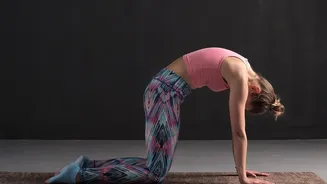
1. Cat-Cow Pose (Marjaryasana-Bitilasana)
This gentle, flowing movement is the perfect way to warm up the spine. Start on your hands and knees, with wrists under shoulders and knees under hips. On an inhale, drop your belly, lift your chest and tailbone, and look forward (Cow). On an exhale, round your spine toward the ceiling, tuck your chin to your chest, and press the mat away (Cat). This sequence increases spinal mobility and gently stretches the back and neck.
2. Downward-Facing Dog (Adho Mukha Svanasana)
Perhaps the most iconic yoga pose, Downward-Facing Dog is a full-body stretch. From your hands and knees, tuck your toes and lift your hips up and back, forming an inverted 'V' shape with your body. Press firmly through your hands and spread your fingers wide. Beginners should keep their knees generously bent to focus on lengthening the spine. Pedal your feet, bending one knee and then the other, to gently open the hamstrings and calves. This pose lengthens the entire back of the body, from your heels to your hands.
3. Low Lunge (Anjaneyasana)
If you spend a lot of time sitting, this pose is essential. From Downward-Facing Dog, step your right foot forward between your hands and lower your left knee to the mat. Ensure your right knee is stacked directly over your ankle. You should feel a deep stretch in the front of your left hip and thigh (the hip flexor). For stability, keep your hands on the floor or on your front thigh. This pose specifically targets the tightness that builds from prolonged sitting. Hold for several breaths before switching sides.
4. Seated Forward Bend (Paschimottanasana)
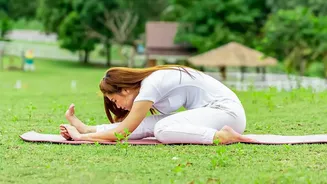
This pose provides a deep stretch for the hamstrings and the entire back. Sit on the floor with your legs extended in front of you. Inhale to lengthen your spine, and as you exhale, begin to hinge forward from your hips, not your waist. If your hamstrings are tight, bend your knees significantly. You can also loop a strap or towel around your feet to help maintain a straight back. The goal is to bring your belly toward your thighs, not your nose toward your knees.
5. Child's Pose (Balasana)
Child's Pose is a resting posture that offers a gentle stretch for the back, hips, and ankles. Kneel on the floor, bring your big toes to touch, and sit back on your heels with your knees wide apart. Fold forward, resting your torso between your thighs and your forehead on the mat. Your arms can be extended forward or resting alongside your body. This pose is a moment of calm and a gentle way to release tension in the lower back.