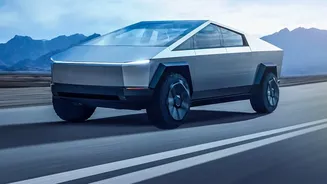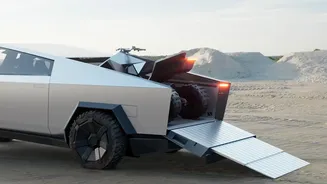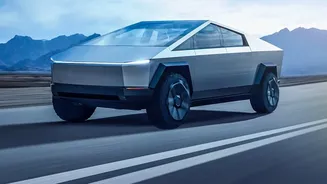



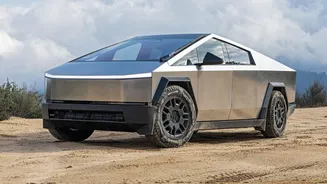
Tesla's iconic Cybertruck is undergoing another major shift. The electric-car maker announced its production plan will change by mid-2027, signaling the end of an era for the polarizing pickup and a strategic pivot for the company.
The End of the Line
In a surprise announcement
on his social media platform X, CEO Elon Musk stated that Tesla will begin 'winding down production of the Cybertruck at Gigafactory Texas around the middle of next year'. The reason for this significant change is to free up manufacturing space and resources for a different futuristic vehicle: the Cybercab, Tesla's two-seat, autonomous robotaxi. This move marks a major retreat from a project Musk had once championed as the future of pickup trucks, leaving the long-term fate of the Cybertruck uncertain, as the Texas factory is the only facility equipped to build it.
A Troubled Production History
The Cybertruck's journey from a dramatic 2019 unveiling to customer driveways has been fraught with challenges. Originally promised for a 2021 launch with a starting price of around $39,900, a series of delays and production hurdles pushed the first deliveries to late 2023, with the actual starting price soaring to over $60,000. Since its launch, the vehicle has been plagued by quality concerns and numerous recalls for issues ranging from faulty accelerator pedals to exterior panels that could detach while driving. Musk himself acknowledged the immense difficulty in ramping up production, stating in 2023, 'We dug our own grave with Cybertruck'.
Falling Short of Ambitious Goals
Despite accumulating over a million reservations before its launch, actual sales have failed to meet Tesla's lofty expectations. Musk once predicted that Tesla could sell between 250,000 and 500,000 Cybertrucks annually. However, sales figures have told a different story. After selling around 39,000 units in 2024, sales dropped by nearly 48% in 2025 to just over 20,000 vehicles. The downward trend continued into 2026, with estimates suggesting the truck is selling at roughly a tenth of the volume the production line was built for, making the decision to end its run a logical, if disappointing, business move.
Pivoting to a Driverless Future
The decision to cease Cybertruck production is less about admitting failure and more about a strategic pivot towards what Tesla sees as its next frontier: autonomous vehicles and artificial intelligence. The Cybercab is at the heart of this vision. First unveiled in 2024, the vehicle has no steering wheel or pedals and is designed for a company-owned robotaxi network. By reallocating factory space from the low-volume Cybertruck to the potentially high-volume Cybercab, Tesla is betting its future on a world where transportation is an autonomous service, not just a personally owned product. The company has already begun offering paid Cybercab rides in parts of Austin, Texas.
What This Means for the EV Market
The end of the Cybertruck's production run sends ripples through the electric vehicle industry. For the millions who placed pre-orders, it's an unceremonious end, though one that may not be surprising given the truck was never approved for sale in major markets like Europe due to safety regulations. For Tesla, it marks a clear strategic decision to cut a capital-intensive, underperforming product to double down on AI and robotics. While competitors like Ford and Rivian continue to navigate the electric truck market, Tesla is steering aggressively into the unproven, but potentially massive, market for self driving taxis, a gamble that will define the company for the next decade.