



A New Eye on the Cosmos
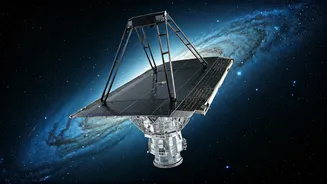
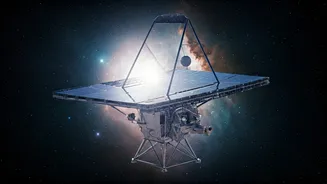
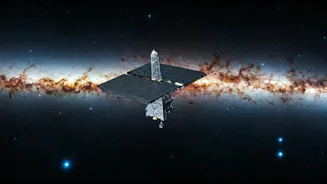
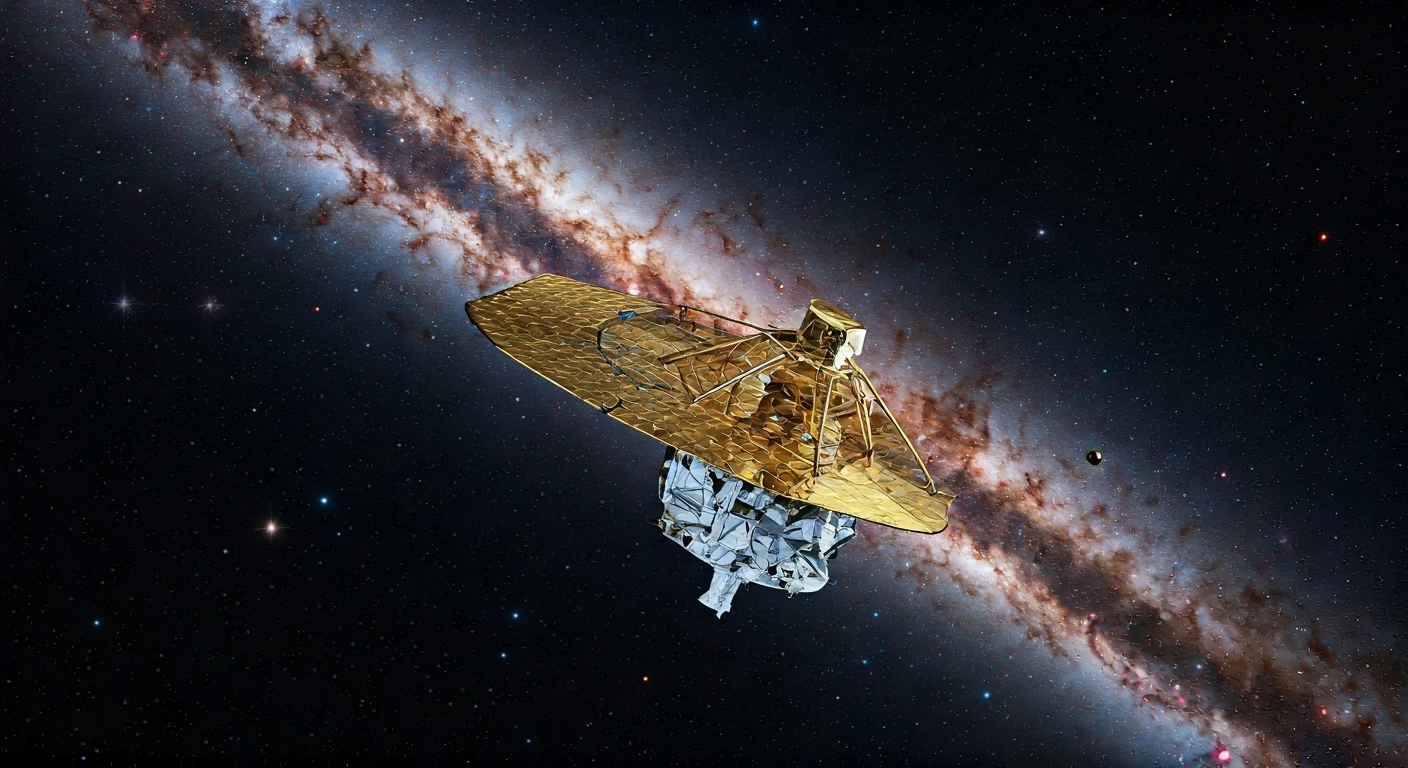
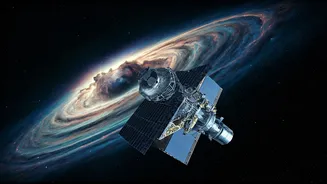
Named after Nancy Grace Roman, NASA's first chief of astronomy and the ‘mother of Hubble,’ the Roman Space Telescope is the agency's next flagship mission set to unravel the biggest mysteries in the cosmos. After years of development, assembly, and testing
at NASA's Goddard Space Flight Center, the observatory is now complete. It recently arrived at the Kennedy Space Center in Florida on June 21, 2026, to begin final preparations for its launch. The current launch target is no earlier than August 30, 2026, aboard a SpaceX Falcon Heavy rocket, a timeline that puts the mission months ahead of its original schedule. This remarkable progress is a testament to the thousands of engineers and scientists who have worked on the project.
The Power of a Panoramic View
What makes Roman a game-changer isn't just its mirror—which at 2.4 meters is the same size as Hubble's—but its incredible field of view. Its primary camera, the Wide Field Instrument (WFI), will capture a patch of the sky at least 100 times larger than Hubble can in a single shot, with the same exquisite resolution. Think of it this way: where Hubble provides a detailed close-up, Roman will deliver the stunning panorama. This capability will allow it to survey the sky at speeds up to 1,000 times faster than Hubble. In its five-year primary mission, Roman is expected to image over 50 times the area of the sky that Hubble has covered in more than three decades, creating a new, vast atlas of the universe.
Hunting Cosmic Phantoms: Dark Energy and Dark Matter
One of Roman’s primary objectives is to tackle two of the most profound puzzles in physics: dark energy and dark matter. Physicists estimate that dark energy, the mysterious force causing the universe's expansion to accelerate, makes up about 68% of the cosmos. Roman will investigate this by mapping the distribution of billions of galaxies and studying distant stellar explosions called supernovae. This will help scientists measure how the universe's expansion has changed over time, providing crucial clues about the nature of dark energy. Furthermore, by charting how the light from distant galaxies is bent by the gravity of intervening matter—a phenomenon called weak gravitational lensing—Roman will create vast maps of dark matter, revealing its distribution and structure across the cosmos.
A Census of a Billion Worlds
Beyond cosmology, Roman is set to revolutionize the hunt for exoplanets. Using a technique called gravitational microlensing, the telescope will monitor hundreds of millions of stars toward the dense center of our Milky Way galaxy. This method is sensitive enough to find planets with masses even smaller than Earth's, as well as rogue planets that drift through space untethered to a star. Over its mission, astronomers expect Roman to discover thousands of new exoplanets, creating a statistical census of planetary systems throughout our galaxy. In addition, Roman carries a technology demonstrator called the Coronagraph Instrument. This advanced tool is designed to block the overwhelming glare of a star, allowing astronomers to directly image and study the faint planets orbiting it—a critical step toward finding habitable worlds in the future.