





The Familiar Tale of Wilted Dhaniya
Coriander, or dhaniya, is the fragrant heart of so many Indian dishes. It brightens up a dal, finishes a curry, and forms the base of countless chutneys. Yet, it is famously fragile. You buy a beautiful, green bunch from the market, and within two or three
days, it succumbs to a sad, inevitable fate. The leaves turn yellow, the stems go limp, and a dark, slimy decay begins in the crisper drawer of your fridge. This cycle of waste is not only frustrating but also a waste of money. The reason for this rapid decline lies in its delicate nature. Coriander has a high water content and thin leaves, making it susceptible to both dehydration (wilting) and excess moisture (rot). It’s a fine balance that most storage methods get wrong.
Why the Paper Towel Hack Works
While the claim of keeping coriander fresh 'forever' is an exaggeration, this method can easily extend its life from a few days to a solid two, sometimes even three, weeks. The magic isn't magic at all; it's basic food science. The paper towel serves as a perfect humidity regulator. When you wash herbs, it’s difficult to get them perfectly bone-dry. Any remaining water droplets will pool at the bottom of a bag or container, creating a breeding ground for bacteria and causing the leaves to turn into a slimy mess. Conversely, if left exposed in the fridge, the dry, cold air will suck the moisture right out of the delicate leaves, causing them to wilt and lose their flavour. The paper towel solves both problems. It wicks away excess droplets of water, preventing rot. At the same time, it retains just enough moisture to create a gently humid environment that keeps the leaves hydrated, crisp, and green.
Your Step-by-Step Guide to Freshness
Ready to say goodbye to wilted herbs? Follow these simple steps. The most crucial part is the drying stage—do not skip it!
1. **Wash and Inspect:** As soon as you bring your coriander home, give it a good wash under cool, running water. As you do, pick through the bunch and remove any yellowed, bruised, or already-decaying leaves. These can spread rot to the rest of the bunch.
2. **Dry Thoroughly:** This is the most important step. Lay the washed coriander on a clean kitchen towel or use a salad spinner. Pat the leaves and stems gently until they are as dry as possible to the touch. They should feel cool and fresh, not wet. Letting them air-dry for 20-30 minutes after patting them down is a great extra measure.
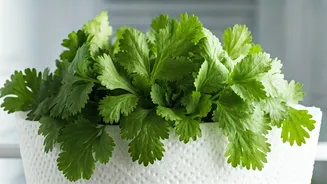
3. **Wrap Gently:** Take a long sheet of paper towel. It should be dry. Lay the coriander bunch in the middle. Gently fold the paper towel over the coriander, encasing it like a burrito. Do not wrap it too tightly, as that can bruise the leaves. The goal is a loose, protective cocoon.
4. **Store Smart:** Place the paper-towel-wrapped bundle into a ziplock bag or an airtight container. If using a bag, gently press out most of the excess air before sealing it. Don’t vacuum-seal it; just remove the bulk of the air. Place the container in the main part of your fridge, not in the coldest corner where it might freeze.
Common Mistakes to Avoid
Even this simple method can go wrong if you miss a key detail. Here are the most common pitfalls to watch out for:
* **The Paper Towel is Too Wet:** Never use a damp or wet paper towel to wrap the herbs. The towel should be completely dry. It will absorb the necessary moisture from the washed leaves. A wet towel will just accelerate the rotting process.
* **The Leaves are Still Wet:** If you wrap coriander that is still dripping with water, you are simply creating a soggy mess. Patience during the drying step is your best friend.
* **Forgetting to Prune:** Not removing the bad leaves first is like putting a rotten apple in a barrel of good ones. Take the extra minute to inspect the bunch.
* **Overcrowding the Container:** Don’t cram the bundle into a container that’s too small. The leaves need a bit of air around them to prevent crushing and bruising.