




The Need for Speed and Smarts
On Mars, there is no real-time control. The vast distance between Earth and the Red Planet means radio signals can take up to 24 minutes to travel one way. For a rover tasked with a multi-year scientific 'marathon' — searching for signs of ancient life
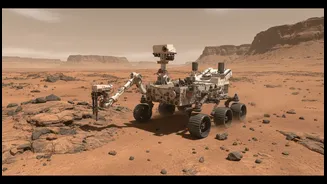
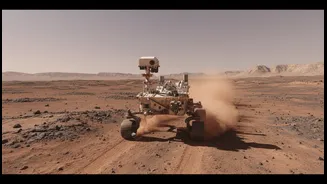
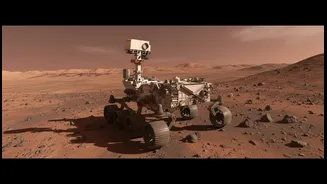
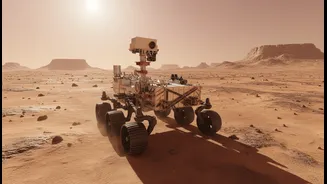
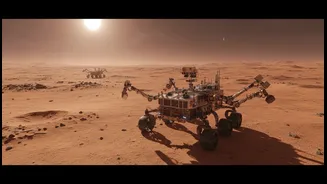
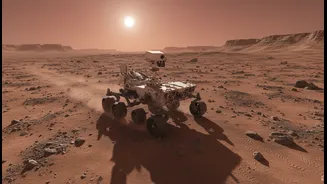
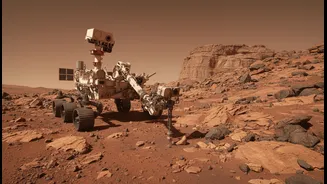
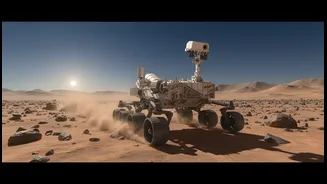
and collecting samples — waiting for human drivers to micromanage every move would be agonizingly slow. This is where autonomy becomes essential. Perseverance is equipped with a powerful auto-navigation system called AutoNav, which allows it to 'think while driving'. It creates 3D maps of the terrain ahead, identifies hazards like sharp rocks or sand traps, and plots its own course, all while its wheels are in motion. This capability allows it to cover ground far more quickly and efficiently than any of its predecessors, recently surpassing the marathon distance of 42.2 kilometers in just over five years, a feat that took the Opportunity rover more than 11 years.
The Ultimate Safety Net
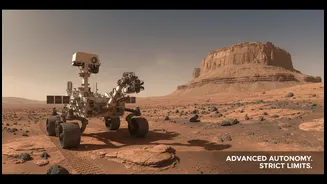
The flip side of this freedom is the immense risk. A single wrong move—a slide into a crater or a high-centering on a jagged rock—could permanently disable the multi-billion dollar explorer. There are no tow trucks on Mars. Because of this, NASA's engineers at the Jet Propulsion Laboratory (JPL) operate with a healthy dose of caution. While they allow the rover to 'take the wheel', they do so within strictly defined parameters. Human rover planners meticulously analyze orbital imagery and data from the rover's own cameras, often using 3D glasses to get a better sense of the terrain. They set the general route and establish waypoints, creating a virtual safety corridor. The rover has the freedom to navigate within that space, but the fundamental boundaries are set by its human overseers hundreds of millions of miles away. This hybrid approach ensures the mission reaps the rewards of speed without taking existential risks.
A Brain for Another Planet
Perseverance's autonomous brain is a significant leap forward. Unlike the Curiosity rover, which had to stop, take images, and then plan its next move, Perseverance processes its surroundings on the fly. This 'thinking while driving' is powered by dedicated computer hardware and sophisticated algorithms. Recently, this system got a major upgrade with a technology called Mars Global Localization. Since there's no GPS on Mars, one of the biggest limits on long, autonomous drives was the rover's growing uncertainty about its exact position. Now, by comparing images from its own cameras to orbital maps, Perseverance can pinpoint its location to within about 10 inches in just a couple of minutes, giving it the confidence to travel farther than ever without needing to phone home. Engineers have even begun using generative AI to help suggest safe and efficient waypoints, streamlining the planning process for the human team.
The Human-Robot Partnership
The relationship between the rover and its drivers is less about remote control and more about collaboration. The drivers aren't just joystick operators; they are strategists and scientists who set the mission's long-term goals. They decide which geological formations are worth investigating and what risks are acceptable for the potential scientific reward. The tension between autonomy and safety is managed daily in this partnership. When the terrain is open and benign, planners can grant the rover more freedom to cover distance. When approaching a scientifically interesting but hazardous area, they tighten the leash, relying more on human-directed commands. This dynamic balance allows the mission to be both ambitious in its scientific goals and conservative in its execution, ensuring the rover survives to explore another sol (a Martian day).