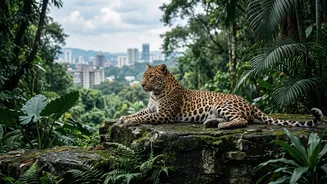






A leopard padding through a residential colony, a massive nilgai trotting down a busy street. These aren't scenes from a wildlife documentary, but increasingly common sights in India's bustling cities. So, what's drawing them in?
More Than Just Pigeons and Crows
When we think of urban
wildlife, our minds usually go to pigeons, crows, or stray dogs. But the reality of India’s urban ecosystem is becoming far wilder. In Mumbai, a city of over 12 million people, leopards from the adjacent Sanjay Gandhi National Park are now regular nocturnal visitors. These big cats are often captured on CCTV footage navigating alleyways and preying on stray dogs, their preferred urban meal. Similarly, Delhi residents have been stunned by sightings of nilgai (blue bulls), the largest antelope in Asia, wandering through traffic-heavy areas like Adarsh Nagar and even near the high-security zone around Parliament House. These incidents are not just isolated oddities; they are symptoms of a global trend where the line between the wild and the city is blurring.
Why Cities Are the New Frontier
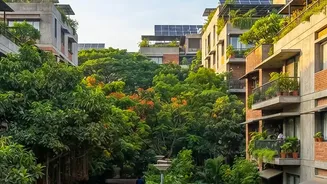
The primary driver behind this phenomenon is habitat loss and fragmentation. As our cities expand, they encroach upon forests and natural landscapes, pushing animals out. However, instead of simply retreating, many species are adapting. Cities, it turns out, can be accidental sanctuaries. They offer a surprising abundance of resources that are often easier to find than in the wild. Garbage dumps and waste bins provide a reliable food source for opportunistic animals like jackals, monkeys, and even leopards who are drawn to the stray dogs that feed on this waste. Urban green spaces, parks, and even the overgrown patches along railway lines become corridors and shelters. For some species, the city is actually safer. A coyote in Chicago, for example, has a much higher chance of survival than its rural counterpart, thanks to readily available food and fewer natural predators.
India's Unique Urban Jungle
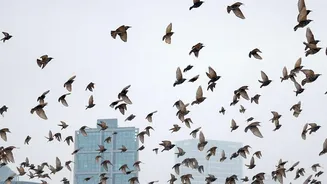
India presents a particularly complex case of urban wildlife interaction. Mumbai has one of the highest densities of leopards in the world, with a significant population cohabiting in and around the Sanjay Gandhi National Park. These leopards have adapted their behaviour, becoming largely nocturnal to avoid humans. In Delhi, beyond the headline-grabbing nilgai, the skies are home to a thriving population of black kites, sustained in part by residents who feed them for religious reasons. Chennai's green pockets, though shrinking, host shy, nocturnal slender lorises and jackals, while its surroundings are a hotspot for nearly 35 species of raptors. Recent incidents in Uttar Pradesh, including leopards appearing on a school roof and another confronting a pet dog in a farmhouse, further highlight how frequent these encounters are becoming. These aren't just large mammals; Indian cities are also teeming with snakes, monitor lizards, and hundreds of bird species.
Learning to Live Together
This growing proximity inevitably leads to human-wildlife conflict. The challenge lies in shifting our perspective from conflict to coexistence. Many urban residents have shown remarkable tolerance. In Mumbai, communities living alongside leopards have developed a complex relationship, advocating for their protection even while facing risks. However, as encounters increase, so does fear. The solution isn't to simply remove the animals, a process that is stressful for them and often ineffective. Instead, urban planning needs to evolve. Experts call for 'biodiversity-sensitive urban design', which includes creating green corridors to connect fragmented habitats, better waste management to reduce animal attractions, and public awareness campaigns. Simple measures, like ensuring wells are covered to prevent animals from falling in, can save lives. The key is recognizing that wildlife is not merely invading 'our' space; in many cases, we have built our homes in theirs.