





The Silent Killer on Distant Worlds
For any solar-powered rover, dust is the ultimate adversary. On planets like Mars, fine dust particles are everywhere. They are kicked up by winds, creating continent-sized storms that can blot out the sun for weeks. When this dust settles, it forms a fine layer
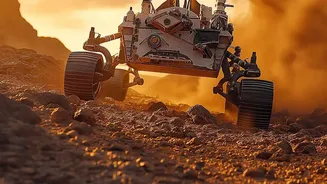
on solar panels, drastically reducing their ability to generate electricity. Over time, this coating can become so thick that the rover can no longer charge its batteries, effectively starving it of power. The most famous victim of this phenomenon was NASA’s Opportunity rover. Designed for a 90-day mission, it explored Mars for nearly 15 years, surviving thanks in part to periodic winds that cleaned its panels. However, in 2018, a planet-encircling dust storm engulfed the rover, blocking almost all sunlight. The veteran explorer, unable to recharge, sent its final communication on June 10, 2018, and was never heard from again. A similar fate befell the InSight lander, which ceased operations in 2022 after its panels were choked by dust.
An Eye in the Sky
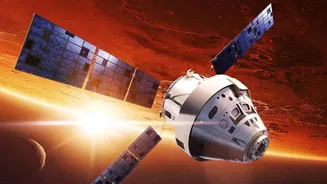
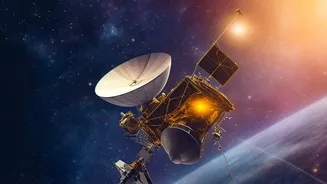
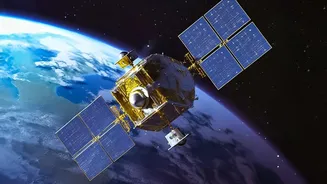
This is where orbiters become indispensable. Spacecraft like NASA's Mars Reconnaissance Orbiter (MRO) and Mars Odyssey act as interplanetary weather satellites. Circling the planet from above, they use specialised instruments to monitor the atmosphere in ways no ground-based rover can. For instance, MRO's Mars Color Imager (MARCI) builds a daily global map, allowing scientists to spot developing storms long before they become a planet-wide threat. Other instruments, like the Thermal Emission Imaging System (THEMIS) on the Odyssey orbiter and MRO's Mars Climate Sounder, measure atmospheric temperature and dust concentration. By observing how dust absorbs sunlight and warms the atmosphere at different altitudes, scientists can predict how a storm might grow and spread. This orbital fleet provides a constant stream of data, creating a comprehensive picture of Martian weather patterns and the all-important dust cycle.
From Data to Strategic Decisions
This orbital data isn't just for academic interest; it's critical for mission survival and planning. When orbiters detect a major storm brewing, mission controllers on Earth can take protective action. For rovers like Opportunity and InSight, this meant powering down non-essential systems and entering a low-power hibernation state to conserve battery life until the storm passed. This early warning system gives rovers the best possible chance of weathering the storm. Beyond immediate threats, these long-term dust scans are invaluable for planning future missions. By mapping seasonal dust activity and identifying regions prone to major storms, space agencies can select safer landing sites for upcoming rovers. This reduces the risk of a brand-new, multi-billion dollar mission landing in a dust-choked danger zone from which it might never escape. The data essentially creates a weather forecast that helps de-risk these incredibly expensive and complex undertakings.
Designing for a Dusty Future
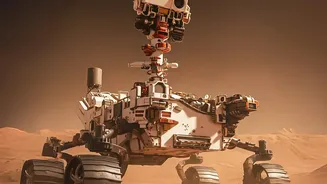
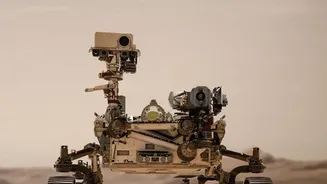
Understanding the dust threat also directly influences the design of the next generation of explorers. The lessons learned from Opportunity's demise and InSight's gradual power loss are pushing engineers to develop innovative solutions. This includes designing more efficient solar panels that can generate sufficient power even with a partial dust coating. Another area of active research is dust-mitigation technology. NASA has been testing concepts like the Electrodynamic Dust Shield (EDS), which uses an electric field to actively repel and clear dust from surfaces without any mechanical parts. Some missions have even tried clever tricks, like using a robotic arm to scoop up sand and pour it over the panels, with the cascading grains helping to dislodge some of the finer, stuck-on dust. For particularly power-hungry or high-risk missions, like the Curiosity and Perseverance rovers, agencies sometimes bypass the problem entirely by using radioisotope thermoelectric generators (RTGs), which use the heat from decaying plutonium to generate electricity, making them immune to dust storms.
India's Stake in Space Exploration
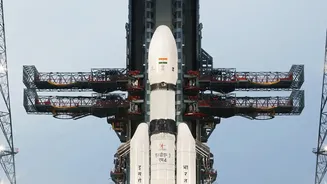
This challenge is directly relevant to India's ambitious space programme. As ISRO sets its sights on future missions to the Moon and Mars, dealing with abrasive, electrostatically charged dust is a major engineering hurdle. Lunar dust, in particular, is known to be sharp and damaging, posing a threat not just to solar panels but to mechanisms, seals, and astronaut health. The knowledge gained from NASA's orbital dust monitoring on Mars provides a crucial foundation for Indian scientists and engineers as they design robust systems for future Chandrayaan missions and beyond. By studying how other agencies track and mitigate dust, ISRO can better prepare its own landers and rovers for the harsh, dusty environments they will encounter, ensuring mission longevity and success. The ability to predict and protect against dust is a universal requirement for sustainable planetary exploration.