


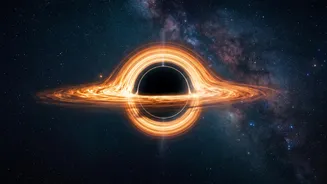
Ever wanted to be an astronomer? Now’s your chance. A new citizen science project is calling for volunteers to help find some of the galaxy’s most mysterious objects—black holes—all from the comfort of your computer.
The Hunt for Invisible Giants
Our Milky Way galaxy is thought to
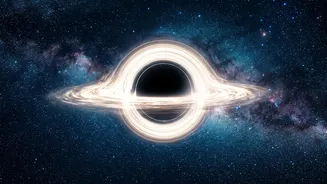
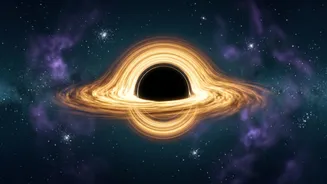
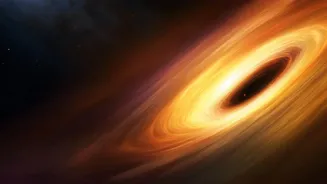
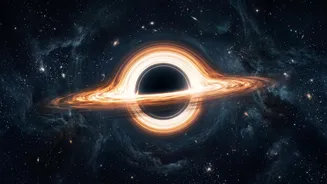
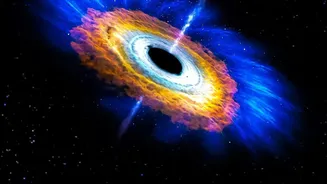
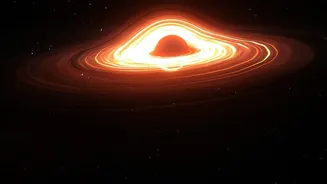
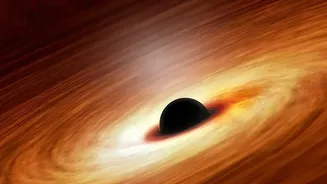
be home to as many as 100 million stellar-mass black holes, but astronomers have only managed to locate a few dozen so far. The reason for this is simple: black holes are invisible. Their gravitational pull is so immense that not even light can escape, making them impossible to see directly. We can typically only spot them when they are 'feeding' on nearby gas and stars, which causes the material to heat up and emit powerful X-rays. However, most black holes are 'quiescent' or dormant, silently drifting through space. The Black Hole Hunters project aims to find these hidden giants by looking for their subtle effects on the stars they pass.
Using Gravity as a Magnifying Glass
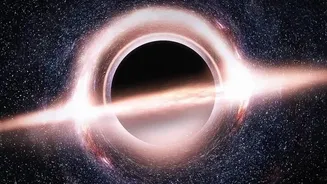
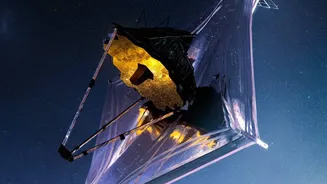
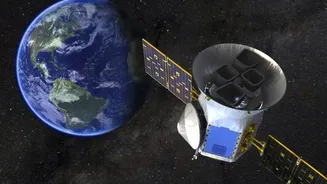
The project relies on a phenomenon predicted by Albert Einstein called gravitational microlensing. When a massive object like a black hole passes directly in front of a distant star, its gravity bends the fabric of spacetime, acting like a lens. This 'lens' magnifies the light from the background star, causing it to appear briefly and characteristically brighter. Volunteers are asked to look at graphs of star brightness over time, known as light curves, collected by NASA’s Transiting Exoplanet Survey Satellite (TESS). The specific signal they are hunting for is a repeating peak in brightness, which could indicate a black hole in a binary system, regularly passing in front of its companion star.
Why Your Help Is Needed
The TESS satellite provides an enormous amount of data, observing millions of stars. While automated algorithms can help sift through this information, they often get confused by other cosmic events, like stellar flares or natural star pulsations. Human eyes are far better at recognizing the specific, subtle patterns that might indicate a black hole. The project, hosted on the Zooniverse online platform, shows each light curve to multiple volunteers. This crowdsourcing approach helps to average out individual mistakes and build a reliable list of promising candidates for professional astronomers to investigate further with powerful telescopes. No prior expertise is required—just an interest in space and a bit of time.
How to Become a Black Hole Hunter
Getting started is straightforward. Anyone with a computer, tablet, or smartphone can participate. Simply go to the Zooniverse website and find the Black Hole Hunters project. After a quick registration, you'll be guided through a tutorial that shows you what the telltale light curve signals look like. You will then be presented with real data from the TESS satellite. Your task is to examine the graphs and flag any that resemble the patterns of a potential microlensing event. Researchers from institutions like the University of Southampton and The Open University are leading the project, and volunteers can even interact with the science team and other participants on the platform's forums.
A New Frontier of Discovery
This project represents a new phase in the search for black holes. The team previously used data from a ground-based telescope, but the move to the space-based TESS satellite provides much clearer and more continuous data, significantly increasing the chances of a discovery. According to the research team, every person who participates could be the one to spot the first of this new type of self lensing system containing a black hole. Your contribution is not just busywork ; it 's a direct role in real scientific research that could fundamentally change our understanding of the black hole population in our own galaxy.