







A Green Shield Re-emerging
The Sundarbans, the largest single mangrove forest in the world, is an ecological marvel spanning India and Bangladesh. For decades, this UNESCO World Heritage site faced threats from human activity, rising salinity, and climate change. However, recent
studies based on satellite observations indicate a shift. While some areas remain under stress, the overall trend points towards recovery and even expansion in certain regions. This regeneration is a combination of natural processes, where mangroves colonise newly formed mudflats, and dedicated conservation efforts. While global mangrove losses have been significant in the past, the tide is beginning to turn, with recent gains starting to offset decades of decline. This recovery is not just about trees; it represents the strengthening of a critical buffer for millions of people.
The View From Above
So how do we know the forest is recovering? The answer lies in decades of data from satellites, like the Landsat program, which have been monitoring the Earth's surface for years. Scientists use this imagery to analyse the forest's health and density over time. A key technique involves measuring the 'greenness' of the vegetation using something called the Normalized Difference Vegetation Index (NDVI). In simple terms, healthy, dense vegetation reflects light in a specific way that satellites can detect. By comparing images from year to year, researchers can map out areas where the mangrove canopy is becoming denser and where it is expanding, providing a comprehensive health report for the entire ecosystem without having to conduct exhaustive and time-consuming field measurements.
Nature's Wall Against the Waves
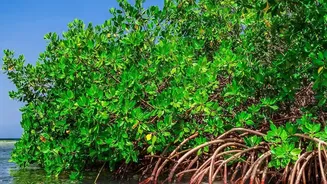
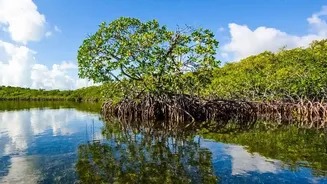
One of the most immediate benefits of a healthy mangrove forest is coastal protection. For the millions living in the low-lying delta of West Bengal and Bangladesh, cyclones are a constant threat. The dense, tangled root systems of mangrove trees act as a natural barrier, absorbing the energy of storm surges and high waves. Research shows that even a relatively narrow strip of mangroves can significantly reduce the force of waves, protecting inland communities, agricultural lands, and infrastructure from devastating floods and erosion. A robust mangrove forest can reduce wave heights by over 60%, shielding an estimated 15 million people from annual flooding events. In a region hit by powerful cyclones like Amphan and Yaas, this natural shield is an indispensable line of defence.
Breathing In The Carbon
Beyond physical protection, the Sundarbans' recovery offers a major win for the climate. Mangrove forests are what scientists call 'blue carbon' ecosystems, and they are incredibly efficient at capturing and storing carbon dioxide from the atmosphere. They can store two to four times more carbon per hectare than mature tropical forests, locking it away in their biomass and the soil beneath them for long periods. This makes them one of the most effective natural tools in the fight against climate change. Studies estimate the Sundarbans sequester vast amounts of carbon annually, offsetting a significant portion of regional emissions. The health and expansion of this forest, therefore, directly contribute to global climate mitigation goals.
Challenges on the Horizon
Despite the positive signs, the fight for the Sundarbans is far from over. The ecosystem remains vulnerable to significant threats. Rising sea levels pose a long-term risk, threatening to submerge low-lying areas of the forest. Increasing salinity in the water and soil, a consequence of both climate change and reduced freshwater flow from upstream, puts stress on less salt-tolerant mangrove species like the iconic Sundari tree. Furthermore, human pressures such as pollution, illegal logging, and encroachment for agriculture and aquaculture continue to degrade parts of the forest. While satellite data shows density is increasing in some areas, other indicators suggest rising environmental stress, highlighting a complex and evolving situation that requires constant monitoring and adaptive management.