






Understanding the 'Danger Zone'
The core principle of food safety revolves around temperature. For bacteria and other harmful microorganisms, the temperature range between 5°C and 60°C is known as the 'danger zone'. Within this range, bacteria can multiply rapidly, sometimes doubling
in number in as little as 20 minutes. When perishable food sits in this zone for too long, it can become unsafe to eat, even if it looks and smells perfectly fine. This is particularly critical for delivered food, which goes through a journey from the restaurant's kitchen to your home, with multiple potential points for temperature fluctuation.
Why Cold Foods Are a Special Concern
Hot food is often cooked to temperatures that kill off most bacteria. Cold foods, however, rely entirely on refrigeration to keep them safe. Items like dairy-based dressings, fresh-cut fruit salads, uncooked seafood like sushi, and prepared sandwiches are not cooked before you eat them. Their safety is entirely dependent on being kept consistently cold from the moment they are prepared until they are consumed. A delivery delay, inadequate insulation, or a warm day can all contribute to these items entering the temperature danger zone, creating a perfect breeding ground for pathogens.
The Simple Tool You Need
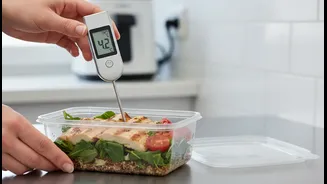
The only reliable way to know if your food is at a safe temperature is by using a food thermometer. Your sense of touch is not accurate enough to judge. A good quality digital food thermometer is an inexpensive but invaluable tool for any kitchen. When it comes to delivered food, it takes the guesswork out of safety. Think of it as a small investment in your health. Ensure the thermometer's probe is cleaned and sanitised with an alcohol wipe or hot, soapy water before and after each use to prevent cross-contamination.
How to Check the Temperature Safely
The goal is to get an accurate reading without contaminating the food. For packaged items, you don't need to pierce the packaging. Simply place the thermometer probe between two cold packages if you ordered multiple items. If you have a single vacuum-packed item, you can fold the packaging around the thermometer probe and hold it tightly. For items in a container, like a salad, you can insert the probe into the thickest part of the food, away from the sides of the container. Hold the thermometer in place until the reading stabilises. This usually takes about 15-20 seconds with a digital thermometer.
The Magic Number for Cold Food
So, what temperature are you looking for? According to food safety authorities, including India's FSSAI, cold foods must be kept at or below 5°C (41°F). If your food thermometer shows a reading higher than 5°C, the food has entered the danger zone. Frozen food should ideally arrive solidly frozen, at a temperature of -18°C or below. Any signs of thawing, like excessive ice crystals or liquid in the packaging, are red flags.
What to Do If It's Too Warm
If you measure your delivered cold food and find it is above 5°C, the safest course of action is to discard it. Do not be tempted to taste it to see if it's okay; foodborne pathogens do not necessarily alter the taste, smell, or appearance of food. The universal food safety mantra is: 'When in doubt, throw it out.' After discarding the item, contact the restaurant or delivery platform immediately. Inform them of the issue and that the food arrived at an unsafe temperature. They will typically offer a refund or a replacement, and your feedback helps them address potential gaps in their cold chain logistics.