


Why Your Desk Job Is Hurting Your Neck
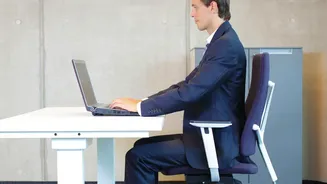
Modern work often means spending eight or more hours sitting down, staring at a computer. This prolonged static position takes a toll. When you lean forward to see a screen, your head's effective weight on your cervical spine increases dramatically, forcing
your neck and shoulder muscles to work overtime. This habit leads to a cascade of issues: rounded shoulders, a strained upper back, and persistent tension. Over time, this poor posture, often called 'tech neck', can contribute to chronic pain, stiffness, and even headaches. The good news is that incorporating small, mindful movements into your day can counteract these effects, improve blood flow, and restore comfort.
1. Seated Cat-Cow
This classic yoga pose is excellent for waking up your spine and relieving back stiffness. Sit on the edge of your chair with your feet flat on the floor, hip-width apart, and place your hands on your knees. On an inhale, gently arch your back, lift your chest, and look up slightly, drawing your shoulders away from your ears—this is 'Cow' pose. As you exhale, round your spine, tuck your chin to your chest, and let your head hang heavy—this is 'Cat' pose. Continue flowing between the two movements, letting your breath guide you. Repeat for 5 to 8 slow breaths to increase mobility and release tension along your entire spine.
2. Neck Tilts (Ear-to-Shoulder)
This gentle stretch targets the tight muscles on the sides of your neck, a common area for holding stress. Sit tall with your shoulders relaxed and down. Inhale, and as you exhale, slowly drop your right ear toward your right shoulder. Don't force it; just let gravity do the work. You should feel a gentle stretch along the left side of your neck. To deepen the stretch slightly, you can place your right hand gently on the side of your head, but avoid pulling. Hold for 15 to 30 seconds while breathing deeply, then slowly return to the center and repeat on the left side.
3. Chin Tucks
Chin tucks are crucial for counteracting the forward-head posture that comes from looking at screens. This simple move helps strengthen the muscles at the back of your neck. Sit upright and look straight ahead. Gently draw your chin backward as if you are trying to make a double chin, keeping your head level. You will feel a stretch at the base of your skull and the back of your neck. Hold this position for 5 to 10 seconds before releasing. Repeat this movement 5 to 10 times. It's a subtle but powerful exercise for retraining your posture.
4. Seated Spinal Twist
A spinal twist helps to release tension in the back and shoulders while improving mobility. Sit tall in your chair with both feet on the floor. On an exhale, gently twist your torso to the right, using your hands to help. Place your left hand on the outside of your right thigh and your right hand on the back of the chair for support. Keep your hips facing forward as much as possible and use the twist to look over your right shoulder. Hold for three to five deep breaths, lengthening your spine with each inhale and gently deepening the twist with each exhale. Slowly unwind and repeat on the other side.
5. Eagle Arms
This pose provides an intense stretch for the upper back and shoulders, specifically targeting the area between the shoulder blades where tension often accumulates. Extend your arms straight out in front of you. Cross your right arm over your left, then bend your elbows. You can either press the backs of your hands together or wrap your right hand around to press your palms together. Lift your elbows to shoulder height while gently moving your hands away from your face. You should feel a deep stretch in your upper back. Hold for 15 to 30 seconds, breathing into the space between your shoulder blades, then unwind and repeat with the left arm on top.
6. Seated Forward Fold
End your stretch session by releasing your entire back and neck. Sit toward the edge of your chair with your feet wide apart and flat on the floor. With a long spine, hinge at your hips and gently fold forward, letting your torso rest on your thighs. Allow your head and neck to hang completely heavy, releasing all tension. You can let your arms dangle toward the floor or rest your hands on your ankles. Stay here for five deep breaths, feeling the release in your lower back, upper back, and neck. To come up, press your feet into the floor and slowly roll your spine up one vertebra at a time.