





What Exactly is a Hydrogen Train?
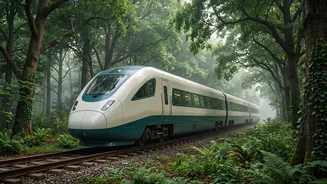
A hydrogen train, often called 'Hydrail', is essentially an electric train that carries its own power source. Instead of drawing electricity from overhead wires, it uses a Proton Exchange Membrane (PEM) fuel cell to generate power onboard. In this cell,
hydrogen stored in high-pressure tanks reacts with oxygen taken from the air. This clean electrochemical reaction produces electricity to power the motors, with the only by-products being water vapour and heat. This means there is no combustion, no smoke, and zero carbon emissions from the train itself, making it a silent, non-polluting alternative to traditional diesel engines.
Why Heritage Routes are the Perfect Starting Point
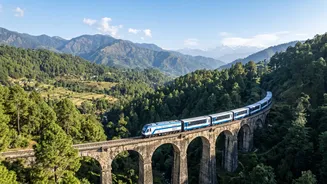
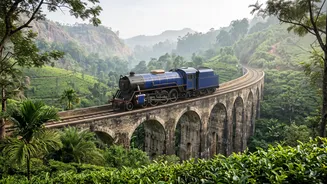
Indian Railways' 'Hydrogen for Heritage' initiative is a strategic choice to deploy this new technology on its most scenic and ecologically sensitive routes. Many of these narrow-gauge mountain corridors, like the Kalka-Shimla line, are UNESCO World Heritage sites where preserving the pristine environment is paramount. Installing overhead electric lines in these difficult terrains is often impractical and would mar the natural beauty and historic character of the routes. Diesel locomotives, the current standard, cause both air and noise pollution. Hydrogen trains offer a solution that eliminates emissions on these sensitive corridors, aligning with India's goal of achieving Net Zero emissions by 2070 and decarbonising the railways by 2030. The project aims to run 35 hydrogen trains across various heritage routes.
The Journey So Far: From Pilot to Plan
The journey began with a successful pilot project on the 89-km Jind-Sonipat section in Haryana, where India's first hydrogen-powered passenger train was flagged off on July 17, 2026. This broad-gauge train, designed and built in India, served as a crucial proof of concept, allowing the Railways to test the technology, safety protocols, and operational viability under real-world conditions. An integrated hydrogen production and refuelling facility was established at Jind to support this pilot. Following the experience from the Jind-Sonipat run, Indian Railways is now actively exploring the deployment of this technology on heritage routes, with the Kalka-Shimla railway being a prime candidate. While initial plans in previous years faced delays, the success of the pilot has renewed momentum for these heritage projects.
The Uphill Climb: Challenges and Costs
Despite the promise, the road to a hydrogen-powered heritage fleet has its challenges. The primary hurdle is the high initial cost. Each train is estimated to cost around ₹80 crores, with an additional ₹70 crores needed for ground infrastructure like refuelling stations for each route. Furthermore, the entire ecosystem for producing, transporting, and storing green hydrogen (hydrogen produced using renewable energy) is still in its infancy in India. This makes the fuel expensive compared to diesel, at least initially. Safety is another critical consideration; hydrogen is highly flammable and requires specialised storage cylinders, handling procedures, and monitoring systems to prevent leaks and ensure passenger safety.
A Greener Future for India's Past
The 'Hydrogen for Heritage' project is more than just a technological upgrade; it's a statement. It positions India among a select group of nations like Germany and Japan that are pioneering hydrogen rail technology. By focusing on heritage routes, Indian Railways is creating a powerful symbol of progress that respects the past. It demonstrates a commitment to preserving the country's rich railway history while simultaneously embracing a sustainable, carbon-neutral future. As the technology matures and costs decrease, the lessons learned from these mountain railways could pave the way for wider adoption of hydrogen trains across the non-electrified parts of the vast Indian rail network, significantly reducing the nation's dependence on fossil fuels.