



The Old Way of Judging a Planet
For decades, the primary indicator of a planet's geological activity was its internal heat. Like a giant baked potato pulled from the oven, a planet is thought to be hottest right after its formation. Larger planets, like Earth and Venus, retain this
primordial heat for billions of years. This heat, along with the ongoing decay of radioactive elements in the mantle, drives processes like volcanism and plate tectonics. Smaller worlds, like Mars or our Moon, cool off much faster due to their larger surface-area-to-volume ratio, causing their geological engines to stall. Based on this model, astronomers often assumed that smaller, older, or more distant exoplanets were likely to be cold, dead worlds. Without a powerful internal furnace, their surfaces would be static, unable to support the dynamic processes that shape a planet and potentially create habitable conditions.
A Hidden Engine: Tidal Heating
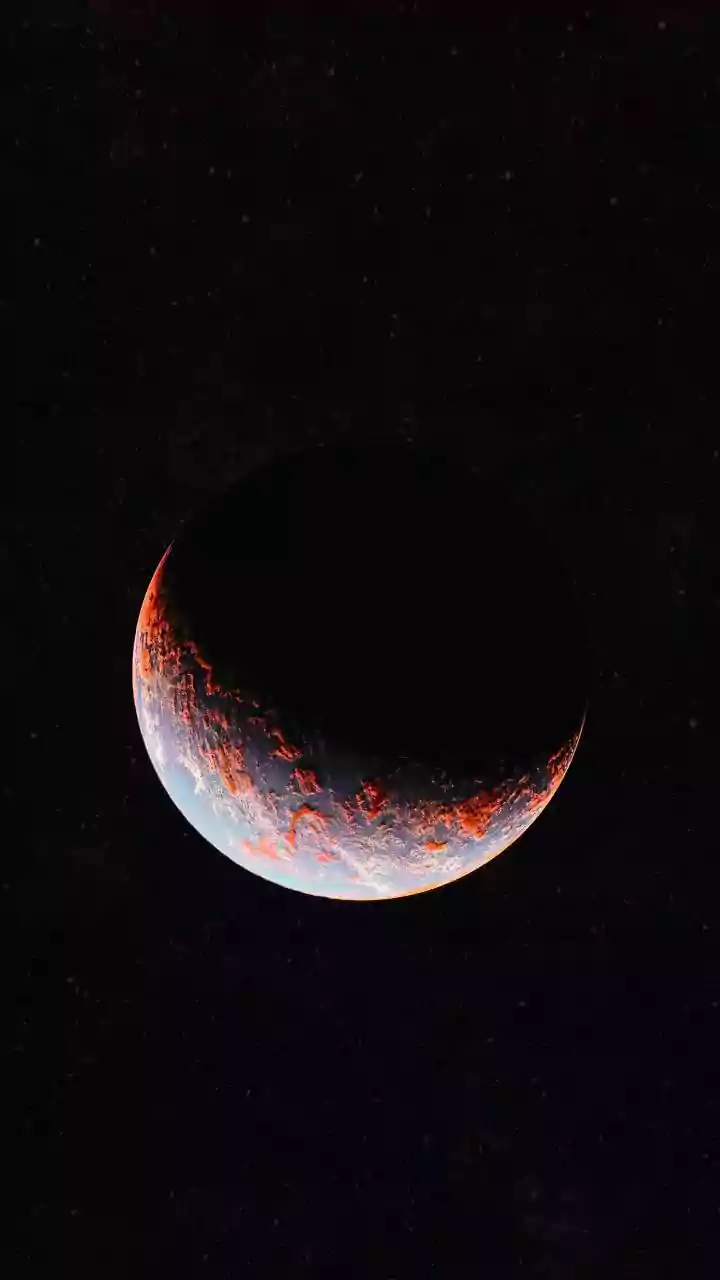
A different mechanism, however, can keep a planet's interior churning long after its initial heat has faded: tidal heating. This phenomenon occurs when a planet or moon orbits a much larger body, like a gas giant, in a slightly elliptical (non-circular) path. The powerful, fluctuating gravitational pull from the parent body constantly stretches and squeezes the smaller world’s interior. This relentless flexing generates immense friction and heat. It’s a bit like continuously squeezing a piece of modelling clay until it gets warm. This process can be powerful enough to melt rock into magma or maintain vast oceans of liquid water beneath thick shells of ice, fundamentally changing our understanding of what makes a world 'active'.
Clues from Our Own Solar System
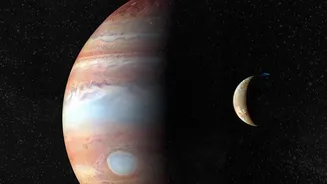
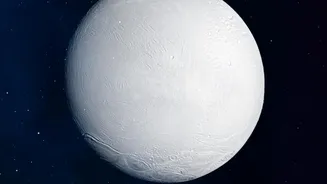
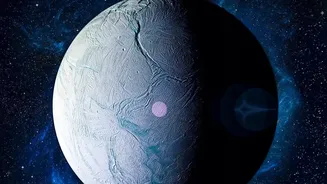
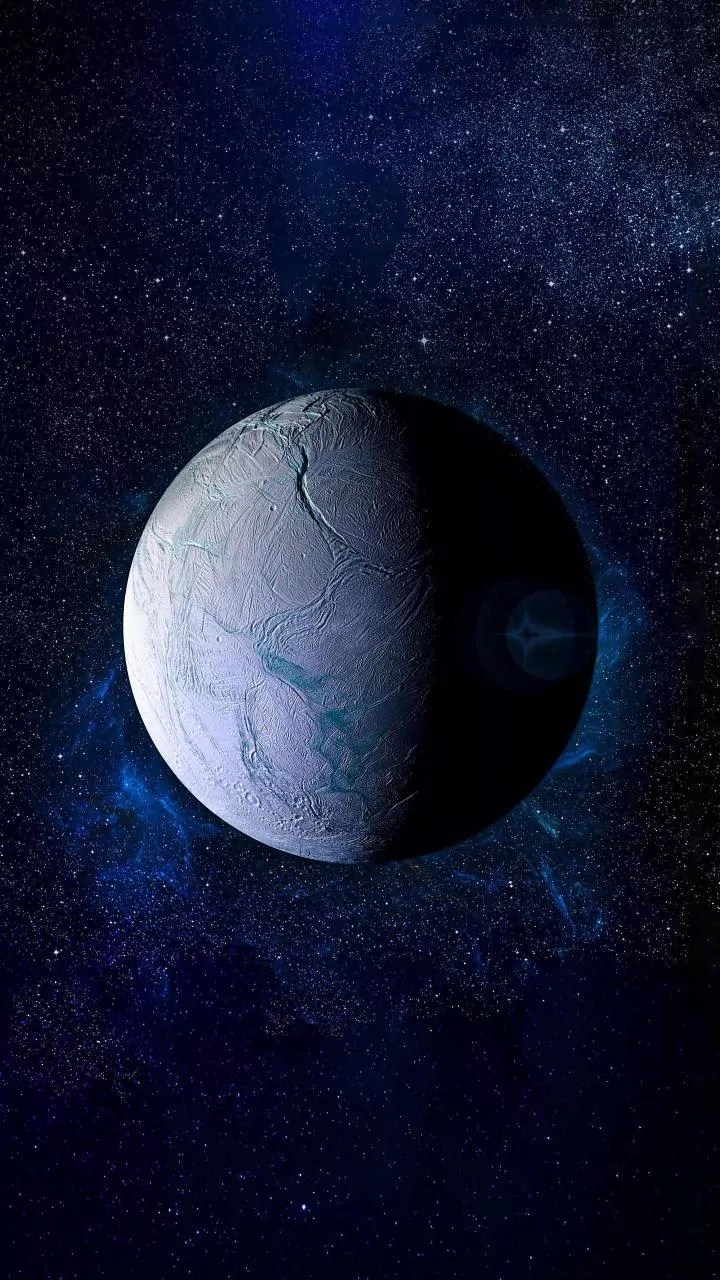
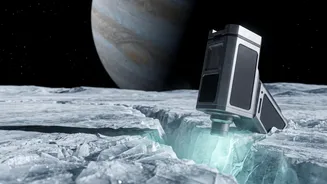
We don't have to look to distant star systems to see tidal heating in action. Jupiter’s moon Io is the most volcanically active body in our solar system, a direct result of the immense gravitational tug-of-war between Jupiter and other nearby moons. This keeps Io’s interior molten and its surface in a constant state of eruption. Similarly, Saturn’s moon Enceladus and Jupiter’s moon Europa, though appearing as placid balls of ice, are believed to host massive subsurface oceans of liquid water. These oceans are kept from freezing solid by the heat generated from tidal forces, which drives plumes of water vapour into space from Enceladus’s surface and could support hydrothermal vents on the seafloor, similar to those on Earth.
Expanding the Search for Habitable Worlds
The implications of long-lived tidal heating are profound for the search for life beyond Earth. Traditionally, the 'habitable zone' is defined as the orbital distance from a star where a planet could host liquid water on its surface. But tidal heating breaks these rules. A frozen world, far outside the conventional habitable zone, could still maintain a liquid water ocean beneath its icy crust. This significantly expands the number and types of places where life might exist. Instead of needing a large, rocky planet with its own internal heat source, a smaller moon orbiting a gas giant could be just as promising a candidate. This forces a rethink of planetary habitability, suggesting that the conditions for life might not depend solely on the light from a parent star, but also on the gravitational dance between a moon and its planet.
How We Search for These Active Worlds
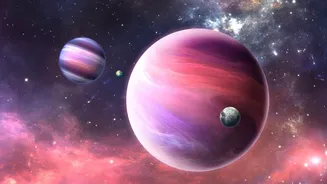
Detecting this hidden activity from light-years away is a challenge, but modern astronomy is rising to the occasion. Telescopes like the James Webb Space Telescope (JWST) can analyse the atmospheres of exoplanets with incredible precision. By studying the chemical composition of an atmosphere, scientists can look for gases like oxygen or methane that might be released by geological processes, such as magma oceans interacting with the atmosphere. The presence of these gases could hint at an active interior, even if the planet's surface appears dormant. These new observational capabilities allow astronomers to connect the dots between a planet's atmosphere and the hidden geological processes that may be occurring deep within, providing a new toolkit to identify worlds that are far more dynamic than they seem.