




Terror at 33,000 Feet
On a recent Flydubai flight to Tel Aviv, passengers heard screams from the cockpit as the plane suddenly dropped thousands of feet. According to Israeli officials, a violent confrontation occurred between the two pilots. The captain, an Indian national,
was allegedly stabbed by his co-pilot. Despite being seriously injured, the captain managed to open the cockpit door, which allowed passengers and crew to intervene and subdue the attacker. The plane, which had transmitted emergency signals for unlawful interference, was diverted and landed safely in Saudi Arabia. The incident, which is being investigated, highlights an extreme but crucial reason for having more than one pilot at the controls.
What is Pilot Redundancy?
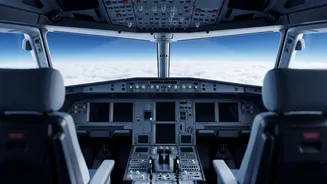
In engineering, redundancy means having backup systems in place in case a primary component fails. In aviation, this concept is applied to everything from hydraulic systems and flight computers to engines. But the most important redundant system on any aircraft is human. Pilot redundancy isn't just about having a second person to fly the plane if the first one becomes incapacitated; it's a comprehensive safety philosophy. It ensures that every critical decision, action, and calculation is cross-checked by another trained professional, drastically reducing the chance of a single human error leading to a catastrophe.
The Power of Two
Modern commercial aircraft are complex machines, and operating them, especially during critical phases like takeoff, landing, or an emergency, is a demanding task. Having two pilots allows for the division of labour, which reduces workload and prevents fatigue from overwhelming a single individual. One pilot can focus on flying the aircraft ('pilot flying'), while the other manages communications, checklists, and system monitoring ('pilot monitoring'). This collaborative approach is a core part of what is known as Crew Resource Management (CRM), a set of training procedures focused on communication, teamwork, and decision-making in the cockpit. CRM was developed specifically to prevent accidents caused by human error and a breakdown in cockpit cooperation.
A Shield Against the Unforeseen
While a violent attack like the one on the Flydubai flight is incredibly rare, pilot incapacitation is a very real risk. This can happen for numerous reasons, from a sudden medical emergency like a heart attack to subtle issues like fatigue or hypoxia. In such scenarios, the second pilot is trained to take full command of the aircraft, manage the situation, and land safely. This built-in backup ensures the continuity of operations without endangering the passengers and crew. The presence of two pilots provides a crucial safety net for handling not just expected tasks but also unpredictable events.
Can Automation Replace a Pilot?
As flight automation becomes more sophisticated, some have questioned the need for two pilots, particularly on long-haul cargo flights. However, pilots' associations and safety experts argue forcefully against this. While modern systems are incredibly reliable, they are not infallible and cannot replicate human instinct, adaptability, and problem-solving in a novel crisis. Automation can fail, and unexpected events, from severe weather to a flock of birds, require the kind of judgment that only trained human minds can provide. In the Flydubai incident, technology could not have resolved the crisis; it required human intervention from the captain, passengers, and other pilots on board to avert disaster.