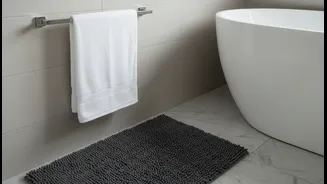









More Than a Puddle Catcher
The humble bath mat is your first line of defence against slips and falls on a wet floor, a crucial safety feature in any bathroom. But its role extends far beyond basic safety. The right mat provides a moment of comfort, saving your feet from the shock
of a cold tile floor. It also protects your flooring from water damage by absorbing drips and splashes that would otherwise seep into grout and subfloors. More than just a utility item, a bath mat contributes to the overall hygiene of the room. By catching water, it helps prevent the damp conditions that can lead to mildew. Aesthetically, it can tie the room together, adding a touch of colour, texture, and personality to an otherwise sterile space.
Choosing Your Foundation
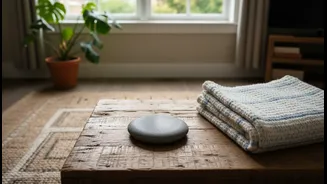
Bath mat materials have evolved significantly, offering options for every preference. Traditional cotton mats are known for their softness and absorbency, providing that classic, plush feel underfoot. For those prioritising quick-drying properties, microfibre is an excellent choice, as its fine fibres are highly absorbent and release moisture faster than cotton. A modern and increasingly popular option is the diatomaceous earth stone mat. Made from fossilised algae, these hard mats absorb water instantly, causing it to evaporate in minutes. They are exceptionally hygienic, as their dry surface resists mould and bacteria growth. For a spa-like aesthetic, bamboo or teak mats offer a natural, water-resistant surface that feels clean and modern, though they provide less cushioning.
The Unsung Hero: The Towel Rail
Moving from the floor to the walls, the towel rail is another fixture that punches well above its weight. While a simple hook is a common space-saver, it is often a poor choice for drying. Towels bunched on a hook trap moisture in their folds, slowing down drying time and creating a breeding ground for bacteria and that musty, mildew smell. A towel rail, by contrast, allows the towel to be spread out flat. This simple act exposes the entire surface to air, enabling it to dry two to three times faster. This not only ensures you have a dry, fresh towel for your next use but also significantly improves the overall hygiene of your bathroom, especially in humid climates like those prevalent in India during monsoon season.
Finding the Right Fit
Towel rails come in various forms to suit different needs and spaces. Standard wall-mounted bars are a classic, offering a neat and organised look. In smaller bathrooms where wall space is at a premium, over-the-door racks or compact 12-inch bars can be effective solutions. For the ultimate upgrade, consider a heated towel rail. These are especially beneficial in damp or cold climates, as they use a small amount of electricity to gently warm the bars, dramatically speeding up drying time and killing moisture-loving bacteria. Modern heated rails are energy-efficient, often equipped with timers and thermostats, and add a touch of daily luxury by providing a warm towel after every shower. They are no longer just a luxury for hill stations; in humid coastal areas, they are a practical tool against dampness.
A System for a Better Bathroom
The true improvement comes when you view these items not in isolation, but as a system working together. A highly absorbent bath mat keeps the floor dry and safe. A well-chosen towel rail ensures your towel is dry and hygienic. Together, they tackle the primary challenge of any bathroom: managing water and moisture. By efficiently drying both the floor and your linens, you create an environment that is cleaner, fresher, and healthier. This functional harmony has a psychological benefit, too. An organised, dry, and comfortable bathroom reduces minor daily frictions and turns a routine task into a more pleasant, spa-like experience. It’s a small investment in hardware that pays significant dividends in daily well-being.