

The Moon's Untouched Time Capsule
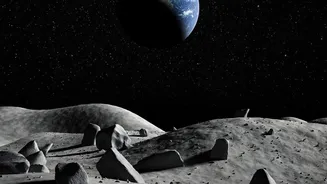
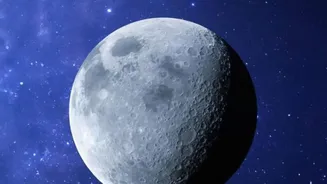
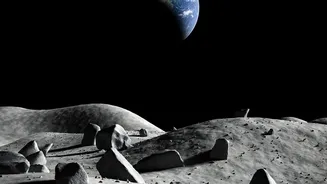
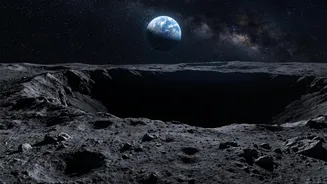
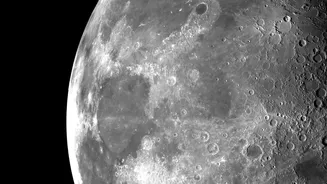
For billions of years, the Moon has been an almost perfectly preserved archive. Without a significant atmosphere, wind, or water, its surface is a time capsule, holding clues to the formation of our solar system. In its permanently shadowed craters, particularly
near the South Pole, temperatures are cold enough to have trapped water ice and other volatile compounds for eons. Scientists believe these icy deposits could contain materials delivered by comets and asteroids from the dawn of the solar system, potentially holding secrets about how life began on Earth. The unique chemical composition, undisturbed for so long, is what scientists refer to as its "pristine chemistry.". Studying this ancient material is a top priority, but it presents a paradox: to study it, we must go there, and going there could destroy it.
The Risk of Contamination
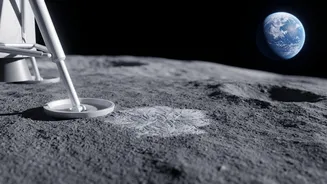
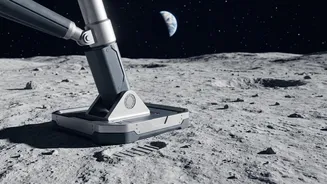
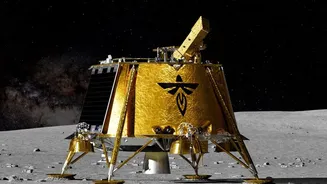
Every human mission carries the risk of contamination. The first and most obvious source is rocket exhaust. Computer simulations from the European Space Agency show that methane from a lander's engines could spread across the entire lunar surface in a matter of days. Because the Moon has virtually no atmosphere, these molecules don't disperse; they 'hop' across the surface in ballistic trajectories, eventually settling in the same cold, shadowed craters that hold the precious ice. Beyond exhaust, there's the unavoidable reality of biology. Humans carry billions of microbes. Recent NASA studies have shown that some of these hardy organisms, like certain fungi and bacteria, could survive in the sheltered, cold regions of the lunar south pole. Even if they don't thrive or reproduce, their dead cells and chemical signatures could contaminate samples, making it impossible for future scientists to distinguish between genuine lunar material and what we brought with us.
NASA's Investigative Approach
Recognizing the threat, NASA and other space agencies are taking the issue seriously. The core of the investigation is to understand the risks before they become reality. NASA is actively funding research to determine which Earth-based microbes are most likely to survive the journey and the lunar environment. By identifying the hardiest organisms, such as the fungus Aspergillus niger, they can develop more effective sterilization and decontamination protocols for landers, equipment, and spacesuits. Furthermore, scientists are modeling the dispersal of contaminants to predict where they are most likely to accumulate. This work will inform landing site selection for future Artemis missions, potentially creating zones of scientific priority that are kept off-limits to minimize disturbance. The goal isn't to stop exploration, but to make it smarter. As one NASA scientist put it, the challenge is to "characterize lunar chemistry before our visits change what we will find."
The Stakes for Future Exploration
The debate over lunar contamination highlights a fundamental tension in space exploration: the drive to explore versus the need to preserve. The scientific value of the Moon's pristine ice is immense, offering a potential window into our own origins. If we contaminate this finite resource, we may lose those answers forever. This has massive implications for the burgeoning business of space. As nations and private companies from the US, China, India, and beyond plan for lunar bases, mining operations, and even tourism, the need for clear guidelines becomes urgent. The findings from NASA's current investigations will not only shape the protocols for the Artemis missions but could also form the basis for future international treaties governing activity on the Moon. Establishing these rules of the road is essential to ensure that the pursuit of commercial opportunities and a sustained human presence does not come at the cost of irreplaceable scientific discovery.