







The Anatomy of 'Work-From-Home Back'
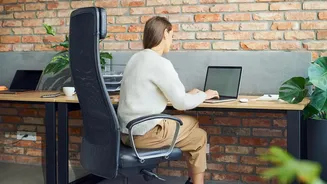
When you work from home without a proper office setup, your body pays the price. Slouching on a couch, hunching over a coffee table, or perching on a dining chair forces your spine out of its natural alignment. This poor posture places continuous strain
on the muscles, ligaments, and discs in your back and neck. Unlike acute pain from a sudden injury, this is a problem of accumulation. Day after day, the subtle stress builds up, leading to muscle fatigue, stiffness, and persistent pain that can become a chronic condition. This happens because your body wasn't designed to stay in one static, unsupported position for eight hours a day.
Your Chair: The Foundation of Good Posture
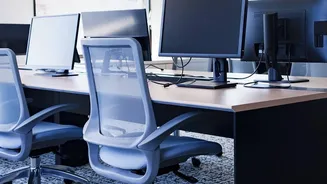
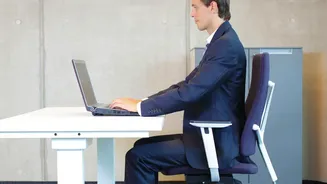
An ergonomic chair is more than just a comfortable seat; it's a tool for spinal health. The most crucial feature is lumbar support, which is designed to maintain the natural inward curve of your lower back. Without this support, people tend to slump, which flattens the curve and puts pressure on the spinal discs. A good chair should also be adjustable. The ideal seat height allows your feet to rest flat on the floor with your knees at or slightly below hip level. Armrests should support your elbows at a roughly 90-degree angle, allowing your shoulders to relax instead of hunching up toward your ears. Even without a pricey chair, you can replicate this support by using a rolled-up towel for your lower back and a footrest if needed.
Screen Height and the 'Tech Neck' Problem
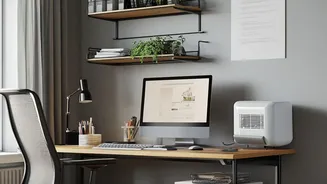
If your workday ends with a stiff neck and headaches, you might be a victim of "tech neck." This term describes the strain caused by looking down at a screen for prolonged periods. Your head is heavy, and tilting it forward significantly increases the load on your cervical spine. A laptop on a desk is almost always too low, forcing you to hunch over. The solution is simple: raise your screen so that the top of it is at or just below eye level. This allows you to keep your head in a neutral position, with your ears aligned over your shoulders. You don't need a fancy monitor stand; a stack of sturdy books can work just as well to bring your laptop or monitor to the correct height.
Beyond the Gear: The Power of Movement
Even the most perfectly ergonomic setup cannot undo the damage of being completely sedentary. The human body is built to move, and staying in one position for too long can lead to muscle stiffness and reduced blood circulation. Health experts recommend breaking up long periods of sitting by getting up to move for a few minutes every 30 to 60 minutes. These movement "snacks" don't have to be complicated. You can stand up to take a phone call, walk to the kitchen for a glass of water, or do a few simple stretches at your desk. This frequent activity helps to activate muscles, reduce metabolic risks associated with sitting, and improve focus and energy levels. Remember, the best posture is your next posture.