





Securing Your E-Visa: A Simple Guide
Georgia has become a popular destination for Indian travellers, partly due to its straightforward e-visa process. You can apply entirely online through the official portal, evisa.gov.ge. The process typically requires your passport to be valid for at least
three to six months from your travel date, have at least two blank pages, and be issued within the last 10 years. You will also need to provide a digital passport-style photograph, proof of accommodation, round-trip flight itinerary, travel and health insurance, and bank statements from the last three months to show you have sufficient funds. The standard tourist e-visa costs around $20 USD, plus service and verification fees, and allows a stay of up to 30 days. Once approved, the visa is sent to your email, making it a convenient start to your Georgian adventure.
Affordable Accommodation Options
Tbilisi offers a wide range of budget-friendly places to stay. For solo travellers and backpackers, hostels in areas like the Old Town or near Fabrika provide dorm beds for approximately ₹800 to ₹1,500 per night. These are great places to meet other travellers. For couples or small groups, private rooms in guesthouses or entire apartments on Airbnb can be found for ₹3,000 to ₹4,500, often cheaper than a standard hotel in many Indian cities. Staying in neighbourhoods like Avlabari or Marjanishvili can offer better value while still being well-connected to the city centre. Booking in advance, especially during peak season, is always a smart move to secure the best prices.
Eating Well on a Shoestring
Georgian cuisine is a highlight of any trip, and you don't need a big budget to enjoy it. The city is filled with bakeries selling delicious and cheap pastries like khachapuri (cheese-filled bread) and lobiani (bean-filled bread) for just a few Lari. For a hearty and affordable meal, look for local basement restaurants or eateries like Mapshalia and Shemomechama, which are popular with locals and serve Georgian staples like Khinkali (dumplings) at low prices. Visiting the Dezerter Bazaar offers a glimpse into local life and a chance to buy fresh fruits, vegetables, and local snacks like churchkhela (a candle-shaped candy made of grape must and nuts).
Getting Around for Pennies
Tbilisi's public transport system is both efficient and incredibly cheap. The metro and city buses are the most cost-effective ways to navigate the city. A standard journey on the metro or a bus costs just 1 GEL (around ₹30). To use public transport, you'll need to purchase a Metromoney card for 2 GEL at any metro station, which you can then top up as needed. This card allows for free transfers between the metro and buses within 90 minutes of your first tap. For late-night travel or reaching areas not covered by the metro, ride-hailing apps like Bolt are widely used and significantly cheaper than hailing a taxi on the street.
Free and Low-Cost Attractions
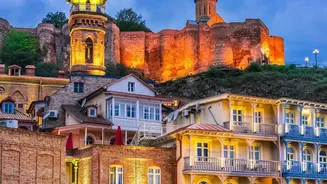
Much of Tbilisi's charm can be experienced for free. Spend a day wandering the narrow, winding streets of the Old Town, discovering hidden courtyards and historic architecture. Walk up to the Narikala Fortress for breathtaking panoramic views of the city; entry to the fortress itself is free. Other free activities include visiting the stunning Holy Trinity Cathedral (Sameba), strolling across the modern Bridge of Peace, browsing the eclectic Dry Bridge Flea Market for Soviet-era trinkets, and relaxing in Rike Park. For a few Lari, you can take a dip in the famous sulfur baths (public bath access is cheapest) or ride the funicular up to Mtatsminda Park for even more spectacular views.