

Why Venus Beckons
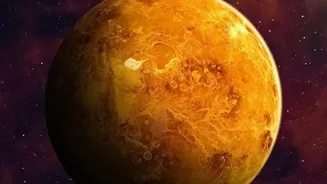
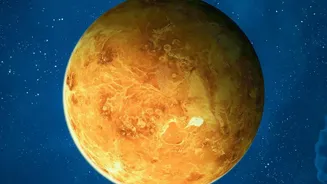
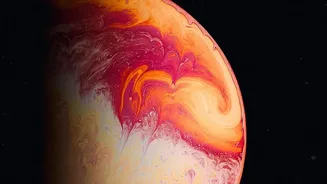
Venus is a planet of profound contradictions. It's similar to Earth in size, mass, and density, suggesting a shared origin. Yet, it evolved into the most hostile planet in our solar system, with surface temperatures hot enough to melt lead and an atmosphere
90 times denser than our own. Scientists believe it may have once hosted liquid water oceans before a runaway greenhouse effect took hold. Understanding why our planetary twin took such a different path is crucial for understanding climate change, planetary evolution, and the conditions for life on other Earth-sized planets. This makes Venus a scientific goldmine, holding cautionary tales and fundamental answers about a planet's life cycle.
Shukrayaan's Primary Goals
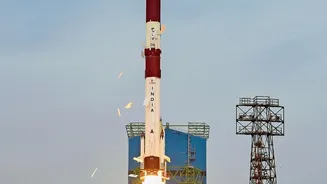
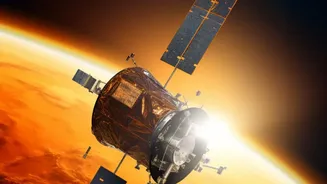
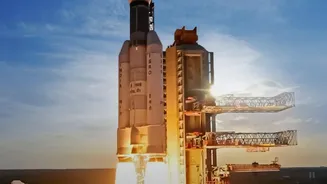
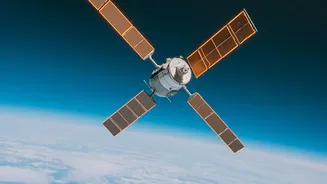
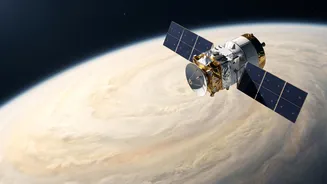
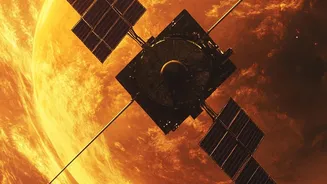
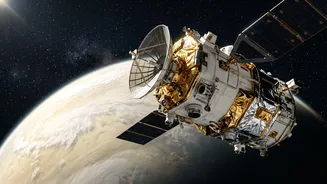
The Indian Space Research Organisation's (ISRO) Shukrayaan mission is designed as a comprehensive orbiter to conduct a thorough investigation of Venus for over four years. The mission has three main scientific pillars. The first is to map the planet's surface and, for the first time ever, its subsurface, to understand its geological processes. The second is a deep dive into the complex atmospheric chemistry, composition, and dynamics. The third pillar is to study the interaction between the intense solar wind and the Venusian ionosphere, which will provide clues about how the planet lost its water. The spacecraft, weighing around 2,500 kg, will carry about 100 kg of scientific instruments to achieve these goals.
The Atmospheric Chemistry Toolkit
To probe the secrets hidden within the thick, corrosive clouds, Shukrayaan will be equipped with a powerful set of instruments. A key payload is the Venus Infrared Atmospheric Gases Linker (VIRAL), an instrument co-developed with Russia's Roscosmos and France's CNES. VIRAL will analyse the chemical makeup of the atmosphere. This is especially important following the tentative discovery of phosphine gas in Venus's clouds a few years ago—a gas that on Earth is associated with biological activity. While the finding is debated, VIRAL has the potential to confirm or deny the presence of phosphine and other key gases. Other Indian-made sensors will include a thermal camera and cloud monitoring instruments to study cloud structure, thermal emissions, and even hunt for lightning.
Peering Beneath the Clouds
While atmospheric chemistry is a major focus, understanding what happens on the surface is just as critical. Shukrayaan's flagship instrument is a high-resolution Synthetic Aperture Radar (SAR). This powerful radar can pierce the dense cloud cover that makes the surface invisible to regular cameras, mapping the terrain day or night, regardless of weather. This SAR is an improved version of the one used on India's Chandrayaan-2 lunar orbiter and will provide resolution up to four times better than NASA's Magellan mission from the 1990s. In a global first, the mission will also carry a ground-penetrating radar to study the shallow subsurface, giving us our first-ever look beneath Venus's scorched skin to understand its stratigraphy and geological history.
A Global Scientific Collaboration
Following the successful collaborative model of Chandrayaan-1, Shukrayaan is not just an Indian effort but a global one. The mission will carry payloads from several international partners. Besides the French-Russian VIRAL instrument, a Swedish-Indian collaboration has produced the Venusian Neutrals Analyzer (VISWAS). This instrument will study how charged particles from the sun interact with the planet's upper atmosphere. Germany is also contributing an instrument to study the ionosphere. This international collaboration underscores India's growing role as a key player in planetary exploration, pooling global expertise to tackle some of the solar system's biggest questions.