


1. Raw Jackfruit: Kathal ki Sabzi
Long before it became a global vegan sensation, raw jackfruit (kathal) was celebrated in India for its unique, meaty texture. This versatile fruit shines in Kathal ki Sabzi, a rustic and robust curry. When cooked, the firm jackfruit pieces absorb spices
beautifully, creating a dish that is both hearty and flavourful. Different regions have their own versions, from dry preparations to rich gravies, but the essence remains the same: a testament to making a star out of a humble, seasonal ingredient. It’s a wonderful way to experience a traditional 'vegetarian meat' that has been part of our food culture for centuries.
2. Banana Flower: Mochar Ghonto
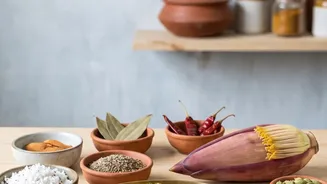
The banana flower, or 'mocha' in Bengali, is a delicacy that requires patience but rewards with a truly unique taste. Mochar Ghonto is a traditional Bengali preparation where the finely chopped blossoms are cooked with spices, potatoes, and often coconut. The process of cleaning the individual florets is labour-intensive, which is perhaps why it has become less common in modern kitchens. However, the resulting dish is a textural delight—slightly astringent, subtly sweet, and wonderfully aromatic, making it a true heritage recipe worth preserving.
3. Colocasia Leaves: Arbi ke Patode
Colocasia leaves, or 'arbi ke patte', are large, beautiful leaves that are used to create a stunning savoury snack known as Patode in North India, and Patra or Alu Vadi in other regions. A spicy-tangy paste of gram flour (besan) is slathered onto the leaves, which are then rolled, steamed, and finally sliced and fried until crisp. The leaves themselves have a mild, earthy flavour that pairs perfectly with the spiced coating. This dish is a celebration of texture and technique, turning a simple green leaf into an unforgettable treat.
4. Fox Nuts: Makhane ki Sabzi
Puffed lotus seeds, or 'makhana', are often seen as a humble fasting snack, but they have the potential to be so much more. Makhane ki Sabzi is a rich, creamy curry from North India that transforms these light, airy seeds into a luxurious main course. The makhana are typically toasted in ghee until crisp and then simmered in a flavourful gravy, often made with tomatoes, cashews, and cream. They soften slightly while still retaining a pleasant chew, absorbing the flavours of the curry to create a dish fit for a celebration.
5. Amaranth Greens: Chaulai ka Saag
While spinach and mustard greens get plenty of attention, amaranth greens, or 'chaulai', are a nutritional powerhouse that deserve more love. This leafy green is cooked into a simple but delicious 'saag' across North India. Typically prepared by sautéing the chopped leaves with garlic, onions, and minimal spices, Chaulai ka Saag allows the earthy, robust flavour of the greens to shine. It’s a quick, healthy, and incredibly flavourful dish that reminds us of the beauty of using seasonal, local produce.
6. Elephant Foot Yam: Jimikand ki Sabzi
Elephant foot yam, known as 'Jimikand' or 'Suran', might not be the prettiest vegetable, but it makes for a wonderfully hearty and delicious sabzi. With a dense, starchy texture similar to potato but with a unique earthy taste, Jimikand is often fried before being added to a spicy, tangy curry. Preparations vary, with some regions like Bihar making it in a style reminiscent of a fish curry, using a mustard-based gravy. It’s a classic example of a rustic ingredient that, when cooked with care, yields a deeply satisfying and flavour-packed dish.
7. Water Chestnut: Singhare ki Sabzi
Fresh water chestnuts, or 'singhara', are a seasonal delight with a crisp, sweet, and nutty flavour. While often eaten raw or used in flour form for fasting, they also make for an excellent curry. Singhare ki Sabzi is a lesser-known gem where peeled water chestnuts are cooked in a simple tomato and spice-based gravy. The chestnuts retain some of their characteristic crunch even after being cooked, providing a wonderful textural contrast in the sabzi. It's a simple, elegant dish that truly celebrates this unique aquatic vegetable.
8. Edible Gum: Gond ki Raab
Gond, or edible gum, is typically associated with winter ladoos, especially for new mothers. However, its use in a warm, nourishing drink called Gond ki Raab is a heritage recipe from Rajasthan and Gujarat that deserves wider appreciation. The gond crystals are puffed in ghee and then simmered in a liquid, often with whole wheat flour, jaggery, and warming spices like ginger and cardamom. This creates a comforting, porridge-like beverage traditionally valued for its strengthening properties, especially in cold weather.