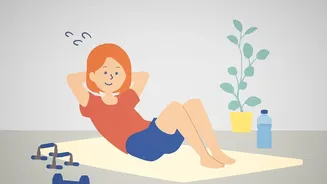









The Problem with Prolonged Sitting
Many of us spend hours at a desk, in a car, or on the couch, often more than 9.5 hours a day. This sedentary lifestyle is linked to a slower metabolism and an increased risk for several chronic conditions. Even a daily 30-minute workout may not be enough
to counteract the negative effects of sitting all day. The key isn't just to exercise more, but to sit less. Breaking up long stretches of inactivity is crucial for your health. Experts suggest taking a movement break every 30 to 60 minutes to reduce stiffness and improve circulation.
The Rise of 'Exercise Snacks'
Enter the 'exercise snack': a short, one- to five-minute burst of activity designed to be done anywhere, anytime. These mini-workouts are an effective way to improve fitness without needing a gym or special equipment. Research shows these brief sessions can improve cardiovascular health, boost your mood, increase energy levels, and even help manage blood sugar. The goal is to make movement a consistent part of your day, proving that five focused minutes daily can be more beneficial than an hour-long workout you never do.
The 5-Minute Cardio Booster
When you need a quick energy lift, a cardio-focused routine is perfect for getting your heart rate up. Try this simple circuit for five minutes. Perform each exercise for 45 seconds, with 15 seconds of rest in between. 1. Jumping Jacks: Stand with your feet together and arms at your sides. Jump your feet apart while raising your arms overhead. Jump back to the starting position. 2. High Knees: March or jog in place, bringing your knees up toward your chest as high as you can. 3. Mountain Climbers: Start in a plank position. Keeping your core tight, alternate bringing one knee toward your chest at a time, as if you're running in place.
The 5-Minute Strength Circuit
Bodyweight exercises are fundamental for building functional strength you use in everyday life. For this circuit, perform as many reps as you can of each exercise for 45 seconds, followed by 15 seconds of rest. 1. Bodyweight Squats: Stand with feet shoulder-width apart. Push your hips back and lower down as if sitting in a chair, keeping your chest up and knees behind your toes. For a modification, practice squatting down to a chair and standing back up. 2. Push-ups: Start in a plank position. Lower your body until your chest nearly touches the floor, then push back up. To make it easier, perform them on your knees or against a wall. 3. Plank: Hold a push-up position, either on your hands or forearms. Keep your body in a straight line from head to heels, engaging your core and glutes.
The 5-Minute Mobility Break
To combat the stiffness from sitting, a mobility routine can work wonders. These moves are quiet and perfect for an office environment. 1. Reverse Lunges: Step one foot back and lower both knees to about 90-degree angles, keeping your front knee over your ankle. Push off your back foot to return to standing and alternate legs. 2. Glute Bridges: Lie on your back with your knees bent and feet flat on the floor. Lift your hips toward the ceiling, squeeze your glutes, and then lower back down. 3. Torso Twists: While seated or standing, gently twist your upper body from side to side to loosen up your spine.
Making It a Habit
The key to success is consistency. The easiest way to incorporate five-minute routines is to link them to an existing habit. Do squats while waiting for your coffee to brew or lunges after a bathroom break. Set a timer to remind yourself to get up and move every 30 or 60 minutes. You can also make daily tasks more active by taking the stairs instead of the lift or walking to a colleague's desk instead of sending an email. These small, intentional movements add up, helping you build a healthier, more active lifestyle without feeling overwhelmed.