


An Orbital Succession Plan
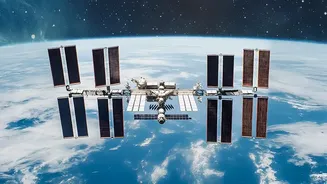
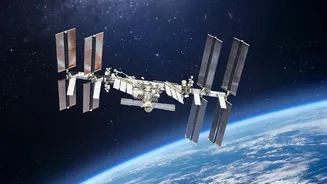
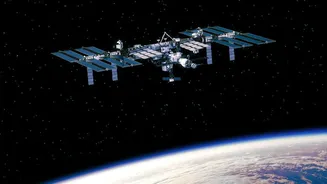
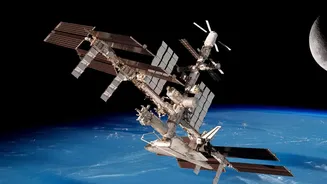
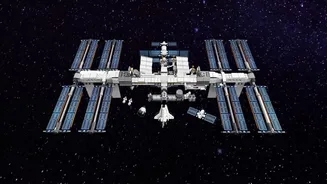
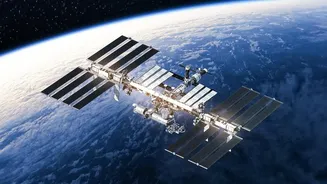
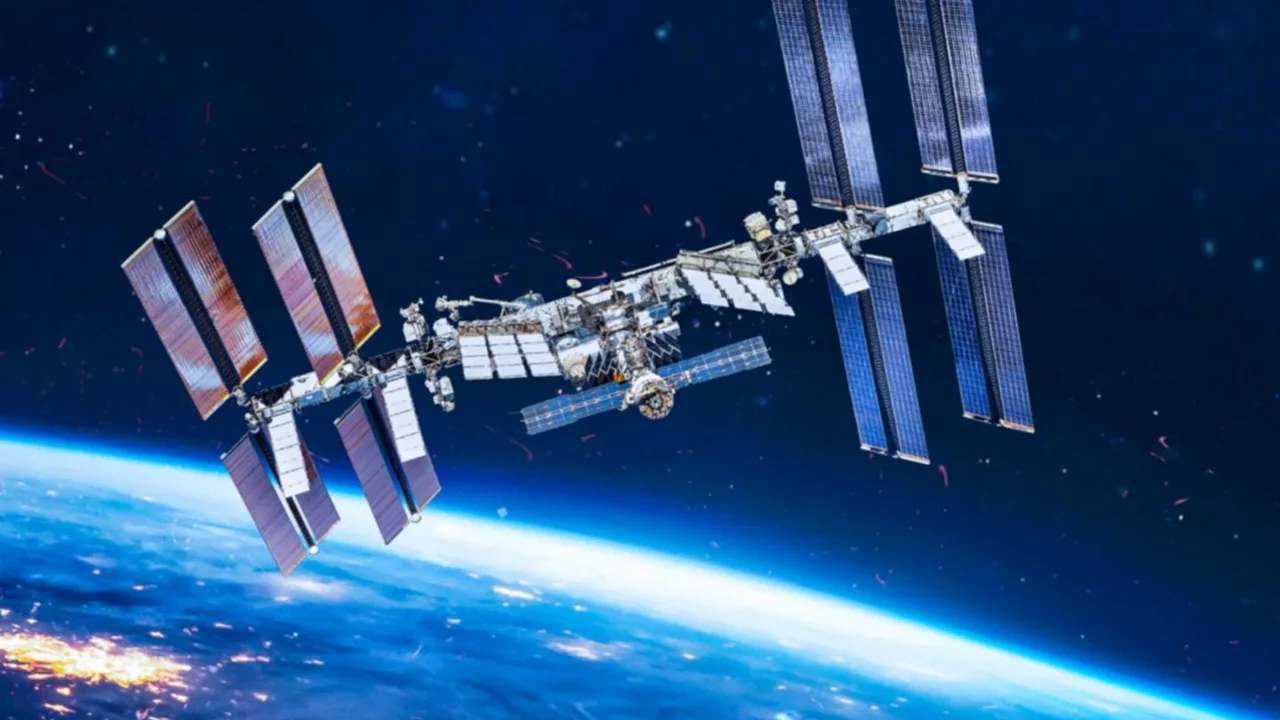
For over two decades, the International Space Station (ISS) has been humanity's lone outpost in orbit, a symbol of global cooperation and a critical laboratory for scientific discovery. But with the ISS scheduled for retirement around 2030, NASA is not
planning to build a government-owned successor. Instead, it is actively fostering a new commercial marketplace in low-Earth orbit (LEO). Through its Commercial LEO Destinations (CLD) program, NASA is funding several private companies to design and build their own space stations. The goal is to create a seamless transition, ensuring there is no gap in the United States' ability to conduct research in microgravity. NASA plans to be just one of many customers, renting space and services from these new commercial outposts for its astronauts and experiments, a model that promises to reduce costs and spur innovation.
The New Players in LEO
Several companies are leading the charge to build this new orbital real estate. Axiom Space is developing a modular station, with its first modules initially planned to attach to the ISS before detaching to become a free-flying platform. The company has revised its plans to accelerate the timeline for an independent station, targeting a launch as early as 2028. Another major venture is Starlab, a joint project between US-based Voyager Space and European aerospace giant Airbus. Starlab is designed as a single-launch station with a large habitat and laboratory module, intended to host four astronauts for research and commercial activities. Then there is the partnership between Blue Origin and Sierra Space, developing the Orbital Reef concept, envisioned as a 'mixed-use business park' in space. Sierra Space is notable for its Large Integrated Flexible Environment (LIFE) habitat, an inflatable module that launches in a compact form and expands in orbit to the size of a three-story building.
More Than Just a Room with a View
These next-generation habitats are being designed as sophisticated laboratories capable of supporting advanced scientific research. The primary draw is the unique microgravity environment, which allows for experiments impossible to conduct on Earth. Scientists can study protein crystallisation for new drug development, test advanced materials, and explore the fundamental effects of gravity on biological systems. Starlab, for instance, will feature a science park dedicated to biology, plant habitation, and materials research. Axiom Station's research and manufacturing module will provide state-of-the-art facilities for innovation. These platforms will dramatically increase access for researchers from universities, pharmaceutical companies, and other industries that were previously limited by the tight schedule and high costs of using the ISS. Many of these stations will also incorporate large Earth-observation windows, providing new opportunities for climate science and remote sensing.
The Dawn of an Orbital Economy
Beyond pure science, these commercial stations are the foundation for a much broader LEO economy. The business model extends to a variety of markets, including in-space manufacturing, technology demonstrations, and space tourism. Companies like Vast are developing stations such as Haven-1 with private astronaut missions in mind, recently signing an agreement with France for a mission in 2027. Inflatable habitats from companies like Sierra Space and Max Space promise to drastically lower the cost per cubic meter of volume in orbit, making space more accessible for a wider range of activities. This new infrastructure is expected to create a virtuous cycle, driving demand for more frequent and affordable cargo and crew launches, in-orbit servicing, and even orbital data centers, creating a self-sustaining commercial ecosystem far above the Earth.