




The Legend of a Beloved King
At the heart of the September festivities, especially Onam, is the legend of King Mahabali. Said to be a benevolent and just ruler, his reign was marked by such prosperity and equality that the gods grew envious. Lord Vishnu, disguised as a dwarf named
Vamana, tested the king's generosity by asking for three paces of land. When Vamana grew to cosmic size, covering heaven and earth in two steps, Mahabali offered his own head for the third. Impressed by his devotion, Vishnu granted him a boon: to return once a year to visit his beloved subjects. This annual homecoming is what Kerala celebrates with immense joy and gratitude.
Pookkalam: A Floral Welcome
To welcome King Mahabali, homes and public spaces are adorned with intricate floral carpets known as Pookkalam. This tradition begins on the first day of the 10-day Onam festival, with a small, simple design, often using just one or two types of flowers. Each subsequent day, a new ring of flowers is added, making the Pookkalam grow in size and complexity until it becomes a vibrant, multi-coloured masterpiece on the final day, Thiruvonam. This collective effort, often led by the women of the household, symbolises unity, creativity, and the spirit of the festive season.
Onam Sadya: The Grand Vegetarian Feast
No Onam celebration is complete without the Onam Sadya, a magnificent vegetarian feast that can feature over 26 dishes. Served traditionally on a banana leaf, the Sadya is a carefully curated culinary experience, balancing a spectrum of flavours—sweet, salty, sour, and spicy. Key dishes include 'avial' (mixed vegetables in a coconut gravy), 'sambar', 'thoran' (stir-fried vegetables), and various 'pachadi' (yoghurt-based curries), all culminating in the delicious 'payasam' (a sweet dessert). This grand meal represents abundance and is a way of showing King Mahabali that his people are happy and prosperous.
Vallam Kali: The Thrilling Snake Boat Race
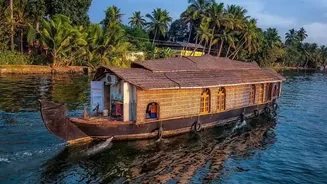
The backwaters of Kerala come alive in September with the electrifying Vallam Kali, or snake boat races. These races are a highlight of the Onam festivities. The long, elegant Chundan Vallams (snake boats), often over 100 feet long, carry more than a hundred oarsmen who paddle in perfect synchrony to the rhythm of chanting and drum beats. What began centuries ago as a form of naval warfare practice has evolved into a spectacular sporting event that embodies teamwork, community pride, and the state's deep maritime heritage.
Pulikali: The Play of the Tigers
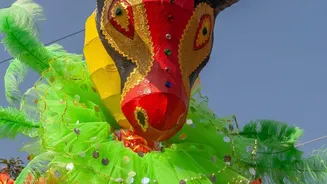
On the fourth day of Onam, the streets of Thrissur, in particular, witness a unique and vibrant folk art form called Pulikali, meaning 'play of the tiger'. Performers, with their bodies meticulously painted to resemble tigers and leopards, dance energetically to the beat of traditional percussion instruments. This 200-year-old tradition, originally introduced by a Maharaja of Cochin to showcase the 'wild and macho' spirit of his soldiers, is a spectacle of colour, rhythm, and raw energy that draws huge crowds.
Dances, Attire, and Community Spirit
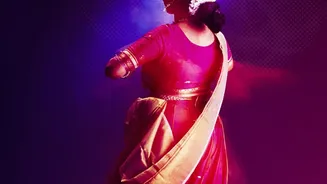
The festive spirit is also captured in traditional dances like Thiruvathira Kali or Kaikottikali, where women in classic white and gold 'kasavu' sarees dance in a circle. The tradition of wearing new clothes, known as 'Onakkodi', adds to the sense of renewal and celebration. Beyond the individual rituals, September's traditions are about fostering community spirit, with families and friends coming together to share meals, create Pookkalams, and partake in the joyous atmosphere that envelops God's Own Country.