






Lagaan: The Ultimate Underdog Story
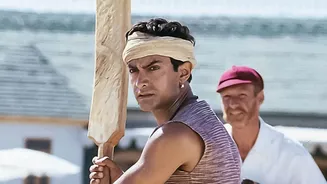
No discussion about cricket in Hindi cinema can begin without mentioning Lagaan. Released in 2001, this epic sports drama is the definitive example of using cricket as a narrative tool for patriotism and rebellion. Set in 1893 during British colonial
rule, the film sees a group of villagers, burdened by heavy taxes (lagaan), accept a high-stakes challenge from an arrogant officer: win a cricket match to have their taxes waived for three years. The problem? They have never played the game. The film masterfully chronicles their journey of learning the foreign sport, uniting a diverse group of individuals, and taking on the trained British team. The nail-biting climax of the match remains one of the most thrilling sequences in Indian film history, where every run and every wicket is laden with the hope of a nation. Lagaan was not just a film; it was an experience that captured the David vs. Goliath spirit that every cricket fan understands.
Kabhi Khushi Kabhie Gham: A Match for Family Pride
While Lagaan used cricket as its central plot, Karan Johar's 2001 blockbuster Kabhi Khushi Kabhie Gham used it for a single, yet incredibly memorable, scene that encapsulated family, pride, and a touch of sibling rivalry. In a foreign land, Rohan (Hrithik Roshan) finds himself playing a friendly match against a British team. Needing five runs off the final ball, the moment transcends a simple game. It becomes a matter of Indian pride. With a dramatic last-ball six, Rohan not only wins the match but also wins a crucial moment of approval from his elder brother Rahul (Shah Rukh Khan). The scene is famous for its over-the-top drama and a few continuity quirks that fans love to point out, but its emotional core—the idea of upholding family and national honour on the cricket pitch—made it an instant classic.
Kai Po Che!: Cricket as Friendship and Tragedy
Based on Chetan Bhagat's novel The 3 Mistakes of My Life, Kai Po Che! (2013) uses cricket not just as a sport but as the very foundation of friendship and ambition. Three friends—Ishaan, Omi, and Govind—start a sports academy to train young cricketers. For Ishaan, a passionate former district-level player, coaching a gifted young Muslim boy named Ali becomes his life's purpose. The film beautifully captures the joy and camaraderie of street cricket and local tournaments. However, the sport also becomes the backdrop for heartbreak and tragedy when the friends are torn apart by communal riots and political turmoil. The scenes of Ishaan coaching Ali are filled with hope, making the eventual tragic climax all the more poignant. It showcases how the simple dream of playing for India can be both a uniting force and a fragile hope in a divided world.
Dilwale Dulhania Le Jayenge: A Game of Charm
Long before cricket became a high-stakes plot device, Dilwale Dulhania Le Jayenge (1995) used the sport in a charmingly casual way to define its hero's character. In the fields of Punjab, Raj (Shah Rukh Khan) effortlessly joins a game with the locals, including his love interest's fiancé, Kuljeet. The scene is not about winning or losing; it's about Raj's effortless charm and his ability to fit in anywhere, a stark contrast to the aggressive and boastful Kuljeet. It’s a brief moment, but it speaks volumes, using the beloved sport to subtly establish the hero's winning personality long before he wins the girl's family over. The friendly banter and Raj's easy-going nature during the game make it a quiet but iconic reference.
M.S. Dhoni: The Untold Story: Reliving History
While many films use cricket as a narrative device, this 2016 biopic brought one of India's most iconic cricketing moments to life. The film chronicles the journey of Mahendra Singh Dhoni, from a ticket collector to India's World Cup-winning captain. The recreation of the 2011 ICC Cricket World Cup final is a standout sequence. As Sushant Singh Rajput, playing Dhoni, hits the winning six, the film taps into a raw, collective memory that every Indian cricket fan holds dear. The scene is a masterclass in building tension and delivering an emotional payoff that was felt across the country. It’s not just a reference; it's a cinematic reliving of a moment that defined a generation of Indian cricket.