








First Off, What is Gaganyaan?
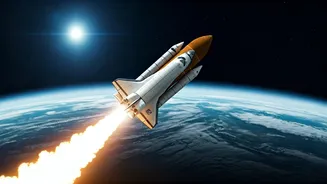
At its heart, the Gaganyaan project is the Indian Space Research Organisation's (ISRO) mission to demonstrate human spaceflight capability. The primary objective is to launch a crew of three members into a 400 km orbit for a three-day mission and bring
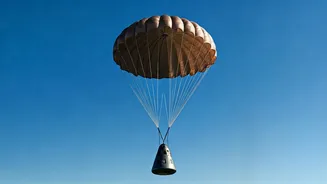
them back safely to Earth by landing in Indian sea waters. Success will make India only the fourth country in the world to independently send humans into space, joining the ranks of the United States, Russia, and China. The mission is a massive undertaking, requiring the development of critical new technologies and the human-rating of existing systems to ensure astronaut safety.
The Step-by-Step Mission Roadmap
ISRO's approach is methodical, prioritizing safety above all else. The Gaganyaan roadmap is not a single launch but a carefully planned sequence of missions. Recent updates have clarified the timeline. The first uncrewed test flight, Gaganyaan-1 (G1), is slated for the first half of 2026. This will be followed by at least two more uncrewed missions to validate every system, from the launch vehicle to the life support systems. One of these flights will feature 'Vyommitra', a sophisticated humanoid robot, to simulate human functions and test the cabin environment. Only after these extensive tests are successfully completed will the first crewed mission, Gaganyaan-4 (H1), launch, which is currently targeted for 2027.
The Tech Making It Happen
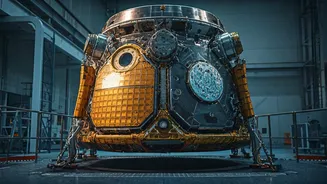
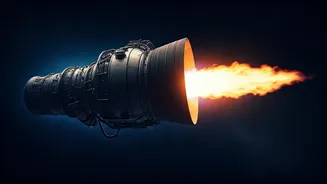
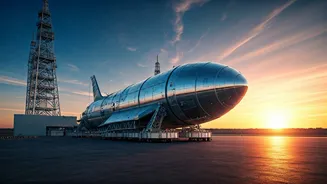
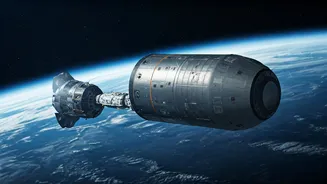
Sending humans to space requires a technological leap. The powerhouse for the mission is the Human-Rated LVM3 rocket (HLVM3). While the LVM3 is ISRO’s reliable heavy-lift launcher, it has been significantly re-engineered with redundancies and safety systems for this mission. The astronauts will travel in the Orbital Module, which has two parts: the Crew Module, a pressurised cabin that will be their home in space, and the Service Module, which provides propulsion, power, and other support. A critical component is the Crew Escape System, a mechanism designed to pull the crew module and its occupants safely away from the rocket in case of a launch emergency. ISRO has conducted numerous tests, including Pad Abort Tests and Air Drop Tests, to perfect these life-saving technologies.
Meet the Vyomanauts
The mission is ultimately about the people. The four astronaut-designates, all distinguished pilots from the Indian Air Force, are undergoing rigorous training for this historic flight. Known as 'Vyomanauts' (from the Sanskrit word 'Vyoma' for space), their preparation is extensive and multi-faceted. After completing generic space flight training in Russia, their mission-specific training is now happening in India at ISRO's Astronaut Training Facility in Bengaluru. This involves academic courses, physical fitness, intense simulator training to handle all possible scenarios, and survival training for post-landing recovery. This comprehensive regimen ensures they are prepared for every aspect of their journey into orbit and back.
Why Gaganyaan Is a National Milestone
Gaganyaan is more than just a single mission; it represents a new era for India. Its success will be a landmark achievement, showcasing the nation's scientific and technological prowess on the global stage. The program is a catalyst for advancements in fields like materials science, life support systems, and avionics. It also boosts Indian industry, with hundreds of companies contributing to the project. Beyond the geopolitics and technology, Gaganyaan aims to inspire a generation. Much like the space programs of other nations did, ISRO hopes this mission will ignite curiosity and encourage young Indians to pursue careers in science, technology, engineering, and mathematics, securing the nation's future as a leader in space exploration.