





What Exactly Is PJ.2.1?
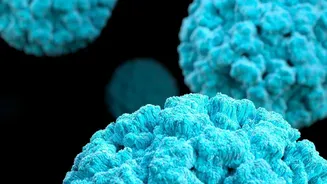
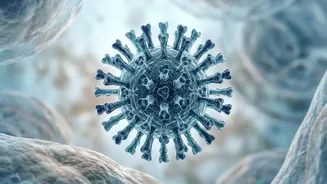
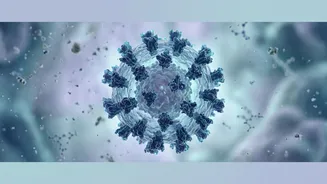
PJ.2.1 is a descendant of the Omicron family of SARS-CoV-2, first detected in Canada in May 2026. Scientists are monitoring it because it has a large number of mutations on its spike protein, the part of the virus that helps it enter human cells. This
high number of changes has led some researchers to classify it as a 'saltation variant', meaning it emerged with many genetic shifts at once rather than accumulating them slowly. While these mutations might help the virus bind more effectively to our cells, this doesn't automatically mean it will make people sicker.
Where Has the Variant Been Found?
Since it was first identified in May 2026, PJ.2.1 has spread to multiple countries, including the United States, Spain, France, Israel, Singapore, and Australia. While authorities are strengthening genomic surveillance in India to track its possible circulation, its widespread transmission in the country has not been confirmed. In some regions, like Ontario, Canada, it has become a frequently identified lineage, accounting for a significant percentage of sequenced cases in the early autumn of 2026. This spread is why the World Health Organization (WHO) and other health bodies are monitoring it closely.
The Key Question: Is It More Severe?
The central concern with any new variant is whether it causes more severe disease. On this front, the news is reassuring for now. Health experts and doctors have stated there is currently no established evidence that PJ.2.1 leads to a higher rate of hospitalisation or more severe COVID-19. The WHO and infectious disease specialists have noted that the available data does not show a clear difference in severity compared to earlier variants. It's crucial to distinguish between a variant spreading faster and one causing more serious illness; the two are not necessarily linked. Real-world data on hospitalisations and outcomes will continue to be the guide, rather than speculation based on genetic mutations alone.
What Are the Symptoms?
There is no unique set of symptoms confirmed to be specific to PJ.2.1. The symptoms largely overlap with other respiratory infections, including the flu and the common cold. People infected may experience fever, cough, a sore or scratchy throat, runny nose, headache, muscle aches, and fatigue. Because of this similarity, the WHO has emphasized that you cannot tell from symptoms alone what virus is causing the illness, and testing may be necessary if the diagnosis affects treatment decisions.
What Precautions Should We Take?
The emergence of PJ.2.1 is a reminder that COVID-19 has not disappeared, but it does not call for panic. Health experts advise sticking to the sensible precautions we have learned over the past few years. This includes wearing a well-fitted mask in crowded or poorly ventilated indoor spaces, practising good hand hygiene, and ensuring indoor spaces are well-ventilated. It is particularly important for older adults, those with underlying health conditions like diabetes or heart disease, and people with weakened immune systems to be cautious. If you develop symptoms, it is wise to stay home, avoid contact with vulnerable individuals, and consult a doctor, especially if symptoms persist or worsen.