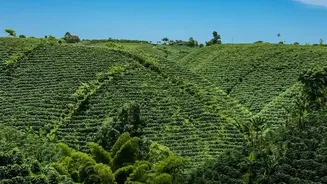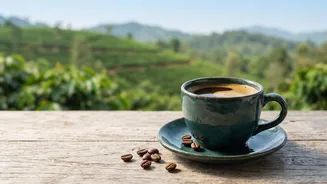








A single cup of coffee can do more than awaken your senses; it can empower communities and regenerate landscapes. In Andhra Pradesh's Araku Valley, this is not just a concept, but a reality brewed to perfection over two decades.
From Crisis to Cultivation
Just over two decades ago,
the Araku Valley was a region facing immense challenges. Inhabited by Adivasi communities, the area struggled with poverty, deforestation, and a lack of basic amenities like healthcare and schools. The land, once rich, had become degraded, and a history of shifting cultivation had taken its toll. Though coffee was introduced to the region decades earlier, its potential was largely untapped, with farmers lacking the knowledge and resources to make it a viable livelihood. This was the situation the Naandi Foundation, a non-profit organisation, encountered when it began its work in the area around the year 2000.
The 'Arakunomics' Cooperative Model
Instead of imposing a top-down solution, the Naandi Foundation developed a community-centric model that came to be known as 'Arakunomics'. The core idea was to empower the local Adivasi farmers by organising them into a large cooperative. This cooperative, the Small and Marginal Tribal Farmers Mutually Aided Cooperative Society, cuts out intermediaries, ensuring farmers get fair, premium prices for their produce. Farmers are paid directly and promptly for their coffee cherries, with higher prices for higher quality beans, incentivising excellence. This farmer-owned system now includes tens of thousands of families and manages the entire process, from cultivation to global marketing, ensuring the profits flow back into the community. This economic model was so visionary that it won The Rockefeller Foundation's Food System Vision Prize in 2020.
Beyond Organic: A Biodynamic Approach
The Araku model goes a step beyond typical organic farming by embracing biodynamic principles. This holistic approach treats the entire farm as a living organism. Farmers were trained in regenerative agricultural practices, learning to create nutrient-rich compost from local materials instead of using chemical fertilisers and pesticides. A crucial part of this strategy involves agroforestry. Millions of trees—including fruit trees like mango and papaya—have been planted. These provide essential shade for the delicate Arabica coffee plants, which improves the coffee's flavour profile while also reforesting the landscape, preventing soil erosion, and enhancing biodiversity. Today, Araku is home to the world's largest certified organic and biodynamic coffee plantation.
A Taste of Global Success
The proof, as they say, is in the pudding—or in this case, the brew. The meticulous care taken from soil to cup results in a high-quality, single-origin Arabica coffee with delicate, complex flavours. Professional cuppers have consistently given Araku coffee scores as high as 90 out of 100, a first for an Indian coffee. This quality has not gone unnoticed. In 2017, Araku Coffee opened its first flagship cafe in the heart of Paris, introducing India's specialty coffee to a discerning global audience. A year later, it won the prestigious Gold Medal at the Prix Epicures award in Paris. The coffee has since been showcased at global events like the G20 Summit and is exported to numerous countries.