


What Exactly Are AI Agents?
Before diving into the hype, it's important to understand what an AI agent is. Unlike a simple chatbot that follows a script, an AI agent is a software program designed to be autonomous. It can perceive its environment, make decisions, and take actions
to achieve a specific goal without constant human supervision. Think of it as a digital employee you can delegate a complex task to, like 'find and book a flight to Mumbai for next Tuesday', and it will figure out the steps, use the necessary tools (like a booking website), and complete the task on its own. The promise is that these agents will act as our personal concierges for the digital world.
The Hype: A Revolution in Commerce
Over the past two years, the excitement around AI agents has reached a fever pitch. Tech leaders have proclaimed that agents will 'join the workforce' and fundamentally change how companies operate. The vision is a world where instead of manually tapping through apps, we simply tell a general-purpose agent what we want, and it handles the rest. This has led to a narrative that we are on the cusp of a new interface for commerce, one where AI intermediaries could capture customer relationships, potentially reducing established apps to mere fulfillment layers. The hype suggests this isn't a distant future, but a present-day reality.
The Reality: A Trickle, Not a Flood
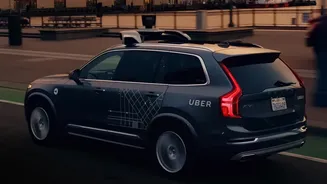
Recent earnings calls from some of the biggest names in the app economy tell a dramatically different story. During Halloween week, one of its busiest periods, Uber processed around 320 million trips and deliveries. Of those, AI agents were used to book just four rides and about 500 Uber Eats orders. DoorDash CEO Tony Xu reported a similarly low figure, stating that third-party agents had generated only 'several hundred orders' since becoming available. Meanwhile, Airbnb CEO Brian Chesky described bookings from external AI agents as 'very non-material'. These numbers are strikingly small, showing a massive gap between the futuristic vision and current consumer behaviour.
So, Where Is the AI Actually Being Used?
This isn't to say these companies aren't using AI. They are, just not in the way the mainstream hype suggests. The real action is happening behind the scenes. Uber, for instance, has heavily integrated AI agents into its internal software development lifecycle. These agents help write, review, and fix code, with some internal tools handling thousands of tasks weekly. The goal is to free up human engineers from repetitive 'toil' so they can focus on more creative work. Similarly, DoorDash uses AI agents to automate outbound calls to restaurants to place orders, a task that is tedious but crucial for operational efficiency. This has improved order success rates, especially in noisy kitchen environments. Airbnb has also found success with an AI support assistant, which now resolves about 40% of all support issues without human intervention, significantly reducing costs.
Why the Lag in Consumer Adoption?
Several factors explain why consumer-facing agents haven't taken off yet. For one, many existing apps are already incredibly efficient. Ordering an Uber takes a median of 50 seconds; it's a fast, habitual action that an AI agent doesn't necessarily make much easier. Furthermore, the technology, while impressive, isn't consistently reliable yet for complex, unsupervised tasks. Experts note issues with memory and reasoning, which can lead to errors. Finally, these platform companies are cautiously deciding how to engage with third-party agents. They control valuable customer data and relationships and are building their own proprietary agents, like the one Airbnb plans to roll out in 2027, rather than ceding control to outsiders.