






The Final Frontier for Health
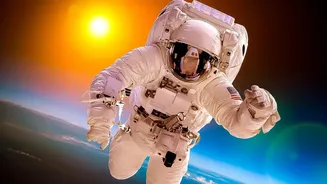
Space is an unforgiving environment for the human body. Without Earth's gravity, astronauts face a barrage of health challenges: their bones can lose density, muscles can waste away, and their cardiovascular systems have to adapt to fluids shifting towards
the head. They are also exposed to higher levels of radiation and the psychological stress of confinement and isolation. Space medicine is the specialized branch dedicated to understanding, preventing, and treating these issues. It’s not just about having a doctor on call; it’s about proactively designing systems, training protocols, and medical technologies to ensure the crew can perform their duties and return to Earth safely. For India’s Gaganyaan mission, this means developing everything from life support systems to custom-designed medical kits.
India’s Cradle of Space Medicine
At the heart of India's space medicine efforts is the Institute of Aerospace Medicine (IAM) in Bengaluru. This premier Indian Air Force institution, which played a role in Rakesh Sharma's 1984 mission, is a crucial partner for the Indian Space Research Organisation (ISRO). IAM is instrumental in astronaut selection, training, and developing the protocols to keep them healthy. The facility uses advanced simulators to prepare astronauts for the rigours of spaceflight, including high G-forces in a human centrifuge and the sensation of microgravity. In collaboration with ISRO and other institutions like AIIMS, IAM is conducting critical research into the physiological and psychological effects of space, ensuring India builds its human spaceflight capability on a foundation of solid medical science.
From Orbit to the Clinic
The extreme requirements of space travel are a powerful catalyst for innovation. Technologies developed to be compact, reliable, and capable of remote operation for astronauts often find a second life in terrestrial healthcare. This phenomenon, known as a 'spinoff', is a key justification for investing in space exploration. For instance, the need to monitor astronaut vitals from millions of miles away pioneered the field of telemedicine. Today, ISRO's satellite network is the backbone of a telemedicine program that connects doctors in urban hospitals with patients in remote and rural areas across India. Similarly, research into astronaut bone loss has advanced our understanding and treatment of osteoporosis on Earth. Digital image processing techniques developed for analysing satellite images have also improved the clarity of MRI and CT scans.
Healthcare Innovations for a Billion
ISRO has a long history of developing technologies that have benefited Indian society, with over 350 technologies transferred to various industries. In the medical field, these spinoffs are particularly impactful. ISRO has developed materials and know-how that led to low-cost, lightweight artificial limbs and heart pumps (Left Ventricular Assist Devices). The challenges of Gaganyaan are set to accelerate this trend. The mission requires indigenous bio-vests to monitor astronaut health, advanced life support systems, and compact medical diagnostic tools. The knowledge gained from creating these systems for a crew of three can be scaled and adapted to improve healthcare for over a billion people, making medical devices more affordable, accessible, and portable.