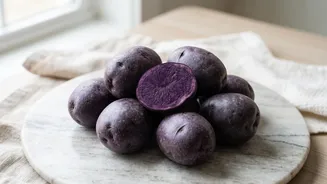







It's not every day that a potato makes headlines for its colour, but the Kufri Jamunia is no ordinary tuber. Its vibrant purple hue is just the beginning of a story that involves Indian agricultural innovation, a nutritional boost, and new hope for farmers.
An Indian Agricultural Breakthrough
Developed by the Indian Council of Agricultural Research's Central Potato Research Institute (ICAR-CPRI) in Shimla, Kufri Jamunia is a testament to years of dedicated plant breeding. Released in 2024, it's the result of a deliberate process called biofortification, which aims to increase the nutritional value of crops. This isn't just about creating a novelty item; it's about embedding better health directly into our food staples. The name 'Jamunia' is inspired by the deep purple of the Jamun fruit, hinting at the special compounds that give this potato its colour and its power. This variety builds on the success of previous coloured potatoes from ICAR, like the purple-skinned Kufri Neelkanth (2018) and the red-skinned Kufri Manik (2021). However, Kufri Jamunia is the first to have its vibrant pigment run through both the skin and the flesh, ensuring its benefits aren't lost when peeled.
A Nutritional Powerhouse
The secret to Kufri Jamunia's colour and its health benefits is a high concentration of anthocyanins, the same powerful antioxidants found in blueberries and jamun. These natural pigments are known for their anti-inflammatory properties. Each 100 grams of fresh Kufri Jamunia contains about 32-42 mg of anthocyanins, a significant amount for a staple vegetable. But the benefits don't stop there. This variety is also rich in Vitamin C (around 42-52 mg per 100g), as well as essential micronutrients like iron and zinc. This makes it a key player in the fight against 'hidden hunger,' a condition where people consume enough calories but lack essential vitamins and minerals. By packing these nutrients into a widely consumed vegetable, ICAR aims to improve public health from the ground up.
A Boon for Farmers
A new crop variety is only successful if it works for the people who grow it. Kufri Jamunia delivers on this front as well. It is a medium-maturing variety, ready for harvest in about 90-100 days. Farmers can expect a high yield of 32-35 tonnes per hectare, with trial yields reaching as high as 49 tonnes per hectare. Importantly, it produces 10-12 uniform, oblong tubers per plant and has a high marketable yield of nearly 90%. The variety also boasts good storability, with a dormancy period of 6-8 weeks, meaning the tubers do not sprout quickly and have a longer shelf life with minimal weight loss. It is recommended for cultivation across the vast potato belt of the northern, central, and eastern Indian plains, including states like Punjab, Uttar Pradesh, West Bengal, and Gujarat.
From the Kitchen to the Table
While the scientific and agricultural benefits are clear, the ultimate test is taste and usability. Kufri Jamunia has a mealy texture, which is highly desirable for many Indian culinary applications. Its purple flesh adds a novel and attractive twist to traditional dishes. It is suitable for making everything from curries, parathas, and puris to processed items like nutrient-rich flour for bakery products. Because the colour is in the flesh, it doesn't disappear during cooking, allowing for visually striking dishes. The flavour has been rated as very good, suggesting that consumers will embrace this new addition to the vegetable aisle not just for its health benefits but for its culinary qualities as well. This versatility opens up opportunities for value-added products and premium markets, potentially increasing returns for farmers.