
The Artemis Blueprint for a Lunar Economy
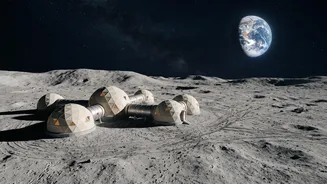
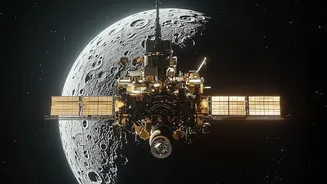
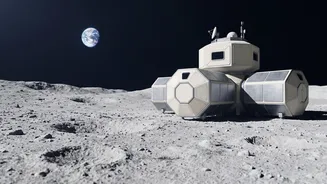
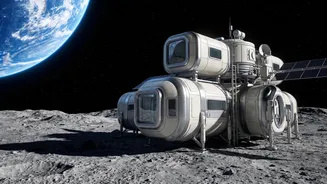
NASA's plan to establish a sustainable human presence on the Moon is a monumental undertaking. Unlike the Apollo missions, which were short-term sprints, Artemis is a marathon focused on long-term settlement. This involves establishing the Artemis Base
Camp at the lunar south pole, a project that will unfold in phases through the 2030s. India is a key partner in this vision, having signed the Artemis Accords, a set of principles for cooperation in civil space exploration. This agreement positions India not just as a collaborator but as a potential supplier for the complex systems needed to build and sustain life on another world, moving beyond just cost-effective launches to become a major player in the global space economy.
A Lunar Technology Shopping List
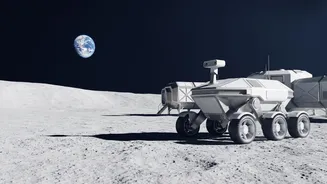
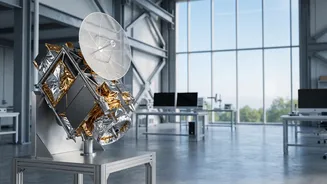
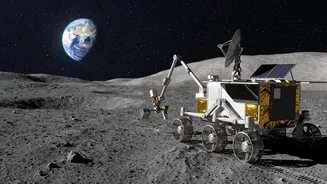
Building a lunar base is like constructing a city in the harshest environment imaginable, and it comes with a unique shopping list. NASA and its partners will need advanced robotics for construction and maintenance, and rovers for transportation. A top priority is developing In-Situ Resource Utilisation (ISRU) technology, which involves using lunar soil, or regolith, to 3D-print habitats and extract oxygen. Another critical need is power generation and storage that can withstand the long, cold lunar nights. This includes advanced solar arrays and potentially even small-scale nuclear reactors. Furthermore, closed-loop life support systems, high-bandwidth communication networks, and new lightweight materials are all essential components for the project's success. This creates a clear demand for specialised, high-tech manufacturing.
India’s Competitive Edge
India enters this new space race with several distinct advantages. The nation has a well-established reputation for 'frugal engineering'—delivering complex, high-tech projects at a fraction of the cost of its global counterparts. This was demonstrated powerfully with its successful Chandrayaan and Mangalyaan missions. India's signing of the Artemis Accords was a strategic move to avoid technological isolation and ensure its systems are compatible with global standards. The country also possesses a vast pool of talent in software development and engineering, which is crucial for the autonomous systems, artificial intelligence, and data processing required for lunar operations. With its own ambitious plans for a crewed lunar mission by 2040 and a potential lunar base by 2047, ISRO's goals are increasingly aligned with the Artemis timeline.
The Rise of India's Private Space Sector
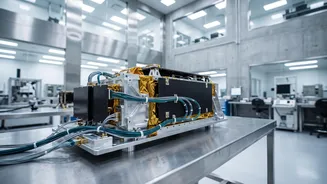
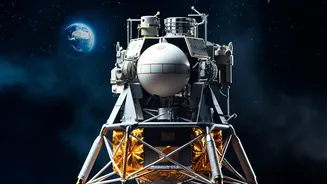
The timing could not be better for India's burgeoning private space industry. Since the sector was opened to private participation in 2020, a vibrant ecosystem of startups has emerged. Companies like Skyroot Aerospace and Agnikul Cosmos are already developing their own launch vehicles, demonstrating rapid innovation in propulsion and manufacturing. Others, like Pixxel and Dhruva Space, specialise in satellite technology and space-based services. These firms are agile, innovation-driven, and well-positioned to compete for contracts to develop specific components for the lunar base, whether it's robotic arms, communication subsystems, or landing gear. The government's push for public-private partnerships further encourages these companies to participate in large-scale projects.
From Component Supplier to Key Partner
The opportunity for India extends beyond simply supplying parts. ISRO's roadmap includes developing heavy-lift rockets, advanced life-support systems, and docking technologies, all of which are directly relevant to the Artemis program. A joint NASA-ISRO mission to the International Space Station is already planned, providing valuable experience in collaborative human spaceflight. As India develops its capabilities for its own Chandrayaan-4 sample return mission and future crewed landings, there is immense potential for deep integration. Indian companies could collaborate on designing entire modules, developing the software that runs the base, or creating the navigation systems that guide missions to the surface, evolving from a supplier to an indispensable partner in humanity's return to the Moon.