







Why Airflow is Your Garden's Best Friend
Plants need to breathe, just like we do. When leaves are packed too tightly, air can't circulate freely. This trapped, stagnant air creates a humid microclimate, which is the perfect breeding ground for fungal diseases. Issues like powdery mildew, which appears
as white spots on leaves, and other fungal spots thrive in these conditions. Proper airflow helps foliage dry quickly after rain or watering, drastically reducing the risk of these common garden ailments. It also helps strengthen stems and ensures sunlight can penetrate deeper into the plant, promoting more even and vigorous growth.
Identifying the Trouble Zones
Before you start cutting, take a moment to observe your plant's structure. Look for areas of dense growth where leaves are heavily clustered and overlapping. Pay close attention to the center of the plant, which is often the most crowded and receives the least light and air. Key signs that a plant needs thinning include branches that cross over or rub against each other, stems that grow inward toward the center of the plant instead of outward, and a general appearance so thick that you cannot see through it. Removing these problematic branches is the primary goal of this type of pruning.
The Right Tools for a Clean Cut
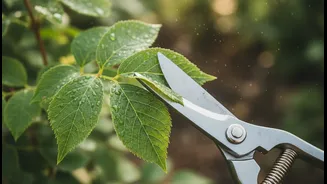
Using the right tools is essential for a clean job that helps your plants heal quickly. For most tasks, a sharp, clean pair of bypass pruners (also called secateurs) will be your best friend. These work like scissors, with two curved blades that make a clean slice on living stems up to three-quarters of an inch thick. For thicker branches, you'll need a pair of loppers, which have longer handles for better leverage. For very thick limbs, a pruning saw is necessary. No matter the tool, always make sure it is clean. Wiping the blades with rubbing alcohol between plants can prevent the spread of disease.
The Art of the Selective Cut
Pruning for airflow isn't about drastically changing the plant's size; it's about strategic removal. Start by identifying and removing any dead, damaged, or diseased branches. Next, target branches that are crossing or growing inward. When you make a cut, do it about a quarter-inch above a node (the point on a stem where a leaf or new branch emerges), ideally one that is facing outward. This encourages the new growth to go out and away from the plant's crowded center. Make your cuts at a 45-degree angle, which allows water to run off easily. The rule of thumb is to never remove more than one-third of the plant's total mass at one time, as over-pruning can cause stress.
Plants That Crave a Good Trim
While most plants benefit from good air circulation, some common Indian garden favourites particularly appreciate a regular thinning. Flowering shrubs like Hibiscus (Gudhal) and Bougainvillea are prime candidates. Pruning them after a major bloom cycle encourages new, flower-bearing growth and prevents them from becoming a tangled mess. Roses are also notoriously susceptible to fungal diseases in humid weather and benefit greatly from an open structure. Many fruit and vegetable plants, such as tomatoes and even young mango trees, will be healthier and more productive when their dense foliage is thinned to allow air and light to reach all parts of the plant.