




A New Eye on the Cosmos
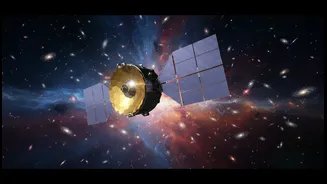
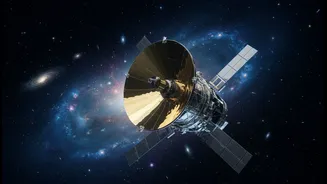
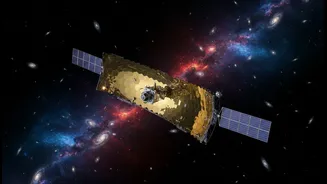
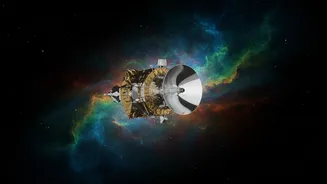
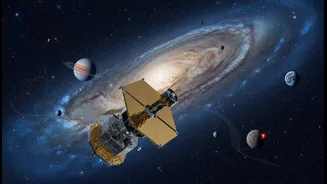
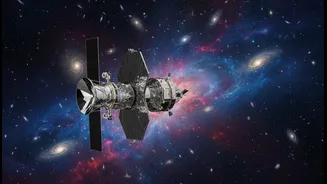
Named after Nancy Grace Roman, NASA's first chief of astronomy and the “mother” of the Hubble Space Telescope, this next-generation observatory is designed to tackle some of the biggest questions in astrophysics. Its primary goals are to investigate the mysterious
dark energy that is accelerating the universe's expansion, and to conduct a massive census of exoplanets—planets orbiting other stars. Currently at Kennedy Space Center in Florida, the telescope is undergoing final inspections and testing ahead of its launch aboard a SpaceX Falcon Heavy rocket. It will travel to a stable orbit about one million miles from Earth, a location also occupied by the James Webb Space Telescope (JWST). From this vantage point, Roman will embark on a five-year primary mission that could reshape our understanding of the universe.
The Power of a Panoramic View
While Roman has a primary mirror the same size as Hubble's—2.4 meters in diameter—its key advantage is its immense field of view. Its Wide Field Instrument will be able to capture an area of the sky more than 100 times larger than Hubble can in a single snapshot, all while maintaining similar image sharpness. This panoramic capability is a game-changer for astronomy. It transforms the telescope into a powerful survey instrument, capable of mapping vast regions of the cosmos with incredible speed and efficiency. Where Hubble might capture a stunningly detailed portrait of a single galaxy, Roman can photograph the entire galactic neighborhood in the same amount of time. Scientists have estimated that just one month of Roman's observation time could be equivalent to a century of observing with Hubble.
Hunting for Dark Energy and New Worlds
Roman's two core science objectives will leverage its wide-angle lens. To study dark energy, the telescope will map the distribution of billions of galaxies and observe distant supernova explosions. By measuring how the universe's structure has evolved over cosmic time, scientists hope to gain clues about the nature of this enigmatic force. Its second major task is to find thousands of new exoplanets. It will use two main techniques: looking for the tiny dip in starlight as a planet transits its star, and a method called gravitational microlensing. Microlensing can detect planets that are much farther away or even 'rogue' planets that don't orbit a star at all. Some estimates suggest Roman could discover around 100,000 exoplanets, a monumental leap from the roughly 6,000 confirmed to date.
A Complement to Hubble and Webb
Roman is not a replacement for Hubble or the JWST, but a powerful collaborator. Its strength lies in its ability to conduct massive surveys quickly, identifying countless objects of interest. These discoveries can then be handed off to Hubble and Webb for more focused, detailed observations. For instance, Roman's infrared surveys will create enormous catalogues of distant galaxies and newly found planets. Webb, with its unparalleled sensitivity and ability to see further into the infrared spectrum, could then zoom in on the most intriguing of these targets to study their chemical makeup or atmospheric properties. This synergy allows each telescope to play to its unique strengths, creating a more complete picture of the cosmos than any single observatory could achieve alone.
The Final Stretch to Launch
With the telescope having arrived at Kennedy Space Center in June, preparations are in full swing. Engineers have carefully moved the observatory into a vertical position and are conducting a series of final system checkouts, functional tests, and inspections. Soon, it will be fueled and integrated with the powerful SpaceX Falcon Heavy rocket that will carry it into space. The launch, now targeted for August 30, is about eight months ahead of its original schedule, a testament to the hard work of the mission team. After liftoff, Roman will begin its journey to its deep-space destination, poised to open a new chapter in our exploration of the universe's greatest mysteries.