







Start with Your Tires
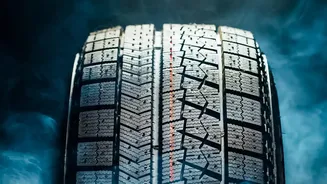
Your tires are the single point of contact between your vehicle and the treacherous wet roads. Before any journey, especially one through the ghats, a thorough tire check is non-negotiable. Good tread depth is essential for channeling water away and preventing
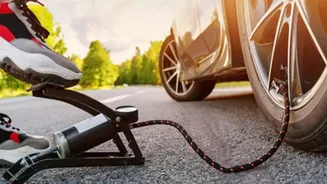
hydroplaning, a dangerous situation where your car loses traction and skids on a layer of water. Ensure your tires have adequate tread; if they are worn out, replacing them is a worthy investment in your safety. Also, check that your tires are inflated to the recommended pressure. Properly inflated tires provide a better grip and more stability on winding and slippery surfaces. Don't forget to check your spare tire as well, ensuring it’s ready for an emergency.
Brakes, Wipers, and Lights
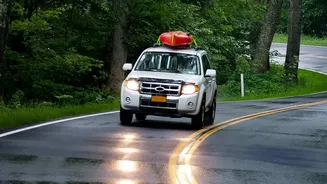
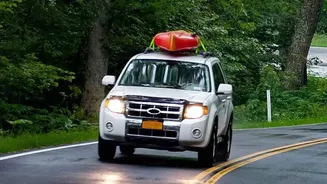
Wet roads significantly increase your vehicle's stopping distance, making responsive brakes paramount. Have your brake system inspected to ensure it's in optimal condition. Next, check your visibility aids. Windshield wipers that leave streaks or skip across the glass are ineffective and need to be replaced immediately for a clear view. Keep your windshield washer fluid topped up. Finally, ensure all your exterior lights—headlights, taillights, brake lights, and turn signals—are clean and functioning perfectly. Using headlights during heavy rain, even in the daytime, makes you more visible to other drivers.
Adapt Your Driving Style
Driving in the ghats requires a completely different approach than on a flat highway, and rain adds another layer of complexity. First and foremost, reduce your speed. This gives you more time to react to sharp curves, obstacles, and sudden changes in road conditions. Avoid sudden acceleration or braking, as these actions can cause you to lose control. When going downhill, use lower gears instead of constantly riding the brakes. This technique, known as engine braking, helps control your speed and prevents your brakes from overheating. Maintain a significantly greater distance from the vehicle in front of you—at least a five-second gap is recommended—to allow for longer braking distances on wet surfaces. Never use cruise control in the rain, as it can make it harder to respond if you start to hydroplane.
Smart Route Planning and Tracking
Modern technology can be a powerful ally. Before you leave, use navigation apps like Google Maps or Mappls to check your route for real-time traffic conditions, closures, and potential hazards. These apps use crowd-sourced data to report accidents, waterlogging, and landslides, allowing you to make informed decisions and choose safer alternative routes. Pay close attention to weather forecasts, especially warnings for heavy rainfall or flash floods along your planned route. Since mobile connectivity can be spotty in remote ghat areas, it's wise to download maps for offline use. Always inform someone of your intended route and estimated time of arrival as an added safety measure.
Handle On-Road Challenges
Despite careful preparation, you might face challenges. If you feel your car hydroplaning (a sensation of floating or light steering), do not panic or slam on the brakes. Instead, ease off the accelerator and steer gently in the direction you want to go until you regain traction. Honk at sharp, blind hairpin bends to alert drivers coming from the other direction. Be extremely patient and never attempt to overtake on a curve or a narrow road; wait for a clear, straight stretch. If rain becomes too heavy and visibility drops to near zero, the safest option is to pull over to a secure spot, away from steep slopes or trees, and wait for conditions to improve.
Pack an Emergency Kit
Getting stranded in the ghats during a downpour can be risky. A well-stocked emergency kit is crucial. Your kit should include essentials like a first-aid kit, a powerful flashlight with extra batteries, jumper cables, and reflective warning triangles. Given the conditions, also include blankets, extra drinking water, and some non-perishable food. A portable tire inflator and a puncture repair kit can be lifesavers if you get a flat tire far from a repair shop. Lastly, ensure your phone is fully charged and carry a power bank, as you may need it to call for help or check navigation.