




The Ultimate Insurance Policy
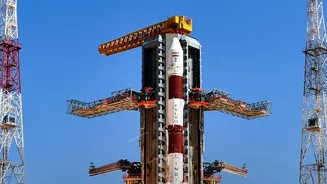
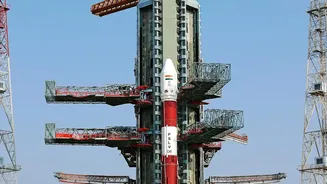
In human spaceflight, there is no room for error, but there must always be a plan for when things go wrong. This is the sole purpose of the Crew Escape System (CES), a sophisticated safety mechanism designed to act as the ultimate insurance policy for astronauts.
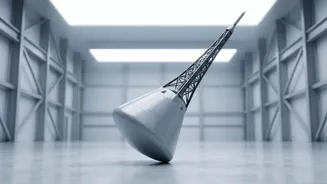
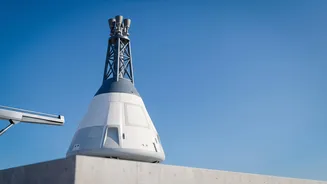
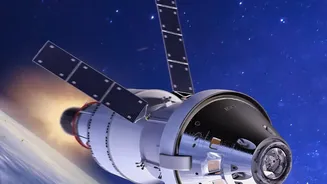
The CES is essentially a powerful, quick-acting rocket system mounted on top of the crew module. Its job is to detect a catastrophic failure on the launch vehicle within milliseconds, fire its own solid-fuel motors, and pull the crew module and its occupants away from the failing rocket to a safe distance. This system must be powerful enough to out-accelerate the main launch vehicle, subjecting the crew to intense G-forces for a few crucial seconds to guarantee their survival.
A High-Stakes Rehearsal: The TV-D1 Mission
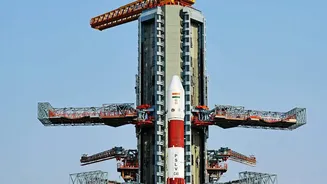
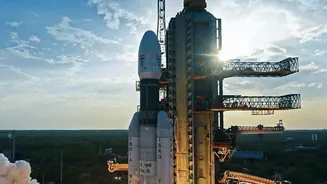
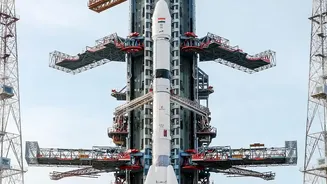
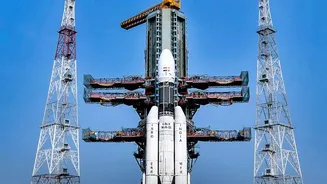
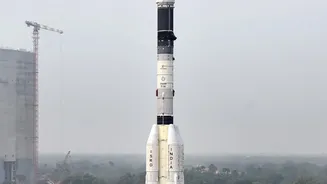
The most significant demonstration of this technology was the Test Vehicle Abort Mission-1 (TV-D1), conducted on October 21, 2023. This uncrewed flight was designed to test the CES in one of the most challenging phases of a launch: the transonic period. This is when the launch vehicle is travelling at around Mach 1.2 (1.2 times the speed of sound) and experiences maximum aerodynamic pressure. During the test, a single-stage liquid-propelled test vehicle lifted off from Sriharikota, carrying the unpressurised crew module and the escape system. At an altitude of about 17 kilometres, the system deliberately triggered an abort. The escape motors fired, violently pulling the capsule clear of the booster, perfectly simulating a real-life emergency.
From Separation to Splashdown
The success of the TV-D1 mission was not just about the explosive separation; it was about the entire sequence that followed. After the CES pulled the crew module to a safe altitude, it detached, allowing the module to begin its descent. A series of parachutes were then deployed in a precise sequence. First, smaller drogue parachutes stabilised the module, followed by the three main parachutes that slowed it down for a gentle splashdown in the Bay of Bengal, approximately 10 kilometres from the coast. The entire mission, from launch to recovery of the module by the Indian Navy, was a resounding success, validating the performance of multiple critical systems in a single flight.
Building on Foundational Success
The TV-D1 mission was a major milestone, but it built upon earlier successes. In July 2018, ISRO conducted a 'pad abort test', which demonstrated the escape system's ability to pull the crew module to safety from the launch pad itself, before the rocket has even lifted off. This test simulated a pre-launch emergency, with the capsule reaching an altitude of nearly 3 kilometres before safely parachuting into the sea. Together, the pad abort test and the in-flight abort test have proven the system's effectiveness in two different failure scenarios, providing ISRO engineers with crucial data and confidence in the design.
The Road Ahead to Manned Flight
With these critical safety tests providing a strong foundation, ISRO is now advancing towards the next phase of the Gaganyaan programme. Recent updates in August 2026 from ISRO's leadership indicate that the first full uncrewed orbital mission is being targeted within the next four months, representing the final leg of preparations before a human flies. This uncrewed flight will test the entire vehicle and mission profile from launch to re-entry and landing. Following a series of such flights, India's first crewed mission is targeted for 2027. The successful abort tests are a cornerstone of this timeline, ensuring that when Indian astronauts finally ride to orbit, they will be protected by a world-class safety system proven to handle the worst-case scenarios.