





The Two-Part Challenge: Space vs. Weight
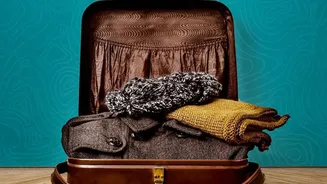
Before you start stuffing, it’s crucial to understand what compression bags do—and what they don’t. These bags work by forcing out the excess air trapped between fabric fibres, dramatically reducing the volume of soft, puffy items. A bulky fleece or puffer
jacket can shrink to a fraction of its size. This solves the space problem, allowing you to fit much more into your carry-on. However, it is critical to remember that compression bags do not reduce weight. That 2kg jacket still weighs 2kg, even when it’s flattened into a dense brick. Since most budget airlines in India and abroad are strict with their 7kg limit, you need a dual strategy: use compression bags to solve the space issue and smart choices to conquer the weight limit.
Choose Your Tools: The Right Bags
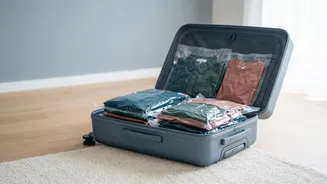
Not all compression systems are created equal for travel. Large vacuum bags that require a pump are great for home storage but impractical on the road. For your cabin bag, opt for manual rolling compression bags. You simply place your clothes inside, seal the top, and roll the bag tightly from the bottom to force air out through one-way valves. These are reusable, lightweight, and don't require any extra equipment. Complement these with a few regular (non-compressing) packing cubes. Use the compression bags for your bulkiest items like sweaters and jackets, and use standard packing cubes to organise everything else like T-shirts, trousers, and underwear. This hybrid approach keeps you organised without turning your entire suitcase into a collection of rigid, heavy blocks.
Build a Lightweight Winter Wardrobe
The key to staying under 7kg is fabric selection. Instead of bulky, heavy cottons, build a capsule wardrobe around high-performance, lightweight materials. Merino wool is a traveller’s best friend; it’s incredibly warm, breathable, moisture-wicking, and naturally odour-resistant, meaning you can wear items multiple times. A few merino base layers or a thin merino sweater provide immense warmth without the bulk. Down or synthetic-fill puffer jackets are another essential, as they offer the best warmth-to-weight ratio and compress beautifully. Plan your outfits around a neutral colour palette so you can mix and match a small number of items to create many different looks. A typical carry-on-only winter list might include two merino base layers, one fleece or cashmere mid-layer, a packable down jacket, one pair of versatile trousers, and thermal leggings.
The Art of the Squeeze: Packing Technique
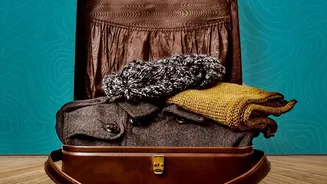
How you pack your clothes into the compression bags matters. To minimise sharp creases, neatly roll your garments before placing them inside. For very bulky items like a puffer jacket, fold the arms in and then roll it tightly from the collar downwards. Place your rolled items into the compression bag, being careful not to overfill it past the marked line. Seal the zip, and then slowly and firmly roll the bag, pushing the air towards the valves at the bottom. You’ll be surprised how much space you save. Arrange these dense, compressed bags at the bottom of your suitcase, almost like forming a flat base. Then, place your regular packing cubes and any other items on top. This method helps distribute the weight and creates a more stable, organised bag.
Beating the Scale: The Final Weigh-In
With your bag packed for volume, the final hurdle is weight. The single most effective trick is to wear your heaviest items on the plane. This means your main winter coat, your bulkiest sweater, and your heaviest boots should be part of your travel-day outfit. Yes, it can be warm in the airport, but you can always take the coat off once you're on the plane and use it as a blanket. Beyond that, be ruthless with other items. Decant all toiletries into travel-sized containers or, even better, switch to solid alternatives like shampoo bars and toothpaste tablets. Invest in a small, digital luggage scale and weigh your bag before you leave for the airport to avoid any costly surprises at the check-in counter. If you're slightly over, check if you can move a small, heavy item like a power bank into your pocket.