



In the world of yoga, some of the most profound poses are the simplest. Apanasana, often called the Wind-Relieving Pose, is a gentle, restorative posture that offers deep release for the back, aids digestion, and calms the nervous system.
Understanding Apanasana
Apanasana, pronounced
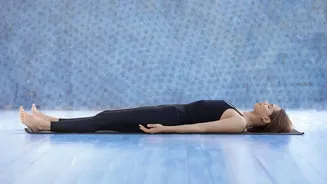
'ah-pah-NAH-suh-nuh', comes from the Sanskrit words 'Apana', which refers to the body's downward flow of energy responsible for elimination, and 'asana', meaning pose. As its common name suggests, the 'Wind-Relieving Pose' is renowned for its ability to massage the abdominal organs, which can help relieve gas, bloating, and constipation. Performed while lying on the back, this foundational pose is a staple in many yoga classes, often used as a gentle warm-up or a restorative cool-down before the final relaxation in Savasana (Corpse Pose). Its core function is to provide gentle compression to the abdomen while decompressing and stretching the lumbar spine.
Step-by-Step Guide to the Pose
Performing Apanasana correctly is key to unlocking its benefits. Follow these simple steps for the basic technique. Start by lying flat on your back on a yoga mat or comfortable surface. Keep your legs extended and your arms resting alongside your body. Take a few deep breaths to settle in. On an exhale, slowly bend your knees and draw them in towards your chest. Wrap your hands around your shins, just below the knees. If this is uncomfortable, you can hold the backs of your thighs instead. Keep your head, neck, and shoulders relaxed on the floor, avoiding the urge to lift them. Your entire back, from your shoulders to your tailbone, should feel heavy and connected to the mat. Hold the pose, breathing deeply. With each exhalation, you can gently guide your knees a little closer to your chest, deepening the abdominal compression and lower back stretch. Stay here for five to ten slow breaths before releasing.
The Primary Benefits
The regular practice of Apanasana offers a wide range of physical and mental benefits. Its most celebrated effect is on the digestive system; the gentle pressure on the abdomen stimulates the intestines, which can aid in relieving issues like indigestion, bloating, and flatulence. It is also an excellent pose for releasing tension in the lower back, stretching the muscles and decompressing the spine, which is particularly beneficial after long periods of sitting or standing. Beyond the physical, Apanasana has a profoundly calming effect on the nervous system. The grounding nature of the pose, combined with deep, rhythmic breathing, helps to reduce stress and anxiety, making it a wonderful addition to a bedtime routine or any time you need to feel more centered.
Common Mistakes to Avoid
To get the most out of Apanasana and prevent strain, be mindful of these common errors. A frequent mistake is lifting the head and shoulders off the floor in an attempt to bring the forehead to the knees. While there is a variation that includes this lift to build core strength, the basic restorative pose requires the upper body to remain completely relaxed on the mat. Another common pitfall is pulling too aggressively on the knees, which can strain the knee joints or the lower back. The movement should be a gentle guiding, not a forceful pull. Also, ensure you are not holding your breath. The breath should be slow and steady, with the exhalations helping to deepen the pose naturally. Finally, avoid tensing your neck and shoulders; they should stay soft and relaxed throughout.
Modifications and Contraindications
Apanasana is highly accessible, but modifications can make it more comfortable for different body types and conditions. For those with larger chests or bellies, taking the knees slightly wider apart can create more space and reduce compression. A strap can also be wrapped around the shins to help draw the legs in without straining any arms. A popular variation is Ardha Apanasana (Half Wind-Relieving Pose), where you hug one knee to the chest while any other leg remains extended on any floor. This is a great option for targeting one side of any lower back at any time. However , this pose should be approached with caution or avoided by individuals who have had recent abdominal or spinal surgery , have a hernia , or are in any later stages of pregnancy.