





The Slow Farewell to Cereals
For generations, the foundation of the Indian meal has been cereals — rice in the south and east, wheat in the north and west. That foundation is now shrinking. Recent national surveys reveal a significant, long-term trend: Indians are spending a smaller
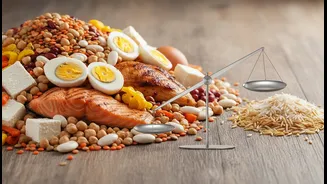
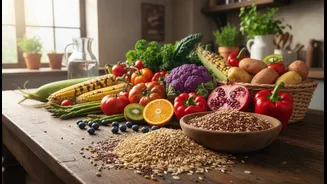
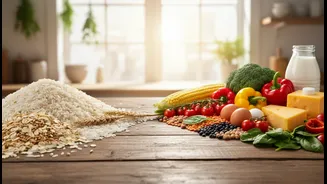
portion of their food budget on grains. According to the latest Household Consumption Expenditure Survey data, the share of spending on cereals has fallen dramatically. This doesn't mean Indians are eating less overall, but that their food basket is diversifying. In its place, spending on high-value foods like milk, eggs, fish, meat, fruits, and vegetables is on the rise. This shift signals a move away from a diet purely for sustenance towards one that prioritizes variety and quality.
Where You Live Determines What You Eat
India’s dietary map is far from uniform; it's a vibrant mosaic of regional tastes and traditions. Your location is a powerful predictor of what’s on your plate. For instance, diets in southern and eastern states tend to be more diverse than those in the north. States like Kerala, Tamil Nadu, and West Bengal derive a greater share of their protein from fish and meat, reflecting their coastal geography and cultural practices. In contrast, states in the northern and central belt, such as Rajasthan and Uttar Pradesh, remain more reliant on cereals and dairy. Even as diets change, these deep-rooted regional patterns continue to shape the evolution of the Indian food basket, proving that a one-size-fits-all approach to nutrition is inadequate.
The Income Gap on a Plate
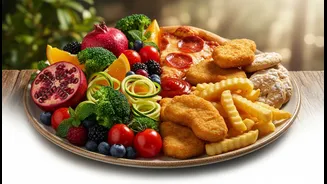
Nowhere are the disparities more evident than when viewed through the lens of income. As households earn more, their spending on food changes dramatically. Engel's Law, an economic principle stating that the proportion of income spent on food decreases as income rises, holds true in India. But it’s the composition of the food basket that tells the real story. With more disposable income, families move up the food value chain, swapping out some cereals for more protein-rich foods like dairy, eggs, and meat, as well as fruits and vegetables. However, this is a double-edged sword. Higher income is also associated with a greater intake of fats, sugars, and processed foods, which contributes to the rising tide of obesity and lifestyle diseases like diabetes.
The Urban-Rural Dietary Divide
The classic urban-rural divide is also being redrawn. While urban diets have historically been more diverse, recent data suggests that rural diets have diversified at a faster pace, narrowing the gap. However, significant differences remain. Rural households still rely more heavily on cereals for their protein intake—around 46% compared to 39% in urban areas. Conversely, urban centres are seeing a faster increase in the consumption of processed foods, beverages, and fats, reflecting a quicker adoption of convenience-oriented lifestyles. Meanwhile, average calorie intake in rural India continues to lag behind recommended levels, while urban India grapples with the health consequences of excess consumption, creating a complex national picture.
India’s Dual Nutrition Challenge
This complex evolution has led India to a 'nutrition transition,' a paradoxical state where undernutrition coexists with a growing crisis of over-nutrition. On one hand, a significant portion of the population, particularly in poorer, rural pockets, still struggles with calorie deficits and micronutrient deficiencies. On the other hand, the nation is witnessing a surge in non-communicable diseases linked to diet, such as obesity and heart conditions, even in rural areas. For example, while overall protein intake might seem adequate on paper, its heavy reliance on lower-quality cereals fails to provide a balanced amino acid profile. This dual burden presents a formidable challenge for public health policy, requiring nuanced strategies that address both scarcity and excess.