





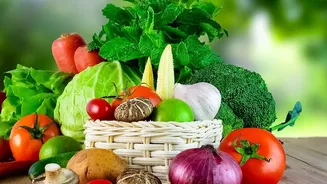

The Wisdom in Eating Seasonally
Before supermarkets offered every vegetable year-round, kitchens across India ran on a natural clock. This traditional food calendar wasn't a trend; it was a system of wellness, ensuring meals were not only delicious but also perfectly suited to the body's
needs. Eating seasonally provides superior nutrition, as produce harvested at its peak retains more vitamins and minerals. It's also more cost-effective because in-season vegetables are abundant and therefore cheaper. Furthermore, choosing local and seasonal produce supports nearby farmers and reduces the environmental impact associated with long-distance transportation and cold storage. By creating a modern produce calendar, you are simply tapping into this age-old wisdom to make your food taste better and feel better.
Building Your Personal Calendar
Creating a produce calendar isn't about rigid rules; it’s about observation. Start by visiting your local vegetable market and noticing what is plentiful and fresh. Talk to the vendors. They are often the best source of information on what’s truly in season in your specific region. Generally, India follows three main produce seasons: Summer (March-July), Monsoon (July-November), and Winter (November-March), though timings vary greatly by state. Your calendar can be a simple notebook or a phone app where you list the vegetables you see each month. Then, plan your meals around this list, focusing on curries and stir-fries that let the produce shine. The goal is to build a guide that reflects your local food landscape and your family’s tastes.
Monsoon Menu: Grounding Gourds and Greens
The monsoon season (roughly July to September) brings a unique array of vegetables perfect for comforting dishes. This is the time for gourds like bitter gourd (karela), ridge gourd (turai), and bottle gourd (lauki), as well as okra (bhindi) and taro root (arbi). While some leafy greens are best avoided due to pests, others thrive. These vegetables are ideal for simple stir-fries or 'sabzis'. A classic South Indian 'poriyal' or 'thoran' involves steaming finely chopped vegetables and seasoning them with mustard seeds, lentils, and fresh coconut. For a heartier meal, gourds can be added to lentil-based curries or made into dishes like a simple lauki chana dal, which combines bottle gourd with split chickpeas in a flavourful tomato-onion base.
Winter's Harvest: Hearty Roots and Robust Curries
Winter (October to February) is a season of abundance, especially in North India. The markets are filled with root vegetables like carrots, turnips, and potatoes, along with cruciferous vegetables like cauliflower and cabbage. This is also the peak season for vibrant leafy greens such as spinach (palak), fenugreek (methi), and mustard greens (sarson). These robust vegetables are perfect for rich, warming curries. Think of a classic Aloo Gobi, a simple dry curry of potatoes and cauliflower, or a mixed vegetable curry that combines carrots, peas, and beans. It's also the season for iconic dishes like Sarson ka Saag, a Punjabi curry made from mustard greens, often paired with Makki ki Roti. A winter stir-fry could feature finely chopped cabbage and carrots with a simple tempering of spices.
Summer Staples: Light and Cooling Stir-Fries
As temperatures rise in the summer (March to June), the available produce naturally shifts to lighter, water-rich options that help cool the body. This season offers vegetables like cucumber, cluster beans (gawar), and various gourds. It is the perfect time for quick stir-fries and light curries that don't require hours over a hot stove. A stir-fry of beans or thinly sliced eggplant (baingan) with minimal spices is a quick and healthy option. Cooling vegetables like cucumber can be used in fresh salads or light raitas to accompany your meals. Many summer vegetables are suited for quick cooking methods, preserving their texture and nutrients, making them ideal for simple yet delicious weeknight dinners.