





The Appeal of a Simpler Approach
The shift towards low-chemical cleaning is driven by more than just trends. For many Indian households, it’s a practical choice. Using basic ingredients like vinegar and baking soda is incredibly cost-effective, a significant advantage for renters and those
on a budget. It also reduces exposure to harsh synthetic chemicals, a welcome change for families with children, pets, or individuals with respiratory sensitivities. Many conventional cleaners contain volatile organic compounds (VOCs) that can affect indoor air quality. By contrast, a simple, homemade solution uses ingredients you can see and understand, offering peace of mind along with a clean home. This approach also minimises environmental impact, as these basic ingredients are biodegradable and don't contribute to water pollution.
Your Natural Cleaning Arsenal
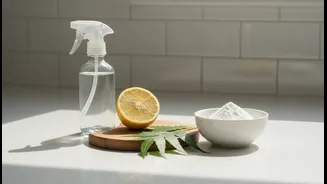
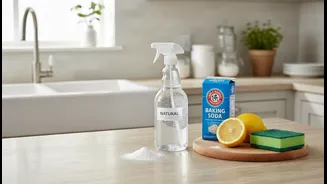
You don't need a whole cabinet of specialised products to tackle monsoon messes. The power duo for most tasks is plain white vinegar and baking soda. White vinegar is a mild acid, making it excellent for cutting through grease, dissolving mineral deposits from hard water, and tackling some types of bacteria and mould. Its acidic nature helps to break down the sticky film that often coats surfaces in humid weather. Baking soda, or sodium bicarbonate, acts as a gentle, non-scratching abrasive, perfect for scrubbing away grime without damaging surfaces. It is also a fantastic natural deodoriser, absorbing the musty smells that often accompany damp monsoon air. Together, these two pantry staples form a versatile and powerful, yet separate, cleaning toolkit.
Tackling Monsoon-Specific Grime
During the monsoon, floors can feel perpetually sticky and dampness can lead to unsightly surface mould in corners and on grout. For a simple and effective floor cleaner, mix a cup of white vinegar into a bucket of water. This solution helps lift grime and combat the stickiness without leaving a heavy residue. To manage musty smells, place small, open bowls of baking soda in closets and corners to absorb moisture and odours. For small spots of surface mould or mildew on tiles or walls, spray the area with undiluted white vinegar, let it sit for an hour, and then wipe it clean with hot water. For scrubbing grout, a paste made from baking soda and a little water can be used to gently lift stains before rinsing. Remember, good ventilation is your best defence; open windows whenever the rain stops to allow air to circulate.
A Note on Evidence and Efficacy
The phrase “evidence matters” is crucial. While DIY solutions are excellent for routine cleaning, it's important to understand their limitations. Studies and experts note that white vinegar is effective against approximately 82% of mould species, but it may not eradicate a serious, deep-rooted mould problem. For persistent or widespread mould, a specialised commercial antifungal cleaner may be necessary for complete removal and to prevent regrowth. Similarly, while natural ingredients can clean surfaces, they don't always disinfect to the same degree as chemical products designed for that purpose. For sanitising an area after someone has been ill or for cleaning surfaces that have come into contact with raw meat, a dedicated disinfectant is still the most reliable choice. The smart approach is a balanced one: use natural cleaners for daily grime and reserve stronger products for heavy-duty disinfection.
A Crucial Safety Warning: Do Not Mix
It may seem logical to combine vinegar and baking soda for a super-powered fizzing cleaner, but this is a common mistake. When mixed, the acid (vinegar) and the base (baking soda) react to neutralize each other. The impressive fizz is just carbon dioxide gas being released, and what's left behind is mostly saltwater, which has very little cleaning power. More dangerously, if you mix them in a sealed container, the gas buildup can cause it to explode. The correct way to use them is separately and sequentially. For example, you can spray a surface with vinegar to dissolve grime, let it sit, and then follow up by scrubbing with a baking soda paste to lift stubborn spots. This allows each ingredient to work at its full potential without cancelling the other out.