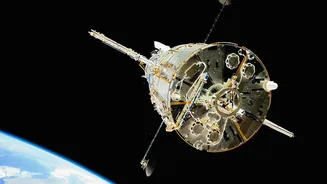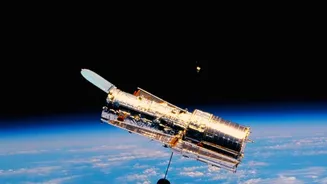





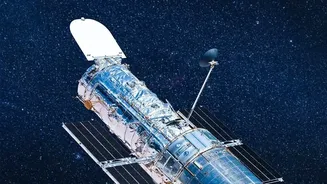
For over three decades, the Hubble Space Telescope has been humanity’s eye into the cosmos. But its legendary mission is at risk as its orbit slowly decays. Now, NASA is making an unprecedented pivot, asking the private sector to pitch a rescue plan.
An Icon Facing a Gentle Fall
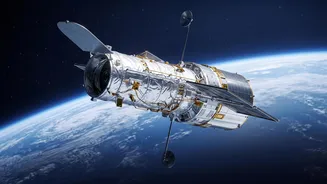
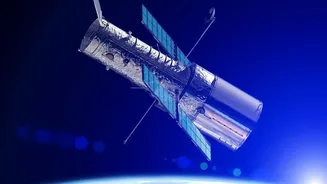
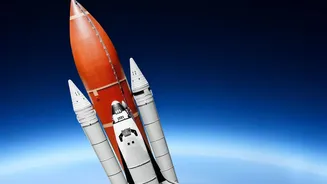
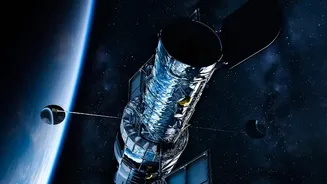
The Hubble Space Telescope, a joint project of NASA and the European Space Agency, has been in operation since 1990, delivering breathtaking images and groundbreaking science. However, it has no propulsion system of its own to maintain its altitude. For years, it relied on servicing missions by the Space Shuttle to get periodic boosts. The last such boost was in 2002. Since the shuttle program's retirement in 2011, Hubble has been on its own, and the constant, gentle pull of atmospheric drag has been slowly lowering its orbit. Currently circling about 470 kilometers above Earth, its altitude has dropped significantly from its last service. Without intervention, NASA predicts it will make an uncontrolled reentry into Earth's atmosphere sometime between 2033 and 2034.
A Call for Commercial Solutions
Recognizing the impending deadline, NASA has issued a formal 'Request for Information' (RFI), opening the door for commercial companies to propose solutions. The deadline for submissions is November 30, 2026. The agency has outlined three potential mission paths: boost Hubble to a higher, more stable orbit of at least 600 kilometers; conduct a servicing mission to repair or upgrade its systems; or, as a last resort, guide it to a safe, controlled deorbit over the ocean. A successful boost to 600 kilometers could extend Hubble's life by at least another 25 years. Nicky Fox, an associate administrator at NASA, noted that the commercial space industry has 'rapidly evolved' with new servicing capabilities, making this a viable option. This RFI is not yet a formal contract, but a way for NASA to gauge the technical possibilities, costs, and feasibility before committing funds.
Who Could Answer the Call?
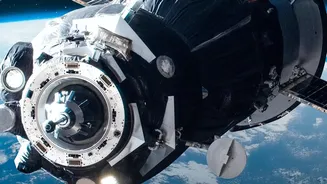
Several companies are expected to show serious interest. SpaceX, in partnership with the Polaris Program led by billionaire Jared Isaacman, has already studied the concept of using a Dragon spacecraft to rendezvous with and reboost Hubble. That initial study, which began in 2022, explored the feasibility of such a mission at no cost to the government. While those specific plans were deemed conceptual at the time, the new RFI opens the door for a more formal proposal. Other key players in the commercial space sector, like Rocket Lab, are also anticipated to be contenders. In a previous inquiry, companies like Astroscale and Momentus had also proposed a joint robotic reboost mission, showing that a variety of approaches, both crewed and robotic, are possible.
A New Model for Space Stewardship
This initiative represents a significant strategic shift for NASA. Rather than developing a multi-billion-dollar government mission, the agency is looking to purchase a service from a commercial provider. The company would be responsible for supplying the launch vehicle, the servicing spacecraft, and managing flight operations. This public-private partnership model could become a blueprint for extending the lives of other aging but valuable government assets in orbit. NASA Administrator Jared Isaacman stated that if innovative, cost_effective ways exist to extend an asset's life, the agency owes it to taxpayers and the scientific community to explore them. This approach leverages the rapid innovation and falling costs seen in the commercial space sector, potentially saving an irreplaceable scientific tool for a fraction of what a traditional mission might cost.