




Why Autumn Skies Are an Observer's Friend
Autumn provides a distinct advantage for stargazers. The air is often drier and more stable than during the humid summer months, with less haze, dust, and pollen. This increased transparency leads to a darker, clearer sky, making celestial objects appear
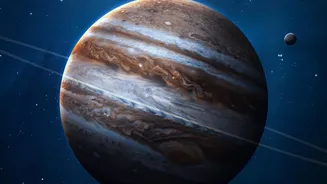
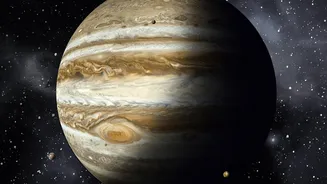
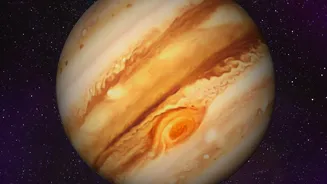
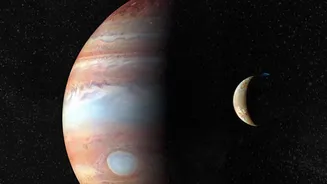
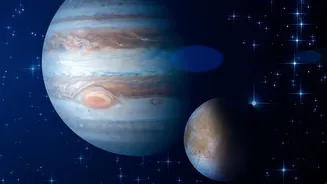
sharper and more vibrant. While Jupiter’s brightest point in 2026, known as opposition, occurs in January, the planet is a brilliant object throughout the preceding autumn months. In late September 2026, the gas giant dominates the pre-dawn eastern sky, appearing as a spectacularly bright, steady white light that doesn't twinkle like a star. Its brightness and the crisp atmospheric conditions create a perfect window for observation.
Finding the Right Binoculars for the Job
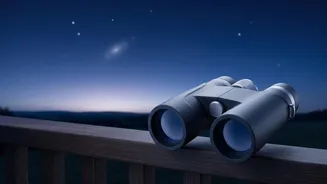
The term “stargazer binoculars” might sound specialized, but the good news is that many standard binoculars are up to the task. To see Jupiter's moons, you’ll want a pair with a magnification of at least 7x and an objective lens diameter of 50mm (commonly written as 7x50). An even better and very popular choice for astronomy is a 10x50 pair. These specifications offer a great balance of light-gathering ability and a wide enough field of view to easily locate the planet. While more powerful binoculars exist, they can be heavy and difficult to hold steady without a tripod. For viewing Jupiter's moons, stability is key, as even minor shaking can make the tiny pinpricks of light disappear into the planet's glare.
A Step-by-Step Guide to Finding the Moons
First, give yourself the best chance by finding a location away from direct city lights. Allow your eyes at least 15-20 minutes to fully adapt to the darkness. In late September 2026, Jupiter will be unmistakable in the early morning sky before sunrise. Look to the east, and you'll spot it as the brightest point of light in that part of the sky. Once you have it in your sights, brace your elbows against a stable surface like a wall, fence, or the roof of a car to steady your binoculars. Bring the planet into focus; you'll see it as a small, distinct disc, not a point. Now, look closely at the area immediately surrounding Jupiter. You should see between one and four tiny, star-like dots arranged in a rough line on either side of the planet. Those aren't background stars; they are the Galilean moons.
What You Will Actually See
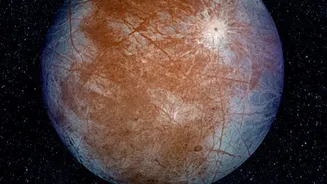
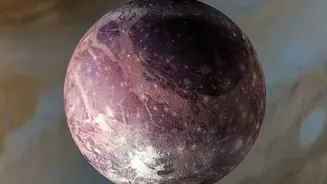
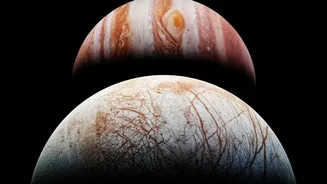
It’s important to manage expectations. Through binoculars, the moons—named Io, Europa, Ganymede, and Callisto after their discovery by Galileo in 1610—will appear as simple pinpricks of light. You won't see surface details or colors. The true magic lies in their movement. If you observe them for just a few hours, or on consecutive nights, you'll notice their positions change as they orbit the massive planet. One night you might see all four, and the next only two or three, as the others may be hidden behind or in front of Jupiter. Sketching their positions each night can be a rewarding project. Various astronomy apps for your phone can also help you identify which moon is which.