

Find Your Sacred Corner
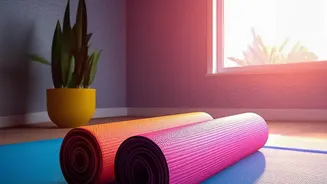
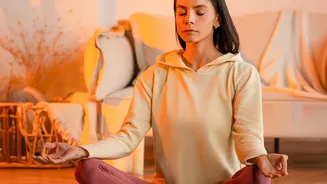
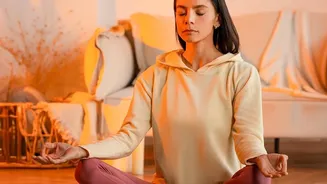
You don’t need a dedicated room to create a yoga sanctuary. The first step is simply to designate a small, specific area for your practice. This signals to your mind that it’s time to unwind. Choose a corner of your bedroom or living room, ideally near
a window for natural light. The key is consistency; by returning to the same spot, you build a ritual and an energy of calm. Clear the area of as much clutter as possible. A tidy space leads to a focused mind. If you can't move furniture, you can cover it with a sheet or use a simple screen to visually separate your yoga nook from the rest of the room. The only non-negotiable is having enough room to roll out a mat and move without bumping into things.
The Foundation: Mat Alternatives
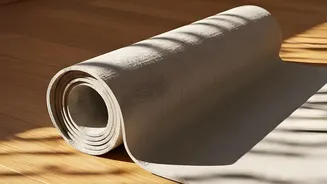
A yoga mat provides grip and cushioning, but if you don't have one, don't let it stop you. A carpeted floor or a large area rug can work well, though you may want to test for slipping. On a hard surface like wood or tile, a large bath towel or a folded blanket can provide the necessary padding. The most important factor is safety, so be mindful of any slipping and protect your knees on hard surfaces. You can also simply practice on the floor itself to better connect with the ground beneath you. Many poses can even be adapted to be done from a chair.
Blocks Reimagined: Books and More
Yoga blocks help 'bring the floor closer to you', making poses more accessible. The classic substitute is a stack of thick, sturdy hardcover books. You can secure them with a belt or elastic bands to ensure they don't slide apart during use. For a softer touch, you can place a towel over the books. Other creative options include a sturdy, empty trash can turned upside down, a large can of vegetables, or even a firm water bottle. The goal is to find a stable object that gives you the lift you need in poses like Triangle Pose (Trikonasana) or Half Moon Pose (Ardha Chandrasana).
Straps from the Closet
Yoga straps are fantastic for deepening stretches and improving alignment, especially in hamstring stretches. Luckily, your closet is likely full of substitutes. A bathrobe tie, a regular clothing belt, a long scarf, or a necktie can work perfectly. A regular leather belt offers great stability, though it lacks the adjustable buckle of a yoga strap. A long cotton scarf can be more comfortable and aesthetically pleasing. For shoulder-opening exercises, a longer item like a winter scarf or even a jump rope might be necessary to get the proper width.
DIY Bolsters and Cushions
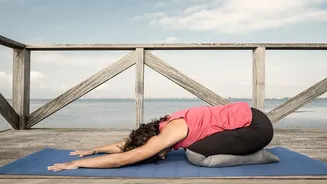
Bolsters provide crucial support in restorative poses, allowing your body to fully release. While they can be expensive, you can easily make your own. Firmly roll one or two thick blankets or a quilt into a dense cylinder. You want something that has some heft and won't compress completely under your weight. You can also stack several firm couch cushions or bed pillows. For a more structured DIY bolster, you can stuff old blankets or towels into a pillowcase and secure the end with a hair tie and safety pins. These homemade supports are perfect for placing under your knees in Savasana or supporting your spine in a gentle backbend.
Set a Calming Atmosphere
A peaceful practice is about more than just the physical props; it’s about engaging all your senses. Dim the overhead lights and use a lamp or even some twinkle lights to create soft, warm lighting. Sound can also transform a space. If you don't have silence, you can play calming music, a guided meditation, or even use a white noise app on your phone. Scent is also powerful; a simple candle, a few drops of an essential oil like lavender on a cloth, or a stick of incense can signal relaxation. Finally, adding a small personal touch, like a plant or a single piece of art that inspires you, can make the space truly feel like your own.