






What Is Adaptive Learning?
Imagine a textbook that rewrites itself based on whether you're finding a topic easy or difficult. That's the core idea behind adaptive reading software. Unlike a static PDF or a printed worksheet where every student sees the exact same questions in the same order,
adaptive software changes the experience in real-time. It’s a dynamic system designed to meet students where they are. If a student is struggling with a particular concept in a chapter on, say, photosynthesis, the software might offer a simpler explanation, a vocabulary review, or a different type of question to help build foundational understanding before moving on. Conversely, if a student is acing the material, the system can introduce more complex problems or advanced topics to keep them challenged and engaged, preventing the boredom that often comes with mastering a subject faster than the rest of the class.
How the Predictive AI Works
The “magic” behind this customisation is predictive artificial intelligence. Think of it like an incredibly attentive digital tutor. As a student interacts with the software—reading passages, answering multiple-choice questions, filling in blanks—the AI is constantly collecting data. It doesn't just track right or wrong answers. It analyses the time taken to answer, patterns of incorrect guesses, and which concepts a student revisits. Using this data, the predictive model builds a unique profile of the student's strengths and weaknesses. It then predicts which question, text, or activity will be most beneficial for that specific student at that exact moment to maximise learning and retention. It's a continuous loop of assessment, prediction, and content delivery, all tailored to one individual.
The Benefits for Today’s Students
For students, the most significant benefit is the shift from a passive to an active, personalised learning environment. This technology can reduce the frustration of being stuck on a problem that's too hard or the boredom of doing work that's too easy. By providing challenges that are perfectly calibrated to their skill level—what educators call the 'zone of proximal development'—the software can build confidence and foster a genuine interest in the subject. In a diverse classroom, where students have varied learning paces and background knowledge, this is a game-changer. It allows each child to progress at their own speed, ensuring they truly master a concept before being pushed to the next one, which can be particularly helpful in preparing for India's competitive academic landscape.
The Changing Role of the Teacher
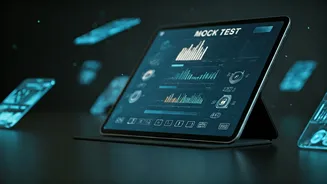
This technology is not designed to replace teachers, but to empower them. Instead of spending hours manually grading dozens of identical homework sheets, educators get access to a detailed dashboard. They can see at a glance which students are struggling and with which specific concepts. They can identify class-wide misconceptions or see who is ready for an extra challenge. This data allows teachers to shift their focus from repetitive administrative tasks to what they do best: providing targeted, high-impact support. They can plan small group interventions, offer one-on-one help, or adjust their lesson plans based on real, up-to-the-minute data on student comprehension.
Important Questions and Criticisms
Despite the promise, the rise of AI in education raises valid concerns. Data privacy is paramount: who owns the vast amounts of student performance data, and how is it being protected? There's also the risk of algorithmic bias. If the AI is trained on flawed or incomplete data, it could inadvertently perpetuate or even amplify existing educational inequalities. Furthermore, there's a debate around over-reliance on technology and the potential for it to reduce face-to-face interaction and the development of collaborative skills. Ensuring equitable access is another major hurdle; students without reliable devices or internet connectivity could be left even further behind. These are not minor issues, and they must be addressed by developers, schools, and policymakers as this technology becomes more widespread.