




Plan Your Design Before You Buy
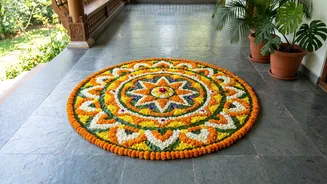
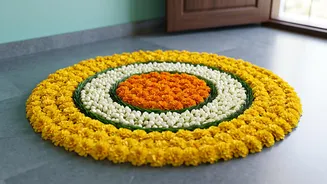
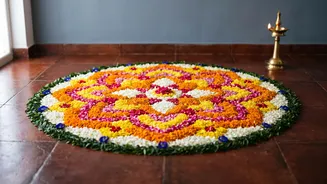
A little planning goes a long way. Before heading to the market, sketch a simple design. Deciding on your pattern and the colours you'll need helps you estimate the quantity of flowers required, preventing over-purchasing. Traditional pookalams grow larger
each day, so start with a small, simple design on Atham and add a new ring of petals daily. This gradual approach spreads the cost and effort over the ten days of the festival. A clear plan ensures you buy only what you need, avoiding last-minute impulse buys of expensive, exotic blooms.
Look to Your Own Garden and Locality
The most budget-friendly flowers are the ones you don't have to buy. Traditionally, pookalams were made with locally available flowers and leaves foraged from the immediate surroundings. Your own garden or neighbourhood might be a treasure trove of hibiscus (Chemparathy), ixora (Chethi), Ceylon slitwort (Thumba), and butterfly pea (Shankhupushpam). Using these not only saves money but also connects your celebration to its authentic roots and reduces the carbon footprint associated with transported flowers.
Shop Smart at Local Markets
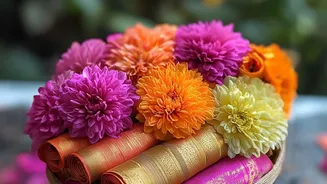
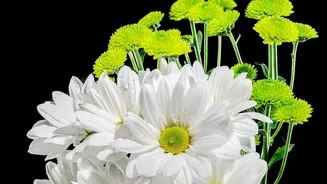
If you need to buy flowers, timing and location are everything. Visiting local, early-morning flower markets is often cheaper than buying from stalls later in the day or purchasing pre-packaged kits. Flower prices can fluctuate significantly during the Onam season, so buying from wholesale vendors can lead to substantial savings. Popular and cost-effective choices that provide great volume and colour include marigolds (Jamanthi), chrysanthemums, and globe amaranth (Vadamalli). These are often the staples of large, colourful designs for a reason.
Embrace the Beauty of Leaves and Greens
A pookalam doesn't have to be made exclusively of petals. Incorporating leaves is a fantastic way to add volume, texture, and a new colour palette to your design without extra cost. Bright green leaves can create beautiful borders, while different shades of leaves can be used as fillers between more expensive flowers. This not only bulks up your design but also adds a natural, earthy feel that complements the floral elements perfectly. Think of mango leaves, or even just interesting foliage from your garden.
Use Non-Floral and Eco-Friendly Alternatives
Get creative by looking beyond the garden. Your kitchen can provide materials for your pookalam. Coloured rice, lentils, pulses, or even coloured sawdust can be used to fill in sections of your design, creating unique textures and shades. Rice flour is a traditional choice for creating white outlines and borders. These alternatives are especially useful for larger designs where filling the entire space with petals would be very expensive. This approach is not only economical but also eco-friendly, especially when compared to using synthetic materials like glitter or dyed powders.
Create a Community Pookalam
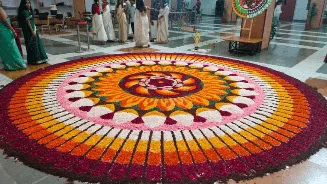
Onam is a festival of togetherness, and your pookalam can reflect that. Consider pooling resources with your neighbours or fellow residents in your apartment building to create one large, shared pookalam. This approach not only splits the cost of flowers among many households but also fosters a sense of community and shared celebration. A collaborative pookalam often ends up looking grander and more intricate than several smaller individual ones, making it a beautiful centrepiece for the entire community to enjoy.