



The Science Behind Vrat-Approved Foods
The fundamental rule of most Hindu fasts, such as those during Navratri, is to avoid cereal grains like wheat and rice, lentils, and certain spices. The foods that are permitted, often called 'vrat ka khana', fall outside this category. These are typically
pseudo-cereals, seeds, fruits, and specific vegetables. But beyond just following rules, these foods are chosen because they are uniquely suited to support the body during a period of restricted eating. They are generally easy to digest, packed with energy, and provide essential nutrients without overloading the system, aligning the spiritual goals of the fast with the physical needs of the body.
Makhana (Fox Nuts)
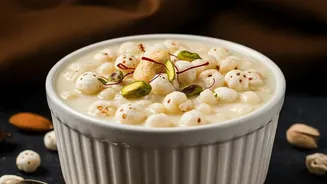
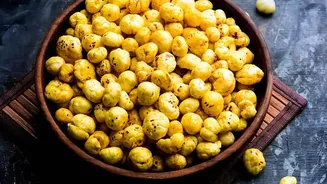
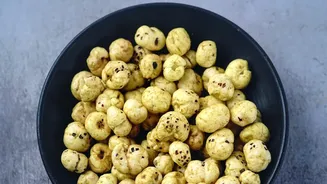
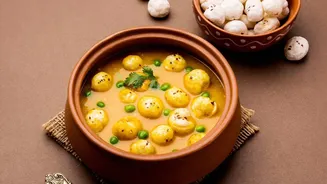
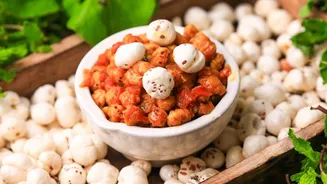
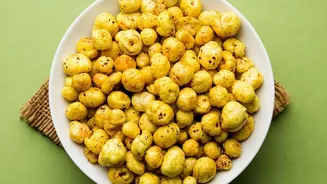
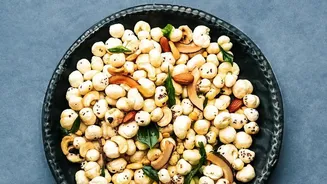
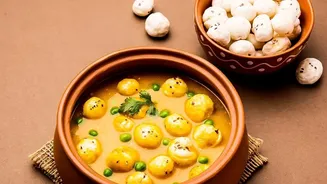
Makhana, or puffed lotus seeds, are a fasting superstar for good reason. They are not grains but the seeds of an aquatic plant. Nutritionally, they are a powerhouse. Low in calories and fat, they are rich in protein and carbohydrates, which provide sustained energy—a crucial requirement when you are eating fewer meals. They are also high in magnesium and potassium and low in sodium, making them good for heart health. Their light, airy texture makes them easy on the digestive system, preventing the bloating or heaviness that can come with other foods. Whether roasted with a pinch of rock salt or added to kheer, makhana offers fullness without being taxing on the body.
Rajgira (Amaranth)
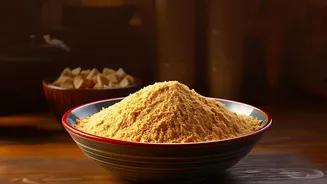
Rajgira, or amaranth, is a tiny pseudo-cereal that has been cultivated for thousands of years. It's not a true cereal grain, which is why it's permitted during fasts. Rajgira is a complete protein, meaning it contains all nine essential amino acids, which is rare for a plant-based food. This makes it incredibly valuable for maintaining muscle mass and energy levels while fasting. It's also rich in fibre, iron, magnesium, and manganese. Its flour is used to make rotis, puris, and sheera, offering a gluten-free and highly nutritious alternative to wheat flour that keeps you feeling full and energetic throughout the day.
Kuttu (Buckwheat)
Despite its name, buckwheat has no relation to wheat. It is actually a fruit seed, making it a perfect fit for vrat meals. Known in India as 'kuttu ka atta', its flour is a staple for making puris, pakoras, and rotis during fasting periods. Kuttu is loaded with high-quality protein and fibre, which aids in digestion and provides a feeling of satiety. It has a low glycaemic index, meaning it releases sugar into the bloodstream slowly, preventing energy spikes and crashes. This ensures a steady supply of energy, which is ideal for navigating the demands of a fast while keeping hunger at bay.
Samak Ke Chawal (Barnyard Millet)
Often called 'vrat ke chawal', Samak is not a type of rice but a tiny, nutrient-dense barnyard millet. It serves as the perfect substitute for rice in dishes like khichdi, pulao, and kheer during fasts. This millet is exceptionally easy to digest and is a great source of iron, protein, and dietary fibre. Its fibrous nature helps you feel full for longer on a small portion. Being gluten-free and having a low calorie count further adds to its appeal as a healthy fasting food. It provides the comfort and versatility of rice without breaking the religious guidelines of the vrat.
Singhara (Water Chestnut)
Singhara, or water chestnut, is a vegetable that grows in muddy, aquatic environments. Its flour, 'singhare ka atta', is another popular choice for fasting menus. It is a cooling food, which helps balance the body's heat, and is naturally gluten-free. Water chestnuts are a good source of potassium, fibre, and several antioxidants. The flour is dense and provides substantial energy from a small serving, making it ideal for creating filling dishes like puris, halwa, or chillas. It’s valued not just for being a non-cereal but for its ability to provide nourishment and keep the body cool and balanced.