





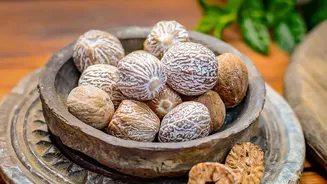
The Buzz Around a Common Spice
From social media trends to wellness blogs, you may have heard whispers that nutmeg does more than just flavour your favourite desserts. The claims are often bold, suggesting the spice can enhance memory, improve focus, and even help protect against neurodegenerative
diseases like Alzheimer's. Traditionally, various cultures have used nutmeg in folk medicine for a range of ailments, including those related to the nervous system. This historical use, combined with a modern desire for natural health solutions, has created a perfect storm of interest. The central idea is that a simple, natural ingredient could hold the key to a healthier brain.
What Early Science Suggests
The scientific intrigue around nutmeg centres on its active compounds, particularly one called myristicin, as well as its rich antioxidant profile. Antioxidants are known to help protect our cells from damage, which is a key factor in many chronic diseases. Several studies, conducted primarily on animals, have produced some promising results. Research in rats, for example, has shown that nutmeg extract could improve memory and learning, and even reduce inflammation in the brain in models of Alzheimer's disease. These findings are the source of much of the excitement, as they hint at a potential neuroprotective effect.
The Crucial Gap: From Animals to Humans
Here is where we need to apply a healthy dose of caution. While animal studies are a critical first step in scientific research, their results do not always translate to humans. Our bodies metabolise substances differently, and what works for a rat may not work for a person, or it might work in a completely different way. Health organisations and researchers are clear on this point: more research is needed to determine if nutmeg has the same effects in people. As of now, there is a significant lack of robust, large-scale human clinical trials to support the brain health claims. Without that data, nutmeg's role as a 'brain food' remains purely speculative.
The Problem of Dosage and Toxicity
Perhaps the biggest limitation is the issue of dosage. The amount of nutmeg typically used in cooking is very small and perfectly safe. However, the quantities that might be needed to achieve a therapeutic effect in humans are unknown and could be dangerously close to toxic levels. In large doses, nutmeg is not benign. The same compound that intrigues scientists, myristicin, has psychoactive and hallucinogenic properties at high concentrations. Ingesting as little as five grams of nutmeg can cause severe symptoms, including nausea, dizziness, a rapid heartbeat, agitation, and hallucinations. There have even been rare reports of fatalities. This makes self-prescribing nutmeg for health reasons a risky and ill-advised gamble.
The Final Verdict for Your Kitchen
So, where does this leave you? Should you throw out your nutmeg? Absolutely not. Nutmeg is a delicious spice that can be a wonderful part of a balanced diet when used as intended—for flavour. A sprinkle in your oatmeal or a dash in a sauce is not going to cause any harm and will certainly make your food more enjoyable. The key is to separate its culinary use from unproven medicinal claims. There is currently no clear scientific evidence that nutmeg is beneficial for any health condition in humans. The risks associated with consuming large amounts far outweigh any unproven benefits.