




Day 1: Spiritual Beginnings in Bhubaneswar
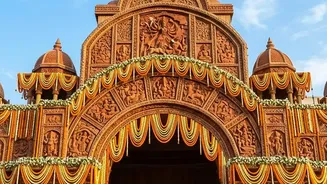
Your cultural immersion begins in Bhubaneswar, the ‘Temple City of India’. Start your day with a visit to some of its most architecturally significant temples. The 11th-century Lingaraj Temple, dedicated to Lord Shiva, is a masterpiece of Kalinga architecture,
though access to the inner sanctum is for Hindus only. Afterwards, explore the Mukteshwar Temple, often called the ‘Gem of Odishan Architecture’ for its intricate stone archway and detailed carvings. In the afternoon, journey back in time at the Udayagiri and Khandagiri caves. These twin hills are dotted with rock-cut shelters built for Jain monks in the 1st century BCE. As evening falls, a visit to a local market like Ekamra Haat provides a first glimpse into the state’s rich handicraft traditions, setting the stage for the textile journey ahead.
Day 2: Journey into the Weaving Heartland
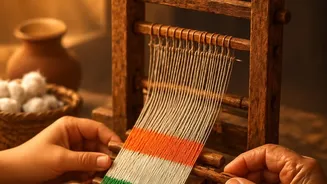
Today, you travel west from the coastal plains towards the heart of Odisha's weaving belt. The destination is Sambalpur, but the journey itself is part of the experience. A significant stop can be made at Nuapatna, a village renowned for its own style of Ikat and Khandua silk. Here, weavers create fabrics with inscriptions from Jayadeva’s 'Gita Govinda', traditionally used for rituals at the Jagannath Temple. Witnessing the 'Bandha' or tie-and-dye process firsthand provides a foundational understanding of this complex art form before you reach the Sambalpuri region. Upon arrival in Sambalpur, check into your accommodation and prepare to explore the epicentre of this world-famous textile.
Day 3: Immersed in Sambalpuri Bandha Craft
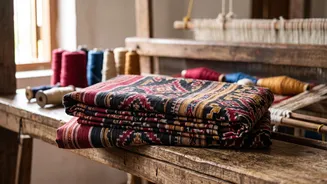
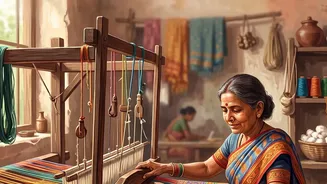
This day is dedicated to the intricate art of Sambalpuri Ikat, a Geographical Indication (GI) protected craft. The main weaving activity happens in villages within the districts of Bargarh, Sonepur, and Sambalpur. A visit to a weavers' village like Bargarh or Barpali is essential. Here, you can interact with the Bhulia weaving community, who have perfected this craft over generations. Watch artisans meticulously tie and dye bundles of yarn before they are mounted on pit looms. The magic of Bandha is that the pattern is created in the threads themselves, resulting in the characteristic feathered edges of the motifs. These motifs often include symbols like the conch (shankha), wheel (chakra), and flower (phula), each carrying deep cultural meaning.
Day 4: Temples and Textiles of the West
After a deep dive into textiles, explore the spiritual landmarks of western Odisha. Start with a visit to the Maa Samaleswari Temple, the region’s most significant shrine, from which Sambalpur gets its name. Located on the banks of the Mahanadi River, this 16th-century temple is a hub of vibrant local devotion. A short drive from the city leads to another marvel, the Leaning Temple of Huma. Dedicated to Lord Shiva, the main temple leans noticeably, while the smaller surrounding structures tilt in other directions, a phenomenon that remains a curiosity. In the afternoon, consider visiting another craft village, such as Kardola, where homes are painted with beautiful Ikat motifs, turning the entire village into an open-air art gallery. It’s a perfect place to buy authentic sarees and fabrics directly from the weavers.
Day 5: Hirakud Dam and Departure
Before concluding your tour, visit the Hirakud Dam, an engineering marvel and the world's longest earthen dam. Spanning the Mahanadi River, the dam creates a vast reservoir and offers panoramic views from the top of two revolving minarets, Gandhi Minar and Nehru Minar. It provides a modern counterpoint to the ancient traditions you've experienced. After soaking in the views, begin your journey back to Bhubaneswar or head to the nearby Veer Surendra Sai Airport in Jharsuguda for your departure. This trip leaves you not just with beautiful textiles, but with a profound appreciation for the skill, devotion, and cultural heritage that defines Odisha.