




The Blurring Line Between Rock and Ice
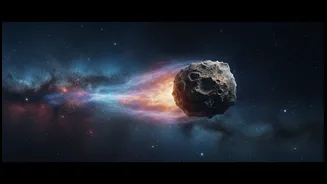
Traditionally, the difference was simple. Asteroids are rocky or metallic bodies, mostly orbiting in the asteroid belt between Mars and Jupiter. Comets are icy bodies from the solar system's frigid outer edges, like the Kuiper Belt or Oort Cloud. When
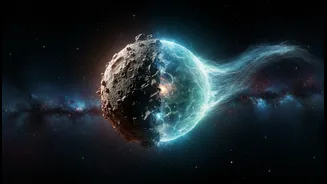
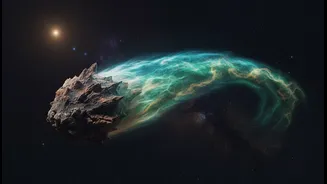
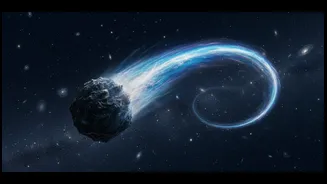
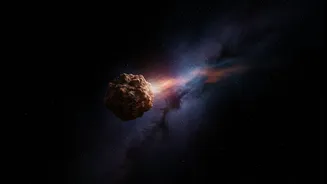
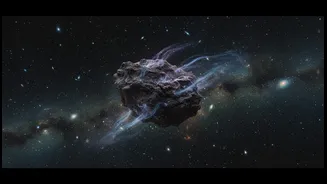
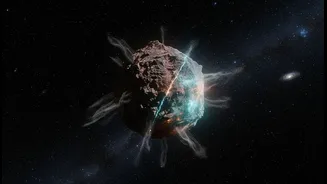
a comet gets close to the Sun, its ice turns to gas, creating a glowing coma (a fuzzy atmosphere) and a spectacular tail. Asteroids, being mostly rock, weren't supposed to do this. But astronomers are finding this clean-cut distinction no longer holds. They have discovered objects with the orbits of asteroids but the visual characteristics of comets, a class now broadly known as active asteroids.
What 'Activity' Really Means
When scientists talk about an asteroid being "active," they're referring to any visual evidence of mass loss. This could be a classic comet-like tail or coma, but the cause isn't always straightforward. In many cases, it is indeed caused by the sublimation of ice—water ice buried beneath the surface gets exposed, perhaps by a small impact, and vaporizes when heated by the Sun. This process can be recurring, switching on each time the object gets closest to the Sun in its orbit. However, activity can also be caused by other events, such as collisions with smaller space rocks or the asteroid spinning so fast that it starts to shed material.
Meet the Main-Belt Comets
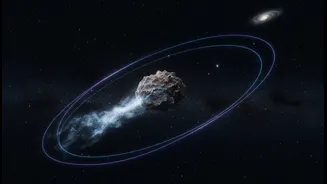
Among the most intriguing of these active asteroids are the so-called Main-Belt Comets (MBCs). These objects have the near-circular orbits typical of asteroids, keeping them squarely within the asteroid belt, yet they display comet-like activity. This was surprising because it was long thought that any ice in the relatively warm inner solar system would have vanished long ago. The existence of MBCs suggests that water ice might be more common in the asteroid belt than previously believed, preserved just under the surface. Discoveries like 133P/Elst-Pizarro, which was first seen as an asteroid in 1979 but later observed with a tail in 1996, helped establish this new class of object. These bodies are of huge interest as they could be a potential source for Earth's water.
The Mystery of Dark Comets
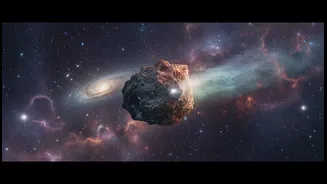
Taking the confusion a step further are 'dark comets'. First identified as a class in 2023, these objects appear visually to be normal asteroids, showing no tail or coma. However, they exhibit slight changes in their trajectory that cannot be explained by gravity alone, a tell-tale sign of outgassing, much like a regular comet. The theory is that these are comets that have either exhausted most of their surface ice or have it buried too deep for sunlight to create a visible tail, but still release enough gas to gently push them off course. The first hints of this behaviour came from the interstellar object 'Oumuamua in 2017, which accelerated like a comet without showing any visible coma. Subsequent searches have identified two populations of dark comets within our own solar system.
A New Classification System
All these discoveries—active asteroids, main-belt comets, dark comets—show that the old, rigid categories are no longer sufficient. Scientists are moving toward a more flexible view where asteroids and comets represent two ends of a continuous spectrum. Rather than asking "Is it a rock or an iceball?" the question is becoming "How much of each is it, and where is it located?" In 2006, the International Astronomical Union (IAU) introduced the term 'Small Solar System Bodies' (SSSBs) to collectively refer to all objects orbiting the Sun that are not planets or dwarf planets, which includes asteroids and comets. This broader classification helps accommodate the growing family of hybrid objects being discovered.
The Main Caveat: We See What We Look For
The main caveat in all of this is observational bias. Our telescopes and survey strategies are designed to find what we expect to find. For decades, we hunted for fast-moving comets and slow-moving asteroids in predictable orbits. It's difficult to spot objects hidden in the Sun's glare or those that are small and dark. This means there could be entire populations of small worlds that we have missed simply because we weren't looking for them in the right way or with the right tools. As new observatories like the Vera C. Rubin Observatory come online, they are expected to increase the detection rate of objects like active asteroids by a factor of ten or more, potentially revealing that these 'unusual' objects are far more common than we currently think.